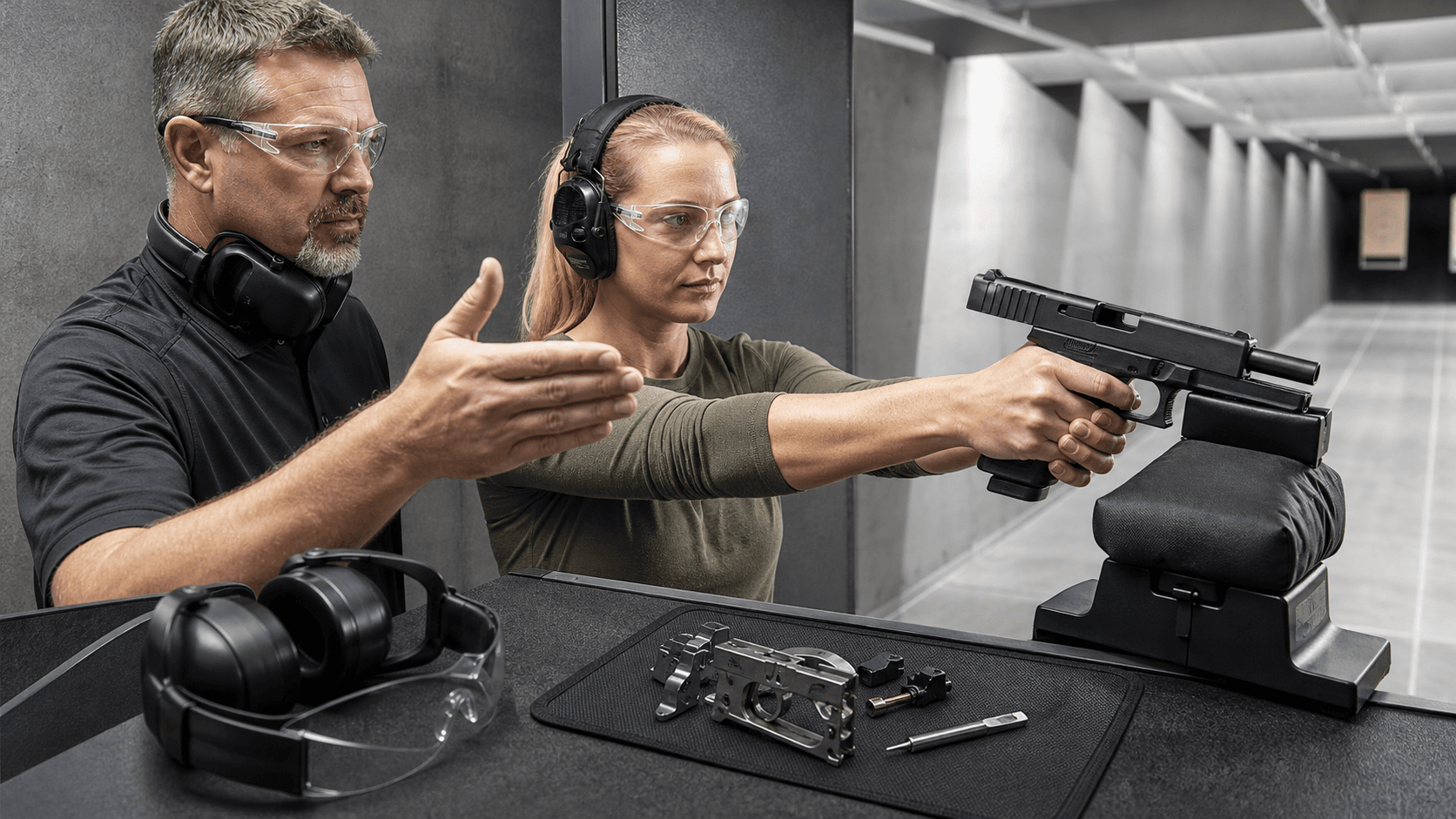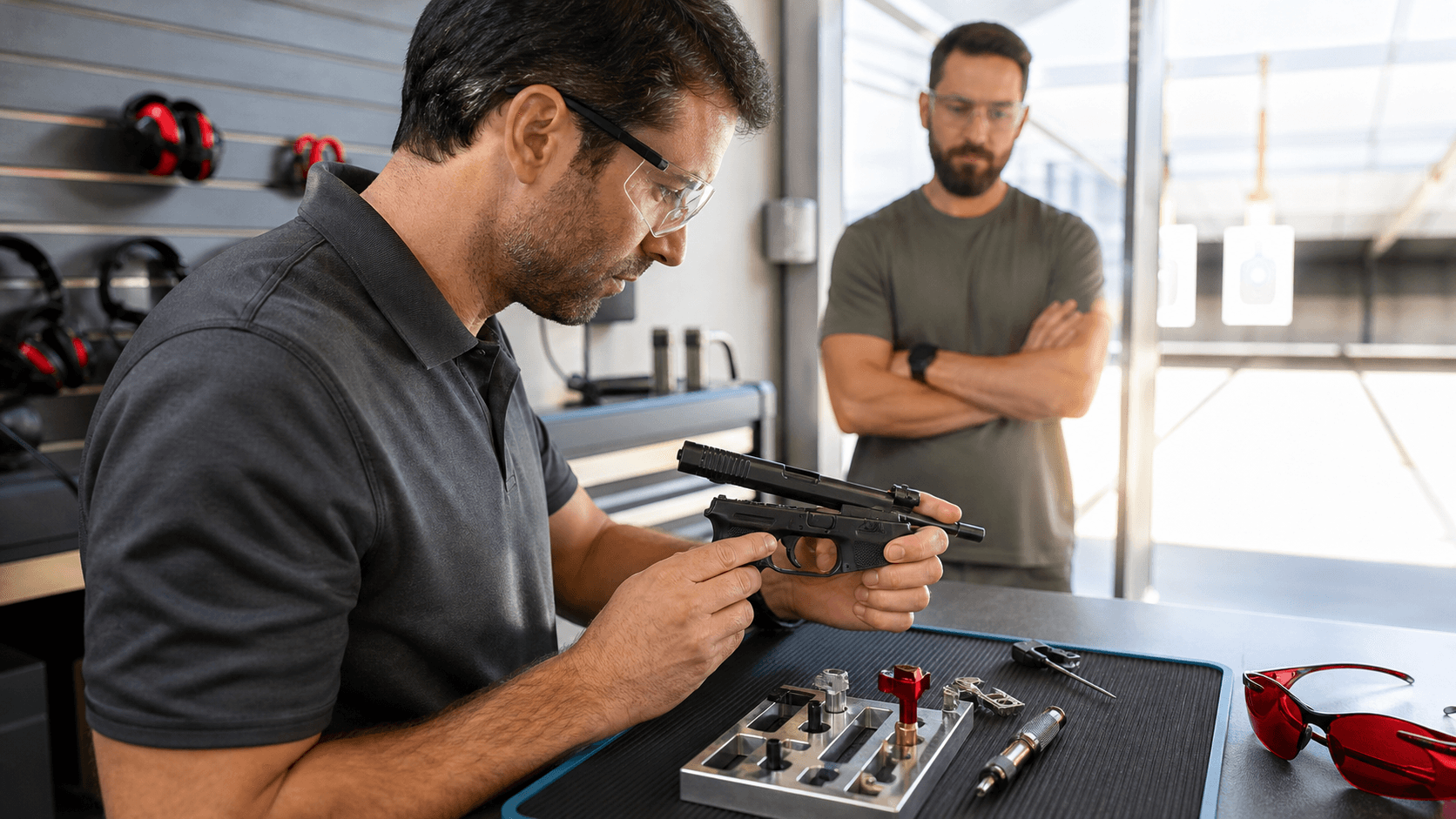
A brief firearm trigger safety check can help keep a planned range day from turning into an unexpected equipment problem. Few things are more frustrating than packing your gear, arriving at the range, and noticing a concern that should have stopped the trip before it started. We recommend making a calm, manufacturer-guided review part of your regular preparation.
This is not a performance test, a repair guide, or a replacement for qualified service. It is a deliberate pause to handle the firearm safely, look for visible concerns, and stop if anything seems different from its normal condition. As late September brings cooler weather, more outdoor range plans, and firearms coming out after longer storage periods, that pause matters even more.
Firearm Trigger Safety Starts Before You Leave Home
Range preparation should begin in a safe, controlled setting, not at the firing line. Before cleaning, inspecting, packing, or reviewing accessories, we urge you to confirm the firearm is unloaded according to the manufacturer's instructions for your specific model. Keep the muzzle pointed in a safe direction, and keep your finger away from the trigger unless you are ready to fire under approved range conditions.
A visual review can reveal concerns without asking you to diagnose or repair anything. If a part looks out of place, damaged, unusually worn, or incomplete, it is time to pause. Never force a component into place or try to alter a trigger assembly because something does not feel right.
A complete pre-departure routine can also prevent small delays that distract from safe handling. Before heading out, we suggest confirming that you have:
- Eye and ear protection
- Required range gear and platform documentation
- Any manufacturer instructions relevant to your firearm or components
- An understanding of the range's posted rules and procedures
Putting these steps together makes firearm trigger safety part of the whole range plan, rather than a rushed thought after you arrive.
A Consistent Routine Helps You Notice Changes
Consistency makes a safety review more useful. When you follow the same manufacturer-approved process before each range trip, you become more familiar with the firearm's normal appearance and condition. That familiarity can help you spot a change early, before it becomes a range-day interruption.
Pay attention to unexpected conditions around the trigger area, controls, and connected components. Unusual looseness, unfamiliar resistance, visible debris, damaged surfaces, or a control that does not appear to work as described in the owner's manual all deserve caution. None of these signs call for a home fix. They are reasons to stop using that firearm until it can be evaluated by an appropriate qualified professional.
Compatibility deserves the same attention. Precision-machined parts are made for specific platforms and configurations. A component intended for one firearm should never be assumed to fit another simply because the parts look similar. Product descriptions, manufacturer compatibility details, and installation guidance all matter when reviewing replacement components or accessories.
Routine cleaning and proper storage also support dependable equipment care. Moisture, dirt, and unsuitable storage conditions can affect firearms and components over time. We recommend following the firearm manufacturer's care guidance and seeking qualified gunsmith support whenever an inspection raises a concern.
Proper Fitment Supports Safe Firearm Handling
Correct fitment is a major part of firearm trigger safety. A trigger-related component can only function as intended when it matches the firearm platform, is installed according to applicable instructions, and receives responsible care. Product research before making a change is not an extra step; it is part of safe ownership.
Start by confirming the exact make, model, and configuration of your firearm. At G-Force CNC Solutions, our precision CNC-machined components, accessories, and Recoil Assisted Trigger systems are made for select G-Series, Canik, and Taurus platforms. Those platform-specific details are there for a reason, and they should guide every purchase and installation decision.
If you are unsure whether a part fits your configuration, whether installation is appropriate, or whether the firearm's behavior is normal, stop and get qualified guidance. Installation must follow the component manufacturer's instructions and all applicable laws. A qualified gunsmith or the product manufacturer can help address questions without guesswork.
Avoid the temptation to polish, force, combine, or modify parts beyond their intended use. Safety-related features should never be defeated, bypassed, or altered. When something feels unfamiliar, treating it as a service concern is far safer than treating it as a do-it-yourself project.
Make a Final Check at the Range
Conditions can change between packing at home and setting up at the range. Gear bags shift during transport. A firearm may be exposed to rain, dust, changing temperatures, or the distractions of a busy firing line. A final firearm trigger safety review gives you a moment to reset your focus before handling equipment.
Range rules and the direction of range officers always come first. Handle firearms only where and when the range permits, keep the muzzle in a safe direction, and maintain trigger discipline. Your personal routine should support range procedures, never replace them.
Fall range days can bring wet surfaces, cooler temperatures, earlier sunsets, and bulkier clothing. Those conditions may make handling feel different, which is one more reason to slow down. Avoid rushing through setup because of weather, limited daylight, or pressure to get on the firing line.
If an unexpected trigger-related condition appears, end the firing session for that firearm. Secure it safely according to range policy and seek qualified help. Continuing to shoot or trying an on-the-spot repair can turn a warning sign into a larger problem.
Keep Each Range Plan Focused on Safety
A short, repeatable review can help protect your range time, your equipment investment, and the people around you. Safe handling, correct component fitment, manufacturer-approved care, and a willingness to stop when something seems wrong all work together.
Before your next range trip, review your firearm manual, confirm that every component matches the intended platform, and follow qualified professional guidance for installation or service questions. A prepared range day starts well before the first shot.
Get Clear Answers Before Your Next Range Visit
At G-Force CNC Solutions, we help shooters identify component concerns and make informed decisions about reliable function. Review our firearm trigger safety troubleshooting guidance for practical insight into common issues and next steps. If you need individualized assistance, contact us to discuss your questions with our team.