How Smart Trigger Geometry Translates to Faster Hits
Trigger performance is not magic; it is mechanics. When you are stuck at the same split times and your groups are not shrinking, it usually is not because you are lazy or shooting less. Often, the parts inside the pistol are holding you back. Small changes in trigger geometry can free up a lot of speed and control.
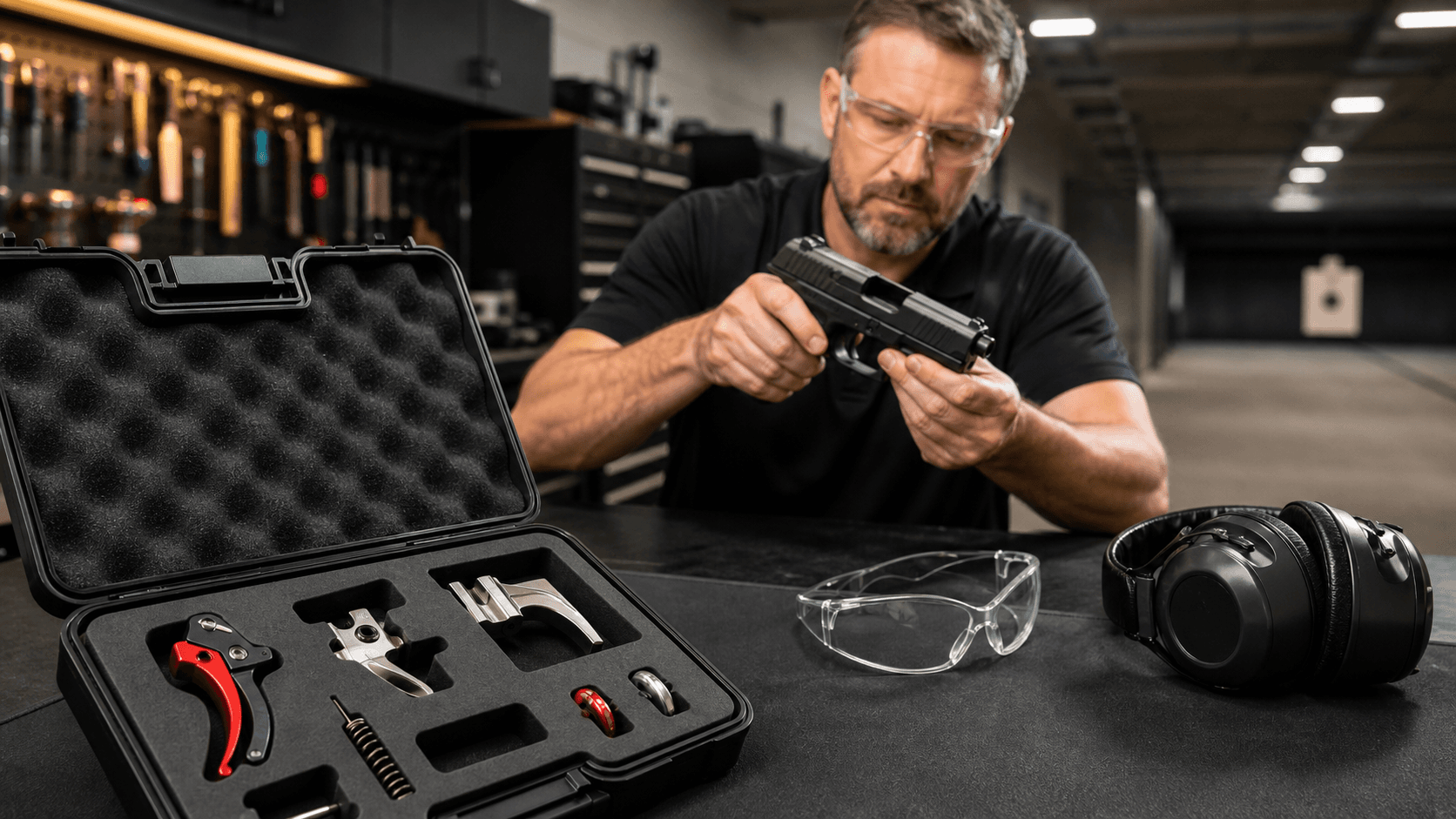
Here at G-Force CNC Solutions, we focus on how a CNC-machined trigger system changes what you can measure, like split times, group size, and how fast the sights settle between shots. In this article, we walk through case-style examples across Glock, Canik, and Taurus pistols to show how different trigger shoes, sear angles, and connector shapes affect real performance on the range, especially during summer match season and longer practice blocks.
When we talk about gains, we are looking at repeatable data. Timers, targets, and drills tell you what actually improves. Feel matters, but the numbers tell the full story of what smarter geometry can do for your shooting.
Why Geometry Beats "Feel" in Trigger Performance
Good trigger feel is nice, but it is also fuzzy and hard to compare. Geometry is clear and measurable. On a modern striker-fired pistol, we can measure things like:
- Pre-travel distance
- Wall definition
- Break weight and where it peaks in the stroke
- Reset length and force
- Overtravel after the break
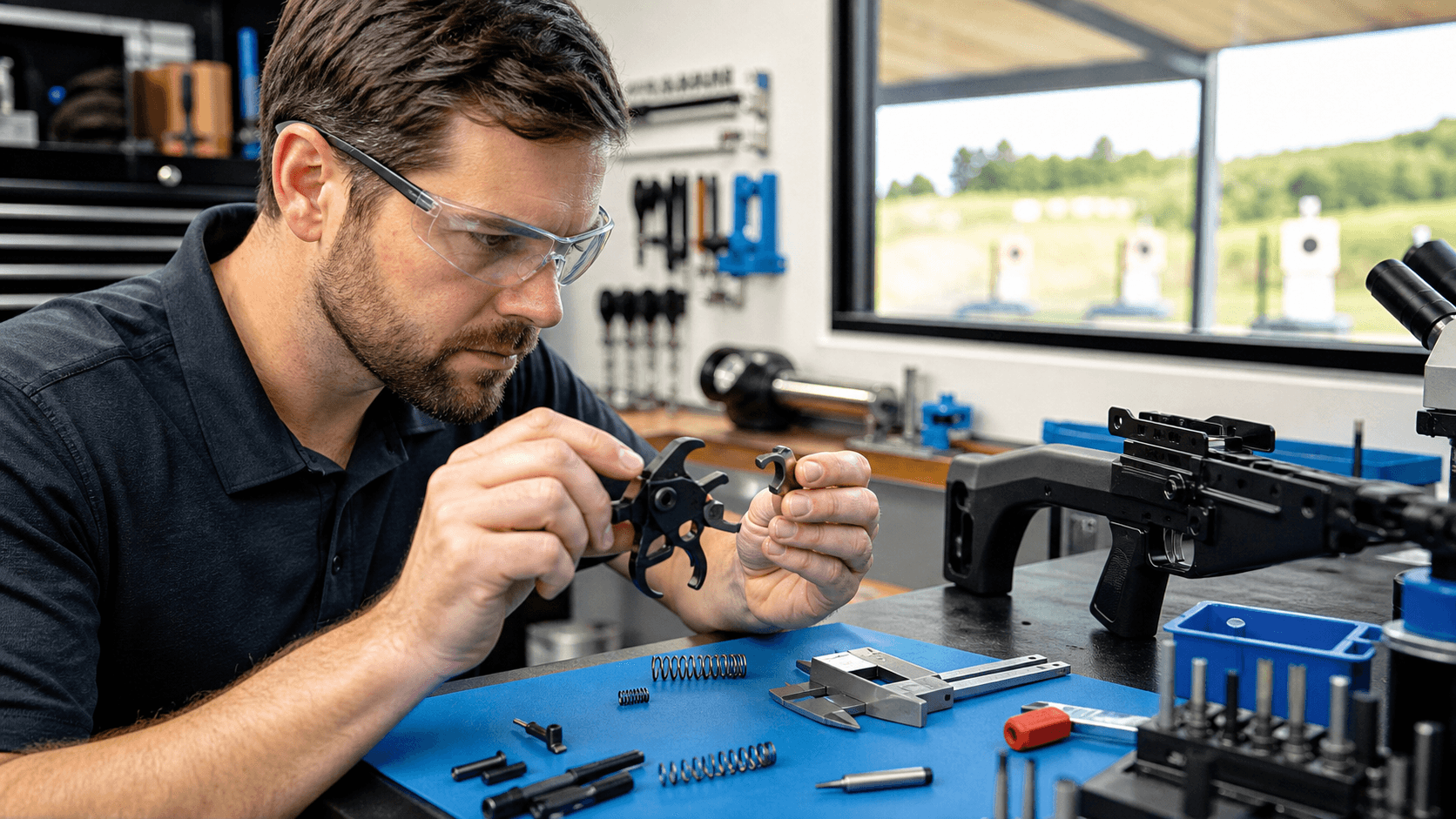
CNC machining lets those dimensions stay tight and repeatable from part to part. That means one CNC-machined trigger system feels and measures like the next one, instead of each pistol being its own mystery.
In the case data we talk about here, we focus on three main areas:
- Flat vs curved trigger shoe shape, which changes leverage and how straight you press
- Revised sear engagement angles, which change creep and break quality
- Tuned connector profiles, which affect how the trigger bar moves and how strong the reset feels
When those parts are shaped with intent, they change how the gun runs on a timer. That is why all the scenarios below are built around simple, repeatable drills, like controlled doubles at short distance, fast strings on a single target, and slow fire at longer range. The goal is to compare before and after in a way any shooter can repeat on their own.
Glock Platform Case Study: Shoe Shape and Split Times
Take a common setup: a stock Glock 19 used for local USPSA-style matches in warm weather. The shooter knows their numbers from regular practice. On basic speed drills, they see mid-range splits and groups that open up as the string gets longer. There are often a couple of shots that drift out of the main cluster when the trigger press falls apart at high speed.
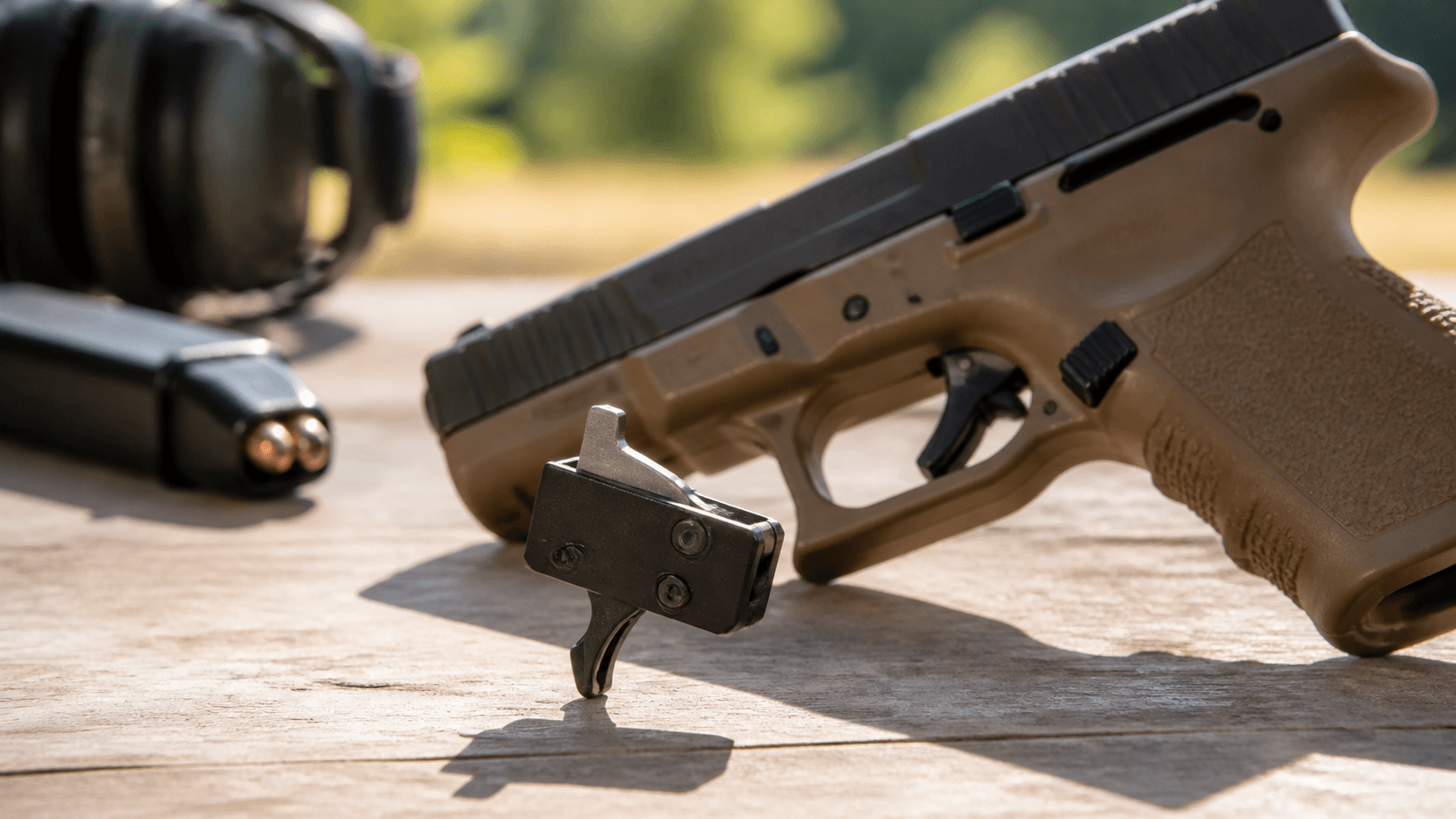
The upgrade in this case is a CNC-machined trigger system built around a flat-faced shoe with tuned pre-travel and a real overtravel stop. The flat shoe changes how the finger sits on the trigger. It brings:
- More consistent finger placement
- A straighter rearward press with less arc
- Slightly better leverage for many hand sizes
By trimming wasted pre-travel and stopping the trigger shortly after the break, lateral movement into the frame tends to drop. On the timer, that usually shows up as cleaner splits and more hits touching in the center of the group instead of stretching sideways.
After getting used to the new trigger, shooters often see:
- Split times trending lower across Bill Drill-style runs
- Fewer wild shots at the end of a string
- Less "searching" for the wall and reset in match pressure
The biggest gain is mental. When the wall is clear and the reset is short and consistent, the brain does not spend as much energy tracking the trigger. That extra bandwidth can go to tracking the front sight, calling shots, and planning the next target.
Canik Platform Case Study: Sear Angles and Accuracy Stability
Canik TP9 pistols are known for decent factory triggers, but even a decent trigger can give mixed results at longer distance. A lot of shooters see vertical stringing at 15 to 25 yards, with shots stacking high or low when they start to push for time. Under mild stress, impacts may drift low-left as they fight through a rolling, unclear break.
Here, the focus is not on shoe shape first, but on sear geometry. By changing the engagement angles and the quality of the mating surfaces with CNC machining, we can:
- Reduce gritty creep before the break
- Shape a more defined wall
- Keep safe engagement while still producing a crisp, repeatable release
When these angles are cut precisely the same way every time, each Canik in that setup starts to break in almost the exact same spot in the stroke. That predictability lets the shooter time their press without guessing.
After the upgrade and some dry fire, many shooters notice:
- Tighter vertical dispersion at mid to long pistol distances
- More centered groups when running timed standards
- Fewer low-left pulled shots during faster strings
A cleaner, repeatable break does not just feel nicer. It reduces anticipation and flinch, since the brain is not bracing for a surprise roll in the trigger. For defensive style training and summer range days, that makes it easier to trust your sights and send the shot when they look right, even when the timer is beeping.
Taurus Platform Case Study: Connector Tuning and Recoil Control
On Taurus G3-type pistols, the complaint we often hear is about stacking before the break and a vague, mushy reset. In fast drills with 6 to 8 rounds, shooters feel like they are working harder against the trigger than against the recoil. The front sight bounces, and by the time it settles, they are still "finding" the reset.
For this platform, we look closely at connector geometry. A CNC-machined connector with a new profile can:
- Smooth out how the trigger bar cams the sear
- Create a more defined wall with less stacking
- Increase or shape the reset force so it is easier to feel
Since the connector is the middle piece between your finger and the sear, its angles change how pull weight builds and releases. When the wall is clear and the reset pushes the trigger forward with a firm, short movement, the trigger stroke feels more like a simple cycle than a vague squish.
On the range, shooters often report:
- Faster splits without their groups getting wider
- A clear tactile reset so they stop slapping at the trigger
- Better sight tracking because they are not fighting the trigger on each shot
The end result is not just "a lighter trigger." It is a trigger that works with your recoil rhythm instead of against it, which is a big gain during hot-weather training classes where you shoot a lot in a short time.
Turning Data Into Your Next Trigger Upgrade Plan
Across these Glock, Canik, and Taurus examples, a pattern shows up. Smart changes to trigger shoe shape, sear angles, and connector geometry, all executed with CNC precision, lead to:
- Faster, more consistent split times
- Tighter and more stable groups at distance
- Better perceived recoil control and less mental strain
If you want to test whether geometry-based upgrades make sense for you, start by collecting data on your current setup. Simple drills work well:
- Bill Drill or similar 6-shot strings at close range
- Two-shot drills at 7 to 10 yards, timed
- Slow fire at 20 to 25 yards for group size and shape
Record your average splits, your first-shot times from ready, and your group sizes and shapes. Note where the trigger feels vague, where you lose the sights, and when you are hunting for the reset. If your grip and stance are squared away but the numbers would not budge, that is a strong sign that the internal geometry is the next place to gain performance.
At G-Force CNC Solutions, we build platform-specific components for Glock, Canik, and Taurus pistols with that goal in mind: precise, repeatable trigger geometry that you can feel and measure on the timer and on the target. When you pair disciplined training with the right CNC-machined trigger system, your summer matches and mid-year range work can start showing the progress you have been working for.
Get Started With Your Precision Trigger Upgrade Today
Ready to tighten your groups and get more consistent performance from your rifle? Explore our CNC-machined trigger system options to find a setup that matches your shooting style and platform. At G-Force CNC Solutions, we carefully machine and inspect every component so you can install with confidence. If you have questions about fitment or custom needs, contact us and we will help you plan the ideal upgrade.