Upgrade Your Trigger, Unlock Your Shooting Potential
Trigger feel is where your shooting really starts. When the press is clean and predictable, the sights stay steady, your hits tighten up, and your confidence grows. When it is gritty or inconsistent, you fight the gun instead of running it.
As late summer training ramps up and people start prepping for hunting season or fall classes, the trigger is often the next upgrade after sights and holsters. A CNC-machined trigger system turns that trigger face into a precise interface between you and the gun. Instead of random play and mush from cast or basic molded parts, you get repeatable movement that you can measure and train to.
Here we walk through a simple decision framework. We will match trigger metrics like pull weight, reset length, and split times to three real use cases, EDC, duty or defensive, and competition, and we will keep platform compatibility in view so your setup stays safe and reliable.
Core Trigger Metrics That Drive Real Performance
When we design and test a CNC-machined trigger system, three numbers matter most. Once you understand these, you can set your own targets.
- Pull weight: how many pounds of pressure it takes to fire
- Reset length: how far the trigger must move forward to reset
- Split times: the time between shots on target
Typical ranges look like this:
- Pull weight: about medium for EDC and duty, lighter for competition
- Reset length: medium for carry and duty, shorter for performance builds
- Split times: around controlled pace for defensive work, much faster for matches
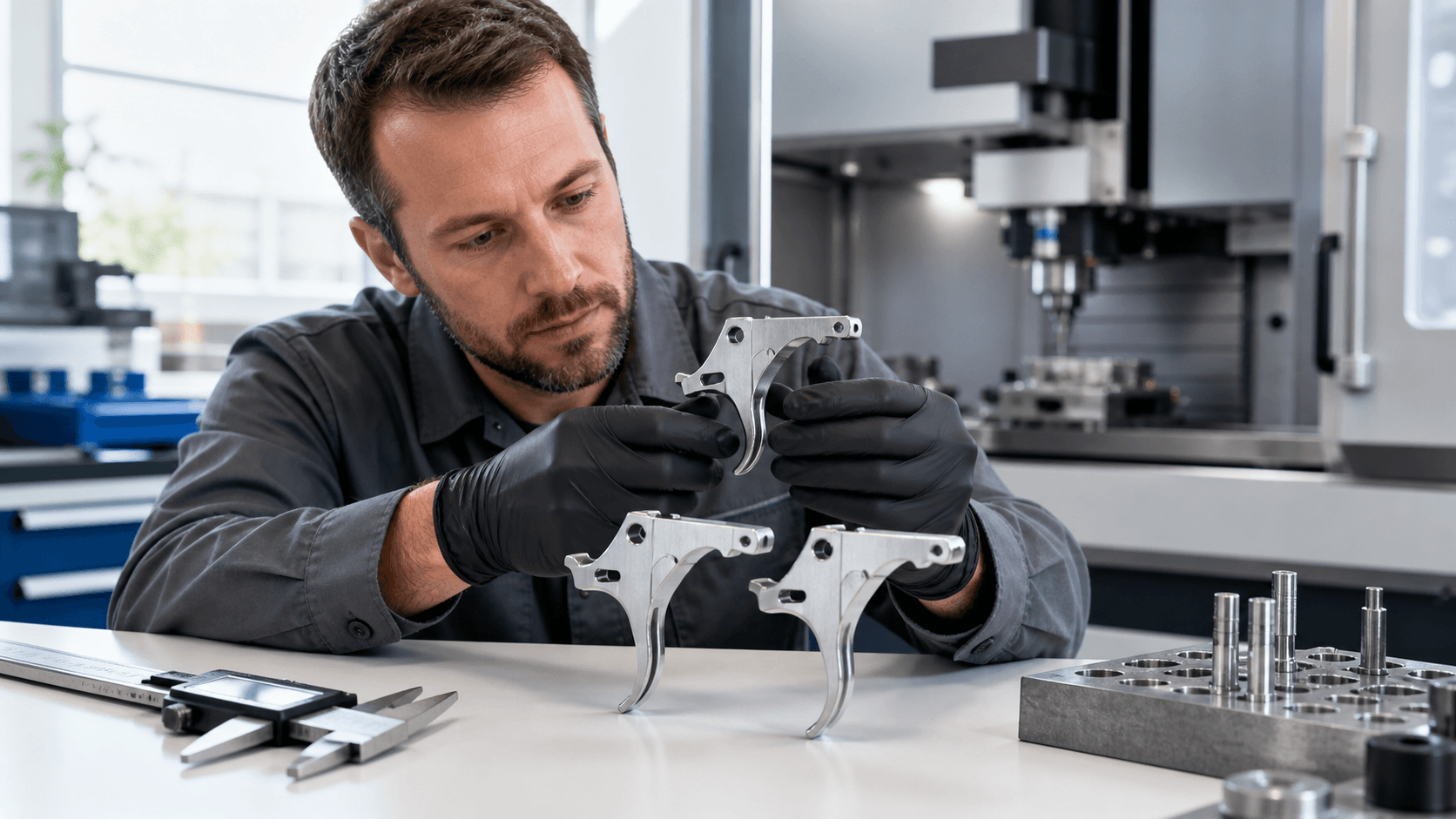
CNC machining keeps tolerances tight, which means the trigger parts fit together cleanly. That helps give you:
- Consistent pull weight from shot to shot
- A clear, crisp break instead of a long mushy roll
- A repeatable reset point that you can feel and hear
This consistency is what lets you diagnose your shooting in dry fire and on the timer during summer training blocks. When the trigger does the same thing every time, you can spot if a miss was your grip, your sights, or your press.
Personal factors also matter. Grip strength, hand size, training time, and the environment where you use the gun all shape your ideal numbers. A newer shooter or someone with lower grip strength might choose a slightly lighter and smoother pull, while someone who trains hard with gloves might want a bit more weight and a firmer reset. Think of these metrics as dials you can tune, not hard rules.
Building the Ideal EDC Trigger Around Control and Safety
For an everyday carry gun, priorities are simple: the gun must fire when it should, and only when it should. Reliability and control come before raw speed.
Key goals for an EDC trigger:
- Safe but manageable pull weight
- Tactile and audible reset for follow-up shots
- Strong materials that handle sweat, pocket lint, and daily holster use
Recommended targets for many concealed carriers are:
- Pull weight: in a moderate range that you can run under stress without being hair-trigger light
- Reset length: short enough that you can feel it and fire a controlled second shot, but not so tiny that you start "riding" the trigger and losing full reset under pressure
- Split times: focus on accurate, accountable hits on a timer, not just the lowest number
Compatibility and liability matter here. Different platforms, like Glock, Canik, or Taurus, have their own internal safeties, striker designs, and trigger bar geometry. An EDC-focused CNC-machined trigger system should:
- Respect factory safety engagement
- Stay inside safe geometry for that frame and slide
- Avoid odd part mixes or aggressive home polishing that could remove safety margins
For a carry gun, a carefully engineered trigger that keeps or improves factory safety is a better path than trying to blend random parts or DIY work.
Duty and Defensive Roles Where Reliability Rules
Duty guns and home-defense setups live in a tougher world. Long training days, changing weather, sweat, dust, and gloves all show up here. In many areas, from humid summers to cold winter mornings, that gear has to run no matter what.
For duty or primary defensive roles, we prioritize:
- Extreme reliability over high round counts
- Consistent feel across hot and cold temperatures
- Durability when used with different holsters, weapon lights, and gear
Measurable duty-focused targets often include:
- Pull weight: a bit heavier on average than a pure competition gun, so you keep control under stress and with gloves
- Reset: firm and positive, easy to feel even through duty gloves
- Split times: fast enough for multi-target drills, but tuned to accountability instead of pure speed
There are also extra compatibility constraints. Agencies and departments may have rules about trigger work, pull weight, or internal parts. Holster fit and light setups might limit how far you can go in changing the feel of the gun. A duty-ready CNC-machined trigger system should be built around popular platforms while keeping OEM dimensions, so it works with existing holsters and keeps safety systems in place.
Competition and Performance Builds for Maximum Speed
On a competition gun, speed and sight tracking take the lead. Here, many shooters push the numbers harder, while still staying within safe operating limits and rule sets.
Common competition priorities are:
- Minimal overtravel once the shot breaks
- A lighter, very crisp break
- An ultra-short, positive reset
For sports like USPSA, IDPA, and outlaw matches, shooters often aim for:
- Pull weight: lighter than EDC or duty, but still safe for movement and rapid fire
- Reset length: as short as the platform and rules allow, so sight tracking drives your split times
- Split times: measured on drills like Bill Drills and target transitions, then trimmed over time
Rules and safety lines still apply. Some divisions limit what you can change inside the gun. As pull weight comes down, safe margins on sear and striker engagement become even more important. This is where a purpose-built CNC-machined trigger system, including advanced recoil-assisted designs on platforms like Canik, can help you safely squeeze more performance without giving up reliability.
Matching Triggers to Platforms and Real-World Use
So how do you pick the right setup for your needs and your gun?
We like a simple three-step framework:
- Start with platform: Glock, Canik, Taurus, or others
- Set the use case: EDC, duty or defensive, or competition
- Dial in metrics: pick pull weight, reset length, and target splits that fit your skills and training time
Your frame, slide, striker or hammer, and internal safeties all affect which CNC-machined trigger system is right for you. Some goals may need matching springs or other internal parts to stay safe and reliable. For example, a very light competition pull that works well on a match Glock might not be what you want on a hot, sweaty EDC gun.
We also suggest a simple seasonal testing plan:
- Dry-fire sessions to feel the break and reset
- Live-fire groups to confirm accuracy gains
- Shot timer drills through summer and into hunting or match season to see if your new trigger actually gives you better splits and cleaner hits
Over time, those measured results give you real confidence.
Turn Measurements Into Confidence on the Trigger
When you match a CNC-machined trigger system to your role, your numbers, and your platform, the gains stop being abstract. The gun feels more predictable. Your groups tighten. Your times come down while your control goes up.
At G-Force CNC Solutions, we focus on that kind of practical performance, from EDC and duty setups to competition builds and recoil-assisted trigger designs for platforms like Canik. A simple written spec sheet for your trigger, plus a checklist for testing and maintenance as seasons change, can help you treat your trigger like the key interface it really is, and build steady confidence every time your finger meets the shoe.
Get Started With Your Project Today
If you are ready to upgrade to a precision-built firearm component, explore our CNC-machined trigger system options tailored to serious shooters. At G-Force CNC Solutions, we machine every part to tight tolerances so you can trust your setup in every scenario. If you have questions about compatibility, custom needs, or bulk orders, contact us and we will help you choose the right configuration.