Keep Your Trigger Running When Temperatures Drop
Cold-range days expose weak trigger setups fast. A trigger that feels great in a warm indoor bay can suddenly feel heavy, gritty, or slow once the wind kicks up and your fingers go numb. That is even more true with high-precision CNC machined triggers that run on tight tolerances.
We build triggers that are made to stay consistent, but physics still wins if the lube is too thick, moisture turns to ice, or grit packs into tight spaces. The good news is that a smart cold-weather routine can keep your trigger clean, crisp, and predictable, even when your breath is fogging in front of you.
Here, we will walk through how temperature affects precision triggers, how to pick and place the right lubricant, and how to manage moisture and grit at the range so your trigger feels the same on shot one and shot one hundred.
Why Precision CNC Triggers React Differently in Cold
Tight CNC machining gives us cleaner surfaces and closer fits. That is where the benefits of CNC-machined triggers really show up: shorter, smoother travel and a repeatable break. But those same tight fits leave less room for thick lube, frozen fouling, or tiny bits of grit.
In cold weather, this can cut two ways:
- The good: less slop, cleaner engagement, more consistent reset
- The bad: more sensitivity to sticky oil, ice crystals, and carbon paste
When temperature drops, metal contracts slightly and contact points feel different. On a rough cast or stamped trigger, that can mean more drag, more creep, and wider swings in feel from shot to shot. On a high-quality CNC design, smooth, consistent surfaces help keep that break steady across a wide temperature range.
This is one reason budget fire-control parts often start to feel unpredictable as it gets colder, especially in striker-fired pistols like common Canik, Glock, and Taurus platforms. Sloppy fit plus thick lube plus carbon equals sluggish reset. With well-machined parts and the right prep, you flip that story. You get less friction, better contact, and more confidence that what you feel dry firing at home is what you will feel on the line.
Dialing in Lubrication Viscosity for Subfreezing Sessions
Viscosity is simply how thick or thin a liquid is. When it gets cold, most oils get thicker. In a trigger group, that thicker oil can slow down the trigger bar, striker, sear, and safeties. Your crisp CNC trigger suddenly feels lazy and heavy, and the benefits of CNC-machined triggers start to fade.
For cold-range work, we like to keep lube simple and light:
- Use low-viscosity synthetic gun oils that are rated for cold temps
- Avoid heavy greases on small moving parts and in striker channels
- Keep lubricant off areas that are meant to stay dry, like some safety faces and friction pads
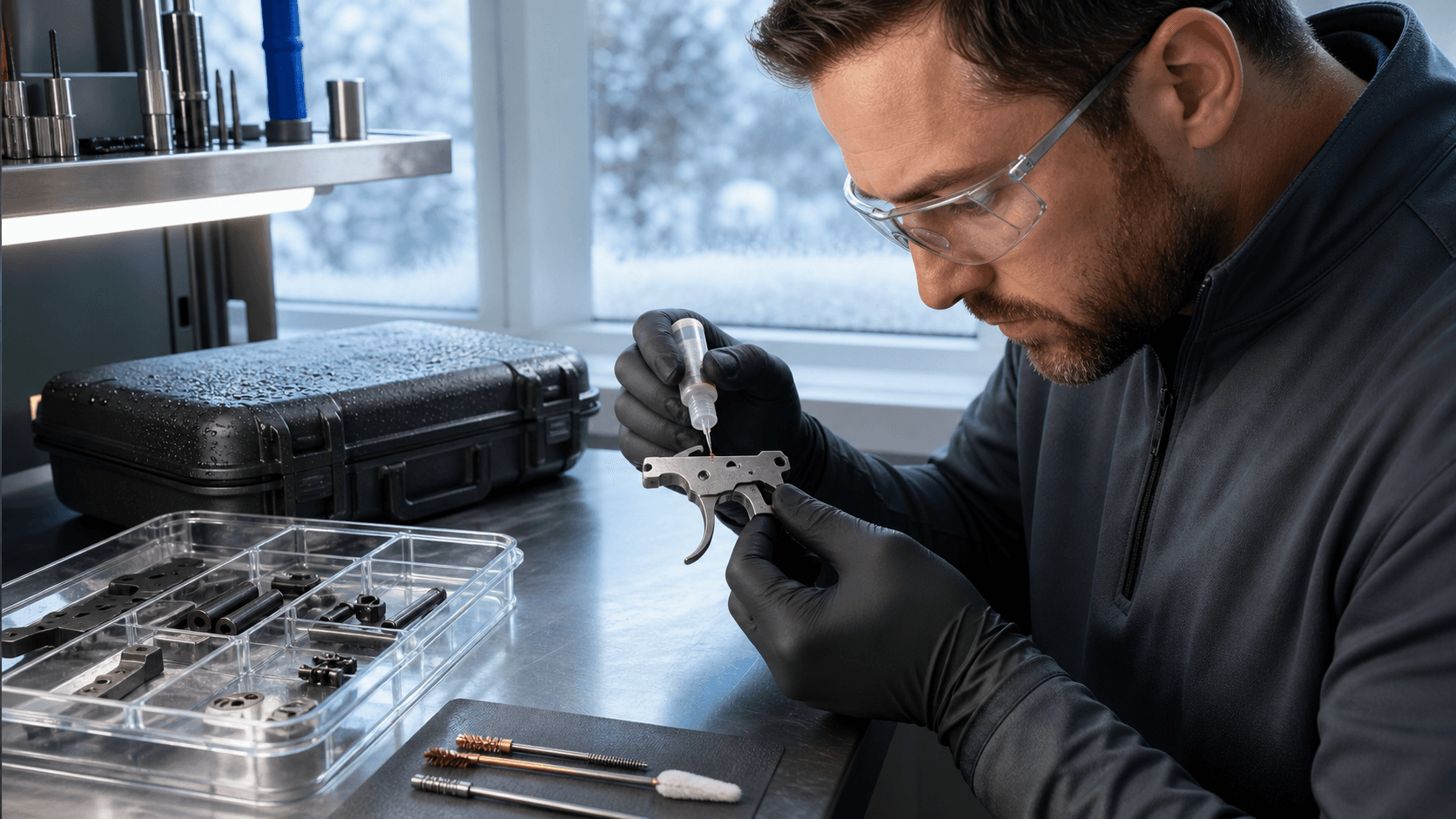
On a CNC trigger similar to what we build, focus on tiny amounts of oil at:
- Pivot pins and bearing points
- Light contact on sear surfaces (if the design allows lubrication)
- Points where the trigger bar interfaces with the striker or firing system
Then, just as important, leave other areas dry so they do not collect sludge. More lube is not better in the cold. It is usually worse.
Before you head to the range, do a quick test: leave the unloaded firearm in a cold garage or car for an hour. Then check trigger break, reset, and any built-in safeties. If anything feels slow or sticky, adjust your lube before you trust it at the range.
Managing Condensation and Moisture Before It Becomes Ice
A big cold-weather problem does not start at the firing line. It starts when a warm pistol leaves a heated room and hits chilly, damp air. Moisture in that air can condense on cold metal, including inside closely fitted CNC parts and striker channels. If it then cools more, that moisture can freeze in all the wrong places.
Smart transport habits help a lot:
- Bring guns outside in a case, but do not seal them in airtight bags
- Allow the firearm to cool and stabilize before heavy dry fire or cycling
- Avoid racking the slide a bunch while condensation is forming on colder metal
Over time, repeated cycles of condensation and drying can leave microscopic rust on engagement surfaces. On precision CNC parts that were machined to be smooth, that rust roughens things up and slowly eats away the clean feel you paid for.
After the range, let the firearm warm back up in a dry room before stuffing it in a soft case. Then do a quick wipe-down and a light, targeted pass with a moisture-displacing cleaner around the fire-control area. That simple habit goes a long way for long-term reliability.
Grit, Carbon, and Frozen Fouling Control at the Range
Cold air does not just make fingers stiff. It also makes carbon and unburned powder more likely to clump up with oil and turn into a thick sludge. On a high-precision trigger system, including designs like our Recoil Assisted Trigger components, that sludge can kill the snappy feel and slow the reset.
Good grit control starts with where and how you set up:
- Use closed-top cases or bags to keep wind-blown snow and dust off the gun
- Avoid placing pistols directly on snowy, sandy, or salty benches
- Keep magazines out of snow, mud, and deicer-treated ground
A small cold-weather cleaning kit is worth its space in your range bag. Think simple:
- Nylon or brass brush for trigger and slide rails
- Cotton swabs or patches to reach tight corners
- A small bottle of low-viscosity oil
- A quick-drying cleaner that does not stay thick in the cold
If the trigger starts to feel gummy mid-session, lock the slide back, clear the pistol, and do a fast field clean of rails and obvious contact points. Getting rid of that paste of carbon and oil brings back the feel you expect from a CNC trigger, especially across longer strings and dirty ammo.
Turn Cold Days Into a Reliability Advantage
Cold days are not just something to suffer through. They are chances to test and prove your setup. When we train in the cold on purpose, we confirm that our trigger system, lube choices, and range habits work when fingers are numb and breath is hanging in the air.
A simple cold-weather checklist helps:
- Verify you are using a light, cold-friendly lube
- Let the firearm acclimate before serious use
- Function check trigger break, reset, and safeties after it has cooled
- Watch for any sluggish reset or extra drag while shooting
- Inspect and dry the gun after the range, then touch up lube as needed
When you combine that kind of care with well-designed CNC parts, you get real benefits of CNC-machined triggers that you can feel in any season: consistent pull, clean break, and a reset you can trust. That is what we focus on with G-Force CNC Solutions triggers and Recoil Assisted Trigger components for platforms like Canik, Glock, and Taurus, built for reliability across real-world temperature swings that shooters deal with every year.
Get Started With Your Project Today
If you are ready to experience the precision and reliability that quality machining brings to your firearm components, we are here to help. Explore the benefits of CNC-machined triggers and choose the setup that fits your build and performance goals. At G-Force CNC Solutions, we focus on tight tolerances, consistent results, and parts you can trust on the range or in the field. Have questions about compatibility or a custom application? Just contact us so we can walk you through the best options for your needs.