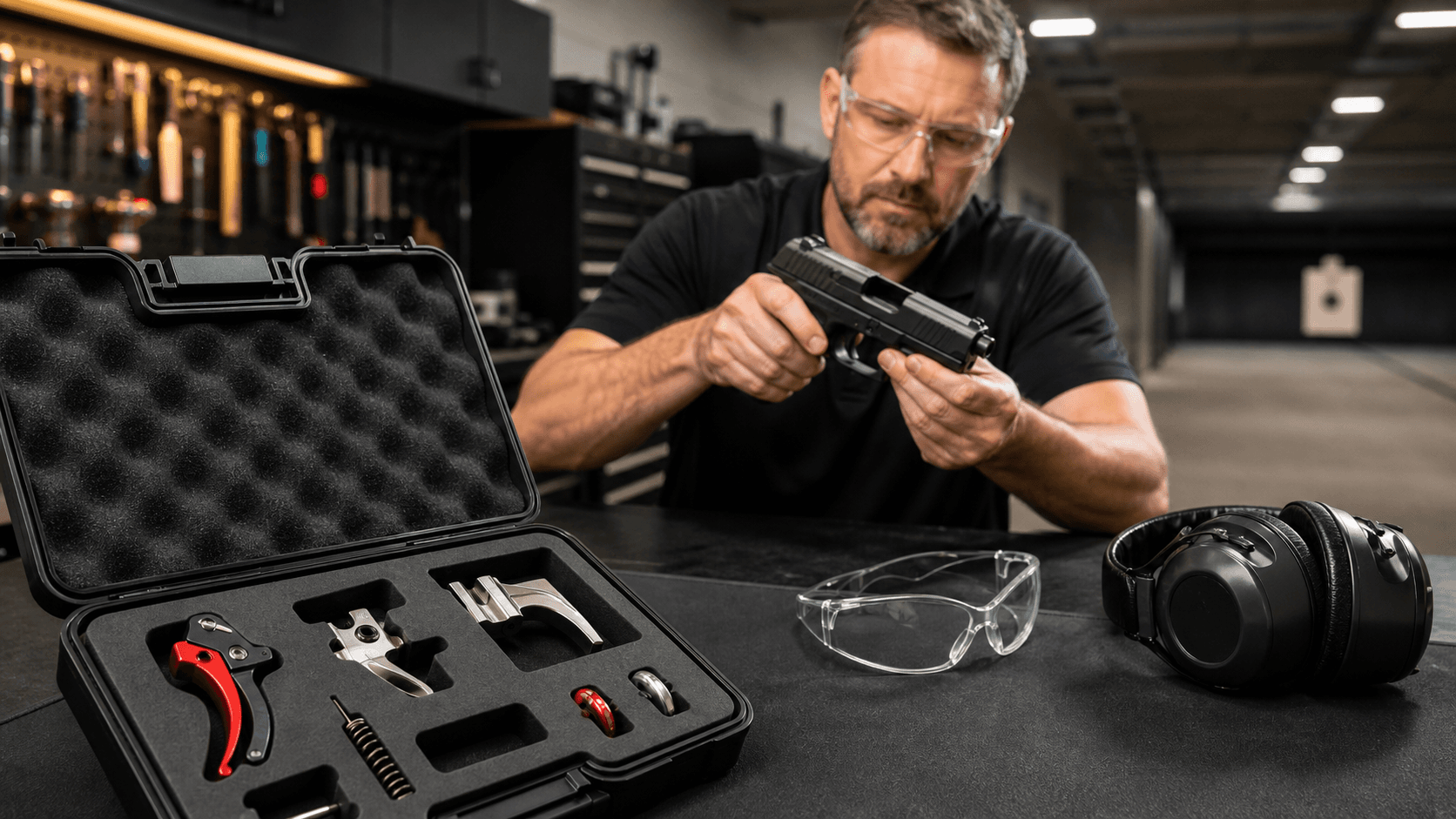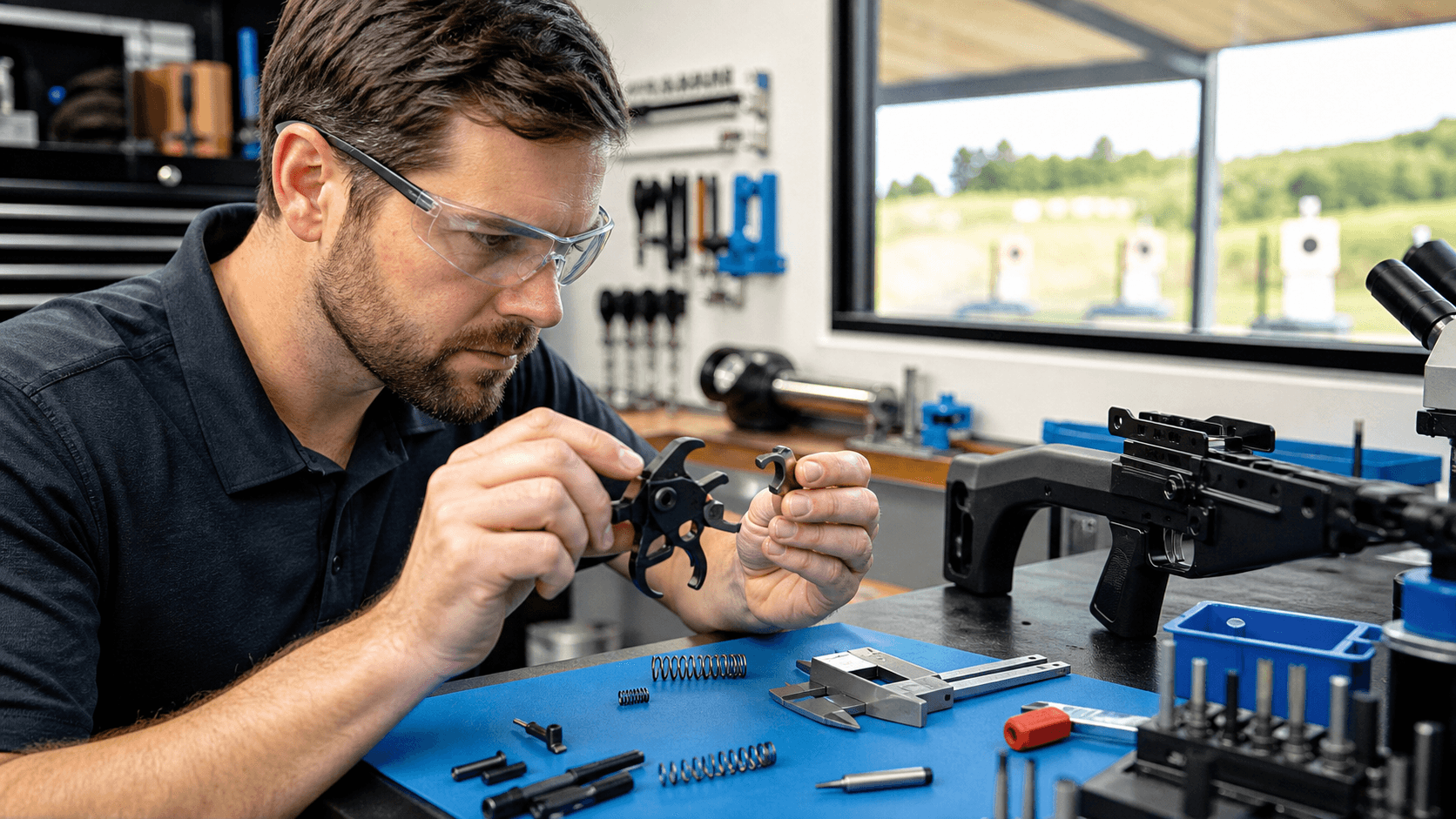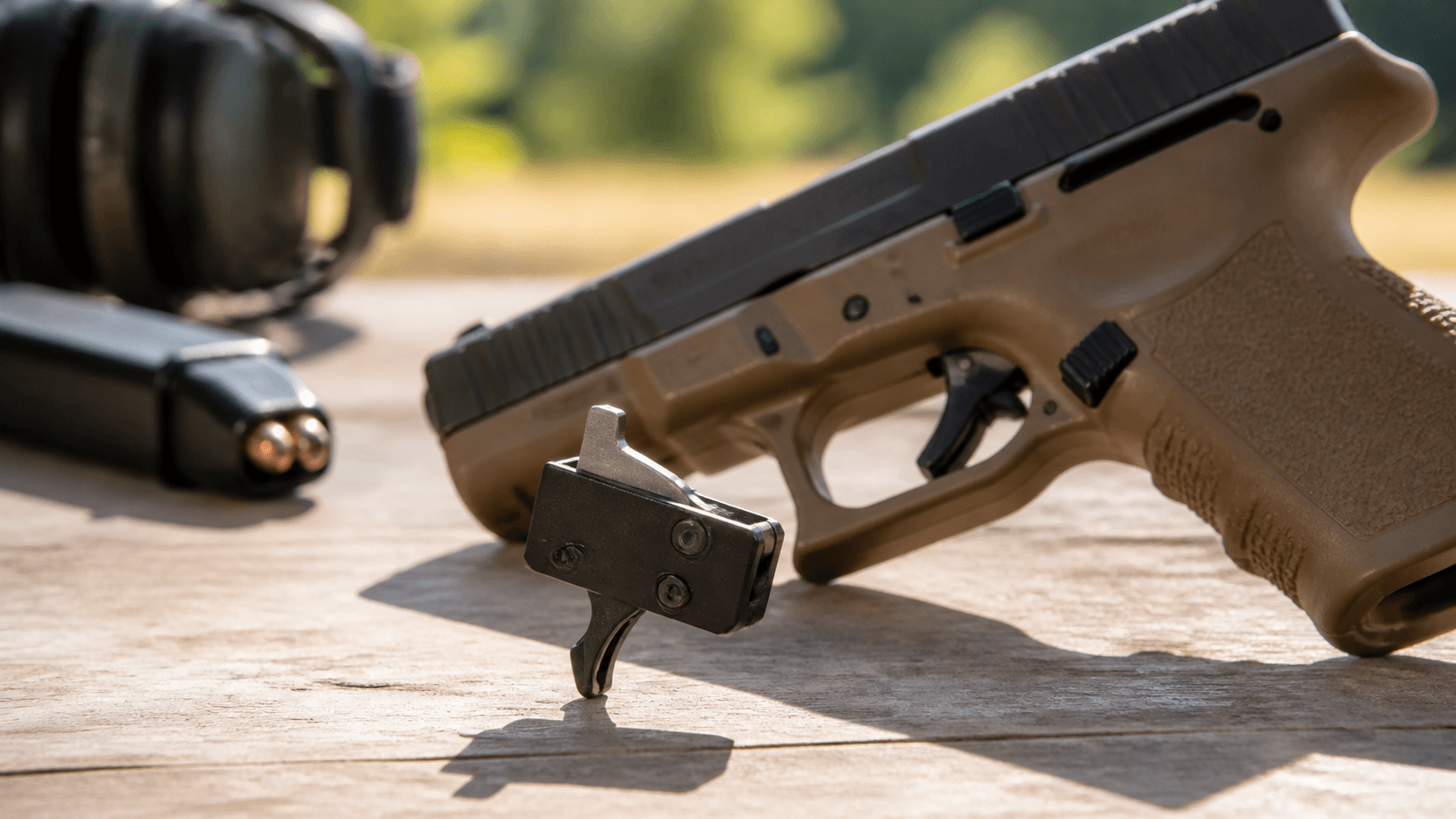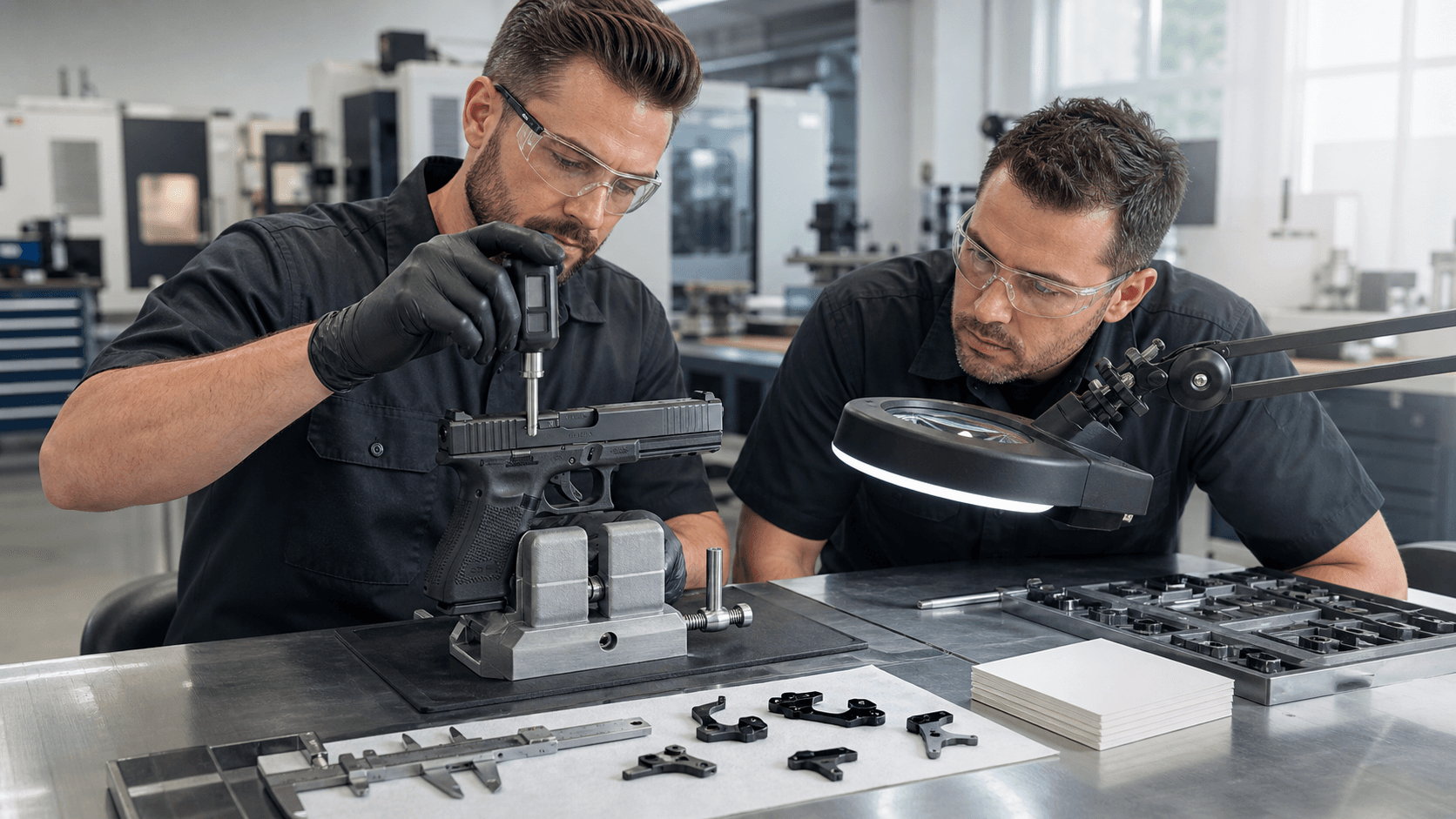
Glock triggers get called all kinds of names: mushy, spongy, gritty, too light, too heavy. None of that actually helps us fix the problem. If we want a trigger we can trust for defense or competition, we need numbers, not vague feelings.
In this guide, we will turn your Glock trigger feel into clear, measurable data. We will walk through the key benchmarks, simple tools, and a step-by-step test plan. By the end, you will be able to tell if the limiting factor is the trigger, the connector, the springs, or the shooter. Mid-summer is a great time for this, since range time, matches, and training blocks are in full swing and you can test changes right away.
Turning "Mushy" Glock Triggers Into Measurable Data
When we talk about a Glock trigger upgrade, words like smooth or crisp sound nice, but they are not enough. We want to know how far the trigger moves before the wall, how hard it is to break, how far it travels after the shot, and how long the reset really is.
The core benchmarks we care about are:
- Pre-travel
- Wall definition
- Break weight
- Overtravel
- Reset length
These directly affect:
- How steady your sights stay through the press
- How tight your groups are at distance
- How fast your split times are in matches
Before swapping parts, it pays to learn what is actually going on. With clear measurements, we can tell if the trigger system is holding you back or if the issue is grip, finger placement, or general shooting habits that need work.
The Five Benchmarks That Define Glock Trigger Feel
Let us break down what we are feeling when we press a Glock trigger.
Pre-travel and wall
Pre-travel is all the movement from the starting point until you hit real resistance. On a striker-fired pistol like a Glock, you feel the trigger safety take-up and the striker being prepped.
- Too much pre-travel can make the gun feel squishy and can shake the sights before the wall.
- Too little pre-travel can feel great but can raise safety concerns if not done correctly.
The wall is the point where resistance stacks up right before the shot breaks. A clear, repeatable wall is gold, especially for:
- Precision shots at longer distance
- Partial targets in USPSA or IDPA
- Head boxes or small steel under time pressure
A mushy wall makes it hard to predict exactly when the shot will break, which can lead to snatching the trigger or driving the gun low.
Break weight and overtravel
Break weight is how much force, usually in pounds, it takes for the shot to fire. It ties into:
- Shooter control, especially with stressed hands or sweaty grip
- Recoil management from shot to shot
- Policy or rule limits for duty guns and competition divisions
Overtravel is the extra movement after the shot breaks. If the trigger keeps moving far to the rear, it can pull the gun off target.
We want enough movement for reliability, but not so much that it yanks the front sight off the scoring zone.
Reset length and tactile feedback
Reset length is how far forward the trigger must move after the shot before it can fire again. A short, positive reset helps:
- Faster, more controlled follow-up shots
- Cleaner splits on close targets
- Better consistency when you are tired late in a match or training day
Tactile and audible reset feedback helps too. Under stress or in a noisy bay, being able to feel and hear that reset click keeps your trigger work honest.
Simple Tools to Turn Your Bench Into a Test Lab
You do not need a full gunsmith shop to measure your Glock trigger. A few simple tools go a long way.
Low-cost measurement essentials
Here is what we like to have on the bench:
- Digital trigger pull gauge
- Calipers or a small ruler
- Masking tape and a fine marker
- Notepad or a simple spreadsheet
- Shot timer for live fire, if you have one
When using a trigger gauge, take several readings and write them down. Ten pulls, with oddball numbers tossed out, give you a much better average.
Safe setup for indoor and outdoor testing
Safety comes first, every single time.
- Unload the pistol, then check again, then check once more.
- Keep all live ammo in another room for dry work.
- Use a safe backstop if you move to live fire, and keep strict muzzle discipline.
In hot summer weather, sweat and fatigue can change how your grip and trigger feel. Keep test blocks short, drink water, and let your hands rest so your data stays honest.
Baseline logging for future upgrades
Make a simple data sheet with columns for:
- Stock trigger setup
- Any aftermarket parts you test
- Pre-travel, wall, break weight, overtravel, reset length
- Notes on temperature, humidity, and whether you wore gloves
These notes will help a lot when you compare later changes or a new Glock trigger upgrade.
Step-by-Step Protocol to Isolate the Real Limiting Factor
Now we turn the idea into a process.
Establish dry benchmarks
With an unloaded Glock:
- Put a thin strip of tape on the trigger shoe and frame. Mark your starting point.
- Slowly press to the wall and mark that new position.
- Press through the break and mark where the trigger stops at the rear.
Use calipers or a ruler to measure:
- Pre-travel distance
- Overtravel distance
Then use your trigger pull gauge:
- Take 10 steady pulls from the same point on the trigger.
- Toss any clearly odd numbers.
- Average the rest for a reliable break weight.
Add live fire and track results
On the range:
- Shoot slow-fire groups at 7, 15, and 25 yards, focusing on a smooth press to the wall and a clean break.
- Note group size, where the shots land compared to your call, and any clear trigger fliers.
Then add a timer:
- Run controlled pairs and short 3 to 5 shot strings.
- Record split times and note if you tend to slap past reset or pin the trigger too long.
Change one variable at a time
To keep things clear, change only one thing per test cycle:
- Connector
- Striker spring
- Trigger return spring
- Full Glock trigger upgrade
After each change, repeat the same dry and live tests. Compare your numbers and notes. You are looking for changes in break weight, reset length, consistency, and real hits on target.
Diagnosing the Trigger, Connector, Springs, or Shooter
Now we read the story your data is telling.
How to read your bench and range data
If your pre-travel and break weight are very consistent, but groups still wander or jerk low, that often points to shooter input:
- Anticipation or flinch
- Grip pressure changes shot to shot
- Inconsistent finger placement on the trigger
If your break weight or wall feel swings a lot between pulls, or the wall sometimes feels sharp and sometimes muddy, you may have:
- Internal friction
- Out-of-spec parts
- A connector or trigger setup that is not working smoothly
Isolating individual components
Patterns can help:
- A lighter pull with a soft, rolling wall usually lines up with spring changes alone.
- A crisper wall with similar weight often comes from connector geometry changes.
A quality Glock trigger upgrade, when matched correctly, can shift several benchmarks at once, like shortening pre-travel, sharpening the wall, reducing overtravel, and tightening reset.
When the shooter is the limiting factor
If the gun shows:
- Stable bench numbers
- Good slow-fire groups
- But messy rapid-fire strings
then the gun is likely fine. In that case, focus on:
- Wall drills
- Ball-and-dummy
- Reset-only drills and dry presses from the wall
Solid mechanics always beat chasing parts.
Turning Measurements Into a Smarter Trigger Upgrade Plan
Once you have clear numbers, you can plan your path instead of guessing.
Build a data-driven upgrade roadmap
Match what you feel to what you measured:
- Need a lighter but still safe break for competition? Focus on springs and a tuned trigger system that stays reliable.
- Want a shorter reset for faster follow-ups? Look for parts that clearly publish reset changes.
- Want a cleaner wall for defensive work? Put wall definition and consistency at the top of your list.
Reliability and repeatability come first, especially for everyday carry and duty-type use.
Schedule seasonal tune-ups and retesting
As seasons change, lube, sweat, dust, and wear all add up. We like to run the same test protocol in both hot and cold months to catch:
- Spring fatigue
- Wear on sear surfaces
- Small changes in reset feel or break weight
When to consider professional-grade solutions
If you have worked on grip, trigger control, and reset discipline, and your data still shows a vague wall or inconsistent break, it may be time for a purpose-built performance trigger system.
At G-Force CNC Solutions, we design and build high-precision Glock trigger components, including innovative recoil-assisted systems, with these exact benchmarks in mind. When you compare your own notes on pre-travel, wall, break weight, overtravel, and reset to published specs, you can pick a Glock trigger upgrade that fits your goals instead of guessing based on feel alone.
Upgrade Your Glock Performance With Precision Components
If you are ready to tighten your groups and gain more consistent control, our team at G-Force CNC Solutions is here to help. Explore our precision-engineered Glock trigger upgrade options to find the setup that matches your shooting style and goals. If you have questions about compatibility or want guidance before you buy, contact us and we will walk you through the best choices for your build.