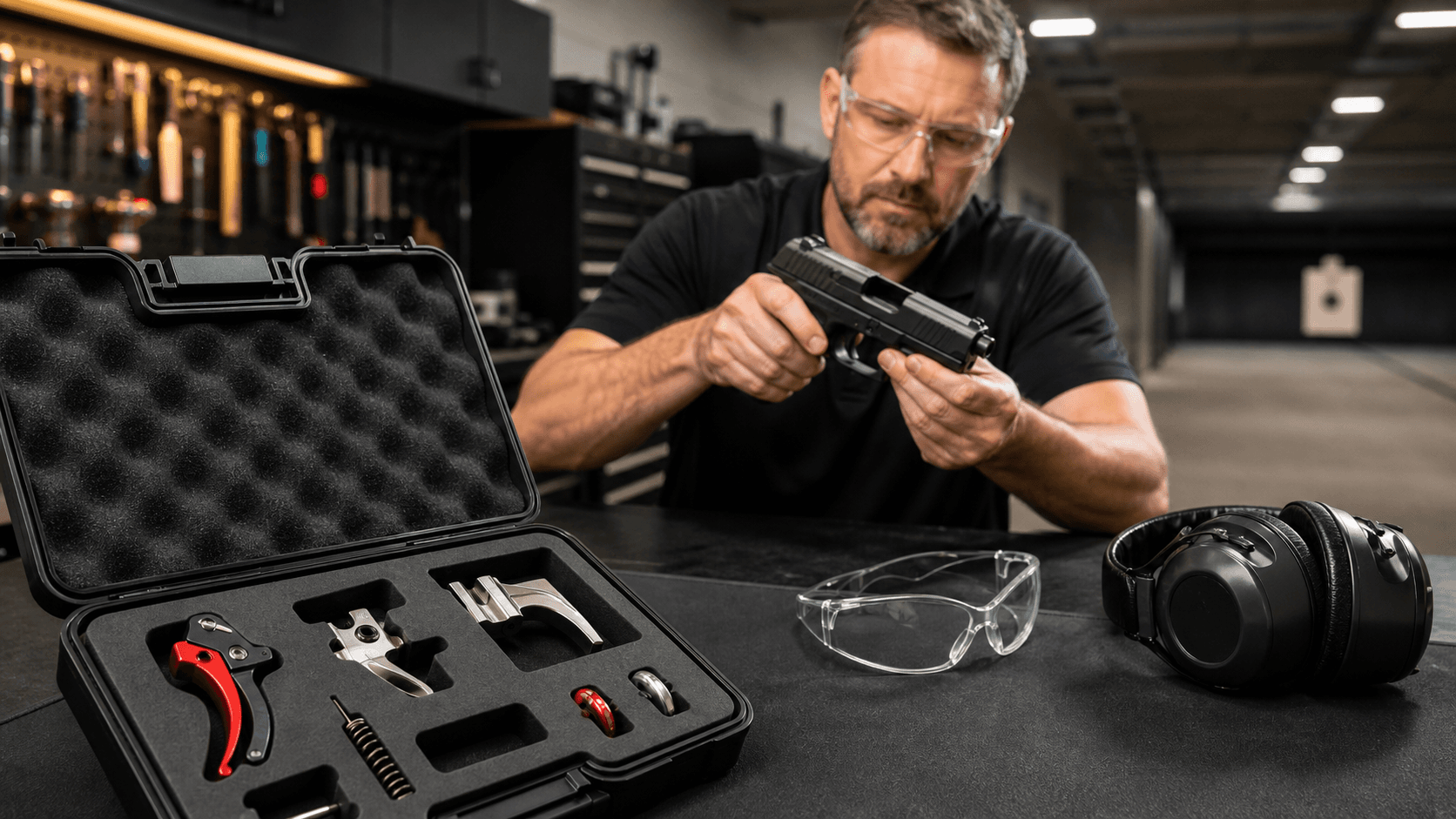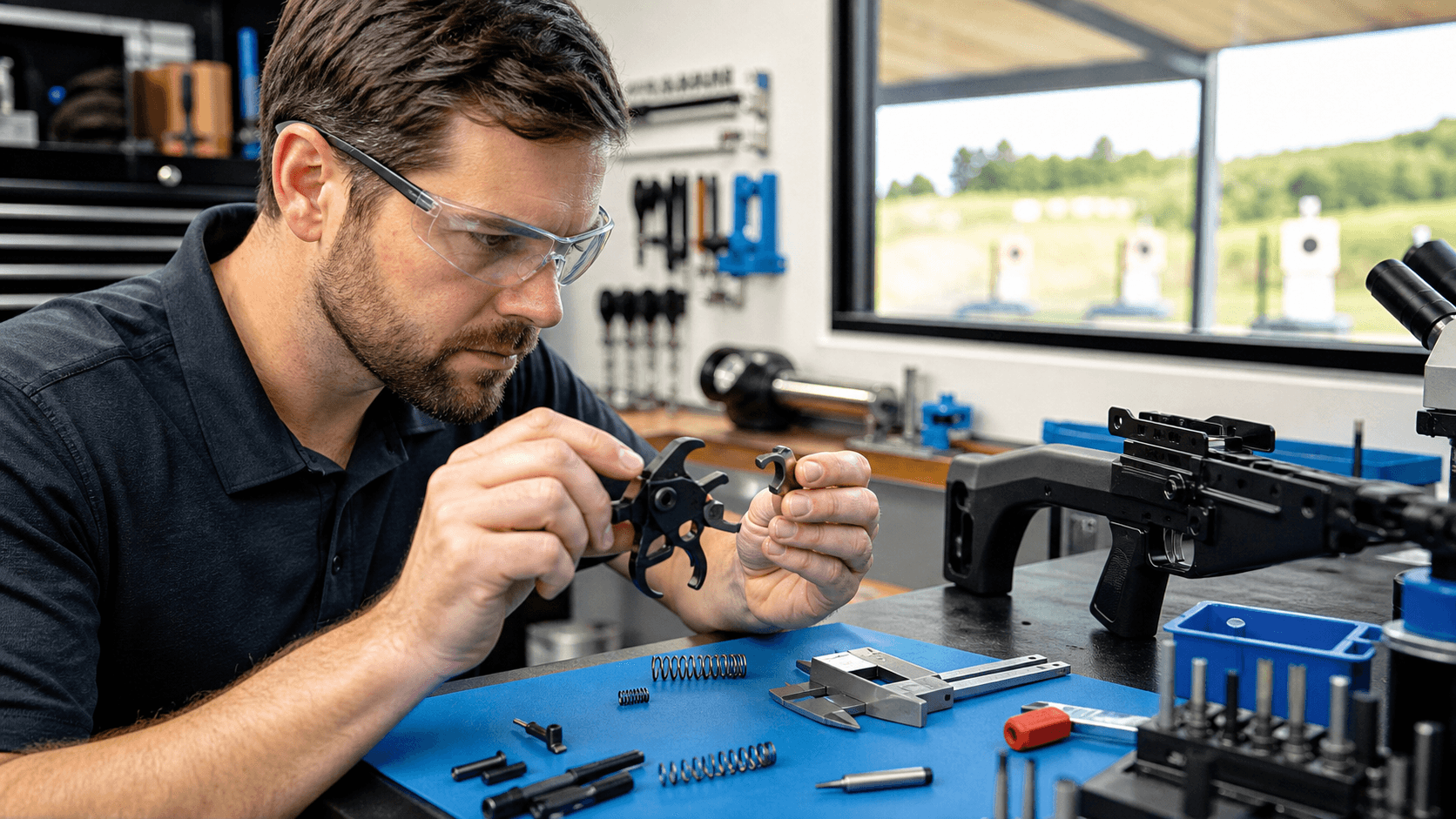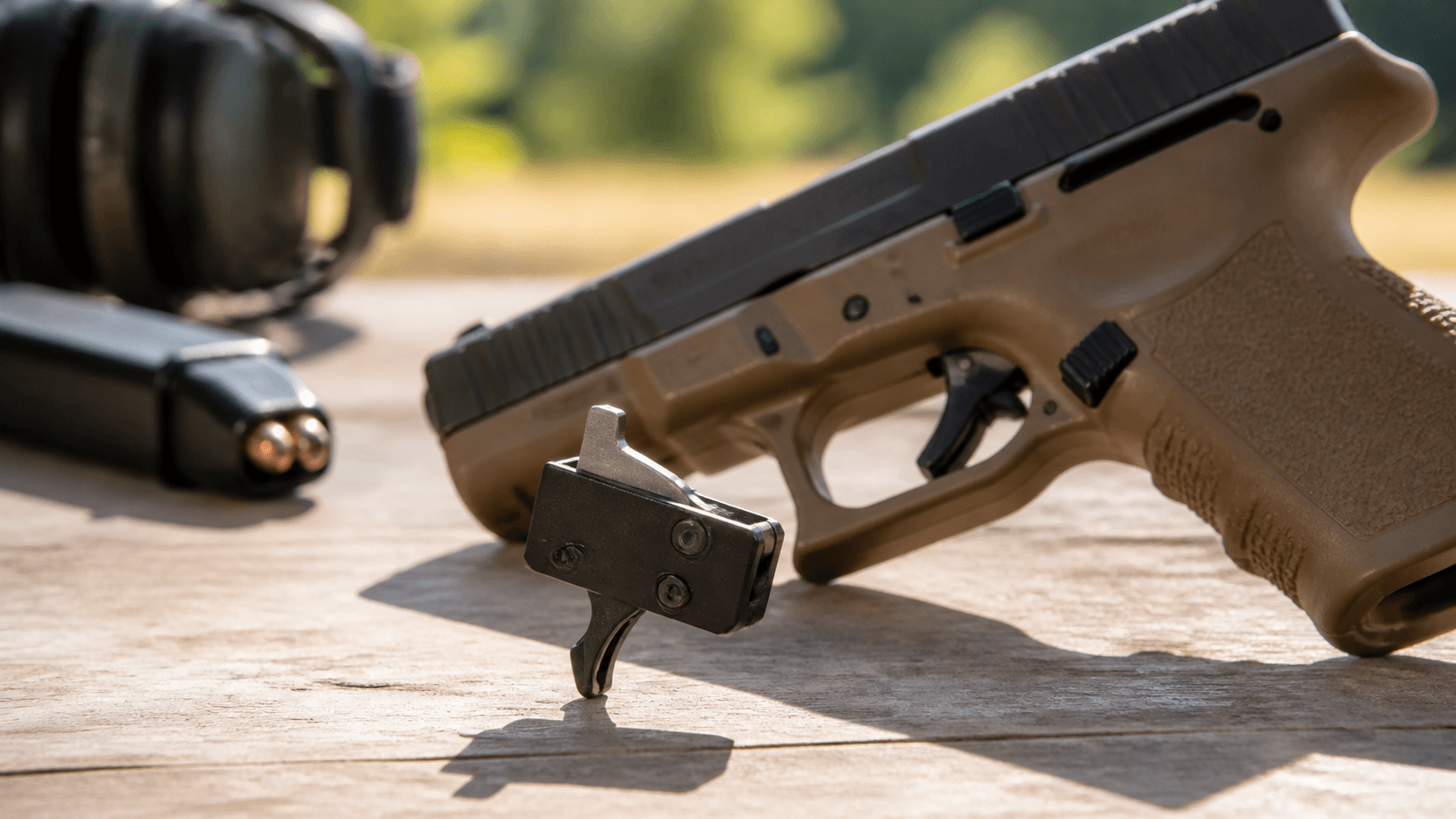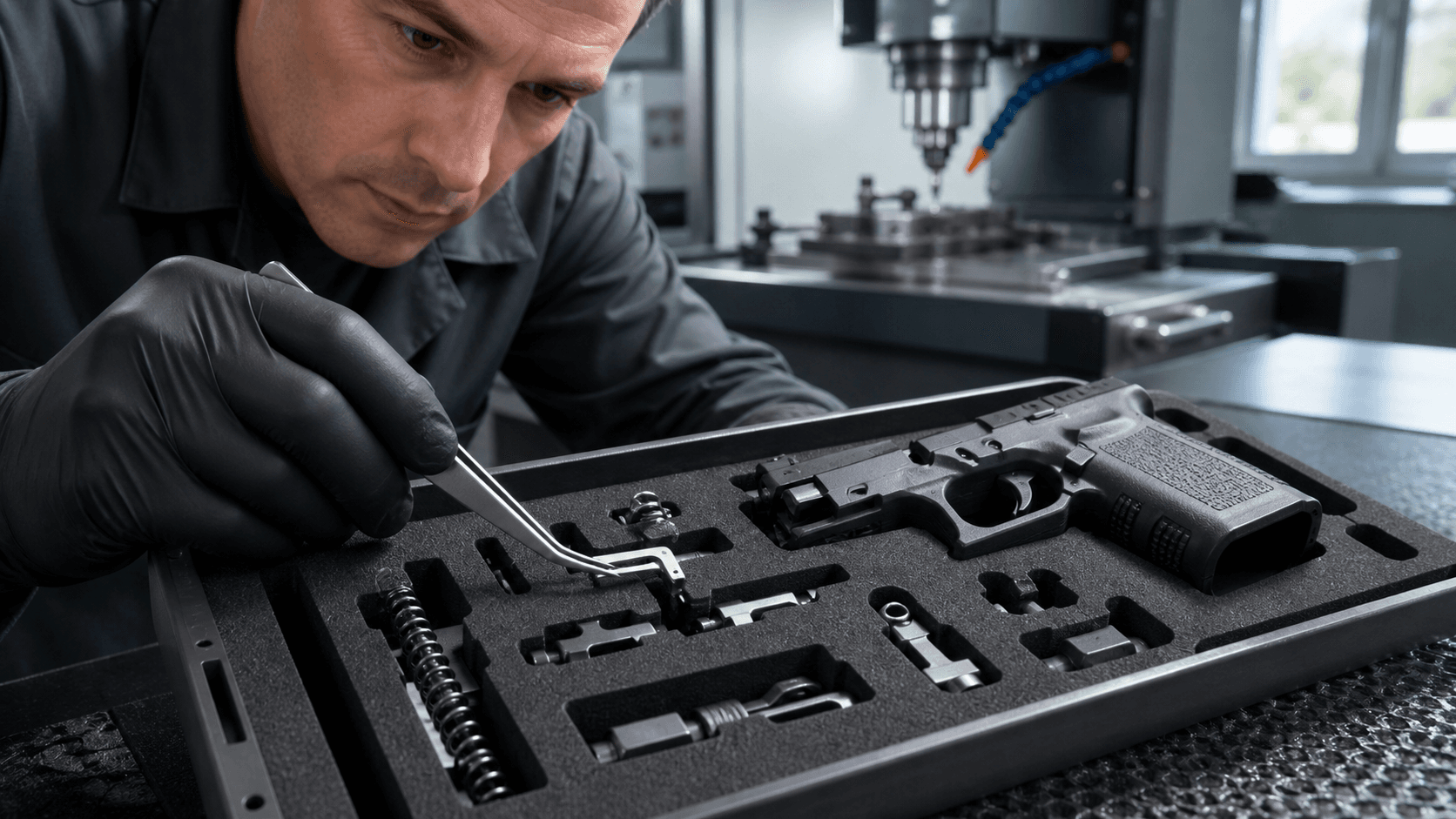
Glock shooters care a lot about trigger reset feel for a good reason. A clear, positive reset helps you stay on your sights, stack fast follow-up shots, and keep control when your heart rate is up, like during fall training classes or local matches. When the reset is vague or mushy, it is harder to stay consistent.
Here, we are talking about the normal Glock-style trigger system, tuned the right way. We are not talking about Glock forced reset trigger designs that have drawn attention from the ATF and raised legal questions. Our focus is on how the connector, trigger bar, and springs work together to shape reset feel, and how careful part design can give you a cleaner reset while staying reliable, safe, and semi-auto.
Unlocking a Cleaner Glock Trigger Reset
Most Glock owners who chase a crisper reset want three things: control, speed, and confidence. When you can clearly feel and hear the reset click, your finger knows exactly when the gun is ready for the next shot.
A better reset can give you:
- Tighter shot-to-shot groups
- Faster split times without slapping the trigger
- More control during recoil and stress
The three big mechanical levers are:
- Connector geometry and finish
- Trigger bar shape and engagement
- Spring rates and how they work as a system
When those parts are designed and machined with tight control over angles and surfaces, the trigger can reset the same way every time. That is where precision CNC work and matched spring rates matter, because very small changes in geometry and tension can shift how the reset feels without stepping outside normal Glock-style operation.
What Really Happens During a Glock Trigger Reset
To understand reset feel, it helps to walk through what your Glock is doing under your finger.
Here is the basic cycle:
- You press through take-up until you hit the wall.
- The trigger bar cams the striker to the rear, then drops off, releasing it to fire.
- The slide moves back, cocks the striker, and pushes the trigger bar down off the connector.
- As the slide closes, the trigger moves forward, the bar rides back up the connector, and clicks back into the ready position.
That moment when the trigger bar pops back into engagement is the reset you feel and hear. The sharpness of that click comes from tiny surfaces and angles, plus how much spring force is pushing things together.
Pre-travel and overtravel matter too. Where the wall sits, how much you move past the break, and when the reset occurs along that path all change how clear the reset feels. Even small shifts in those distances can move the reset point enough that your finger either loves it or hates it.
Through all this, Glock's striker system relies on multiple engagement surfaces and spring tension to stay safe. Any changes to parts that hold or release the striker need to stay within proven safe geometry, especially for carry or duty pistols that see real-world use, heat, sweat, and dirt.
How the Connector Shapes Reset Length and Snap
The connector is a simple-looking part with a big job. Its angle and finish control how the trigger bar rides up and down, which sets reset length, smoothness, and the snap of that click.
A few key points:
- The main angle of the connector decides how soon the bar pops back into place on reset.
- Smoother, cleaner contact surfaces reduce grit but can also change how bold the click feels.
- The way the connector flexes in the frame adds or subtracts from total trigger weight.
Standard-style connectors tend to give you a predictable, slightly longer reset with a clear click. Performance-style or "dot" style connectors aim to lower pull weight and sharpen the break while keeping the system fully semi-auto, not a Glock forced reset trigger. Some very light connectors can shorten or soften the reset feel, which might be fine for competition but less ideal for duty carry.
CNC machining lets a maker hold tight control over those angles and surfaces. When you repeat the same geometry over and over, shooters get a reset that feels the same from gun to gun and round to round, even when the weather swings from hot range days to cold early morning matches.
Trigger Bar Geometry and Its Influence on Feel
If the connector is the ramp, the trigger bar is the part doing the climbing. The cruciform section, engagement height, and where it contacts the firing parts all set when the striker releases and when the reset click happens.
Small changes in trigger bar geometry can:
- Move the break earlier or later in the stroke
- Change how hard the bar snaps back into engagement
- Add or remove grit where parts slide against each other
The reset click you feel comes from the trigger bar riding up and over the connector edge and snapping back into the ready notch. When those contact points are shaped and aligned with care, the reset can feel more positive without raising total pull weight.
Many shooters are tempted to hand polish everything until it is shiny. That can help a little if done with care, but over-polishing or rounding off engagement edges can reduce safe contact and cause problems in high-round-count training or during a long fall hunting day. Purpose-built aftermarket bars that are designed with correct engagement built in are usually a safer path than guessing with a polishing wheel.
Spring Rates, Return Speed, and Seasonal Reliability
Springs are the quiet workers behind every Glock reset. Each one moves or resists movement in a different way.
You are mainly dealing with:
- Trigger return spring, which pulls the trigger forward
- Striker spring, which controls ignition energy and part of the pull weight
- Safety plunger spring, which affects how the safety clears during the press
A stronger trigger spring can speed up reset and make the forward movement feel more assertive, but if you pair it with a very light connector, you might get odd stacking or feel. Lighter striker springs are common in competition setups where shooters want a lower pull weight, but that can cut into reliable ignition with hard primers, especially in cold weather.
Season changes matter. In hot, dusty range sessions, springs heat up and parts get dry. In cold mornings or late fall evenings, thicker clothing and stiffer lube can slow things down. Quality springs with tested rates, matched to the connector and bar, are more likely to keep the reset feel steady across those conditions.
Upgrading Reset Feel Without Forced Reset Systems
There is a big difference between tuning a normal Glock trigger reset and installing any type of Glock forced reset trigger. Forced reset systems are under changing rules and legal opinions, and many shooters decide they are not worth the risk or complexity for daily carry or regular training.
A smart path to a better reset looks like this:
- Start with a quality connector that matches your use, like duty, carry, or competition.
- Add a trigger bar and spring kit that are engineered to work together, not random parts from different sources.
- Test each change on the range before stacking more parts on top.
On the range, simple drills help you really feel what changed. Slow press and hold, then ease forward just until you feel the reset. Run reset-to-click drills during dry-fire. Add timed strings like Bill drills to see if your control at speed actually improved.
Systems like Recoil Assisted Triggers (RAT) from G-Force CNC Solutions are designed to increase how clearly you feel what the gun is doing while still operating as standard semi-auto triggers when set up correctly. The goal is not to force the reset, but to make it easy for your finger to track it.
Dialing in Your Glock Trigger Reset with Confidence
Connector angle, trigger bar geometry, and spring rates all blend together to create your reset feel. When they are tuned as a system, you can get a crisp, reliable reset that helps you shoot better without wandering into forced reset territory or giving up reliability.
The best starting point is to define how the pistol will be used, like concealed carry, patrol, range work, or competition, then choose quality American-made components that are designed to work as a matched group. With careful installation and real-world testing in the conditions you actually shoot in, you can build a Glock trigger that talks clearly to your finger on every reset. At G-Force CNC Solutions, we focus on that kind of predictable, performance-driven behavior so shooters can build confidence in every press and every reset.
Upgrade Your Glock Performance With Precision-Engineered Components
If you are looking to enhance control, speed, and consistency, explore our Glock forced reset trigger solutions crafted to tight CNC tolerances. At G-Force CNC Solutions, we focus on reliable performance so you can spend more time on the range and less time troubleshooting parts. Browse our options to find the configuration that fits your setup, and if you have questions about compatibility or installation, contact us for personalized support.