Late summer on a Louisiana range will test both you and your gear. Heat, humidity, dust, and sweat all work against a clean, crisp trigger. If you run a forced reset trigger or any precision system, that mix can change how it feels, how it resets, and how often you need to clean it.
We design and machine triggers in this same climate, so we see what the weather does to parts up close. Here, we will talk through how heat, moisture, and fouling affect trigger feel and reset, why precision machining in Louisiana matters, and some smart habits that help keep your trigger safe and consistent when the air feels like soup.
Beat Louisiana Heat and Keep Your Trigger Running Clean
Late summer at the range usually means a triple-digit heat index, thick air, and dusty berms. You stand on hot concrete or sand, sweat rolling, sun bouncing off steel, and your pistol bakes right along with you.
Trigger systems take a special beating in this mix because they rely on:
- Tight engagement between small surfaces
- Light, fast-moving parts that must slide, pivot, and reset cleanly
- Clear, consistent clearance around pins, springs, and housings
High heat makes metal expand. Humidity sneaks into every gap. Dust and unburnt powder stick to oil and turn into sludge. All of that shows up first in your trigger feel.
Our goal with this kind of environment is simple: design and machine forced reset triggers that stay crisp and reliable even when the air feels like a wet blanket. Good design and smart maintenance work together so you can train hard without worrying about what is happening inside the trigger group.
How Louisiana Climate Changes Trigger Feel and Reset
Heat does not just make you tired. It changes how metal parts behave inside the gun. Over a long range session, parts soak up heat from:
- Repeated firing
- Direct sunlight on the gun
- Hot air and ground temps
As parts warm, they expand. Pins, sear faces, and trigger bars can grow just enough to tighten clearances. That can mean:
- Slightly heavier or "mushier" pull
- A less sharp wall before the break
- A reset that feels softer or a hair slower
Humidity brings its own problems. Wet air plus sweat, sunscreen, and skin oils give you:
- More drag between sliding parts when moisture mixes with lube
- Higher risk of corrosion on contact surfaces over time
- Condensation or sweat sneaking into the trigger group during long outdoor days
On forced reset triggers, those small changes add up. If the system was not designed with room for thermal growth and light fouling, you may feel:
- Sluggish or incomplete resets
- Tactile feedback that feels dull or inconsistent
- A trigger that does not feel the same from the first magazine to the last
Good forced reset design expects heat and moisture and holds engagement surfaces tight enough for precision but open enough to keep things moving when the weather gets brutal.
Fouling, Carbon, and Range Dust: the Hidden Trigger Killers
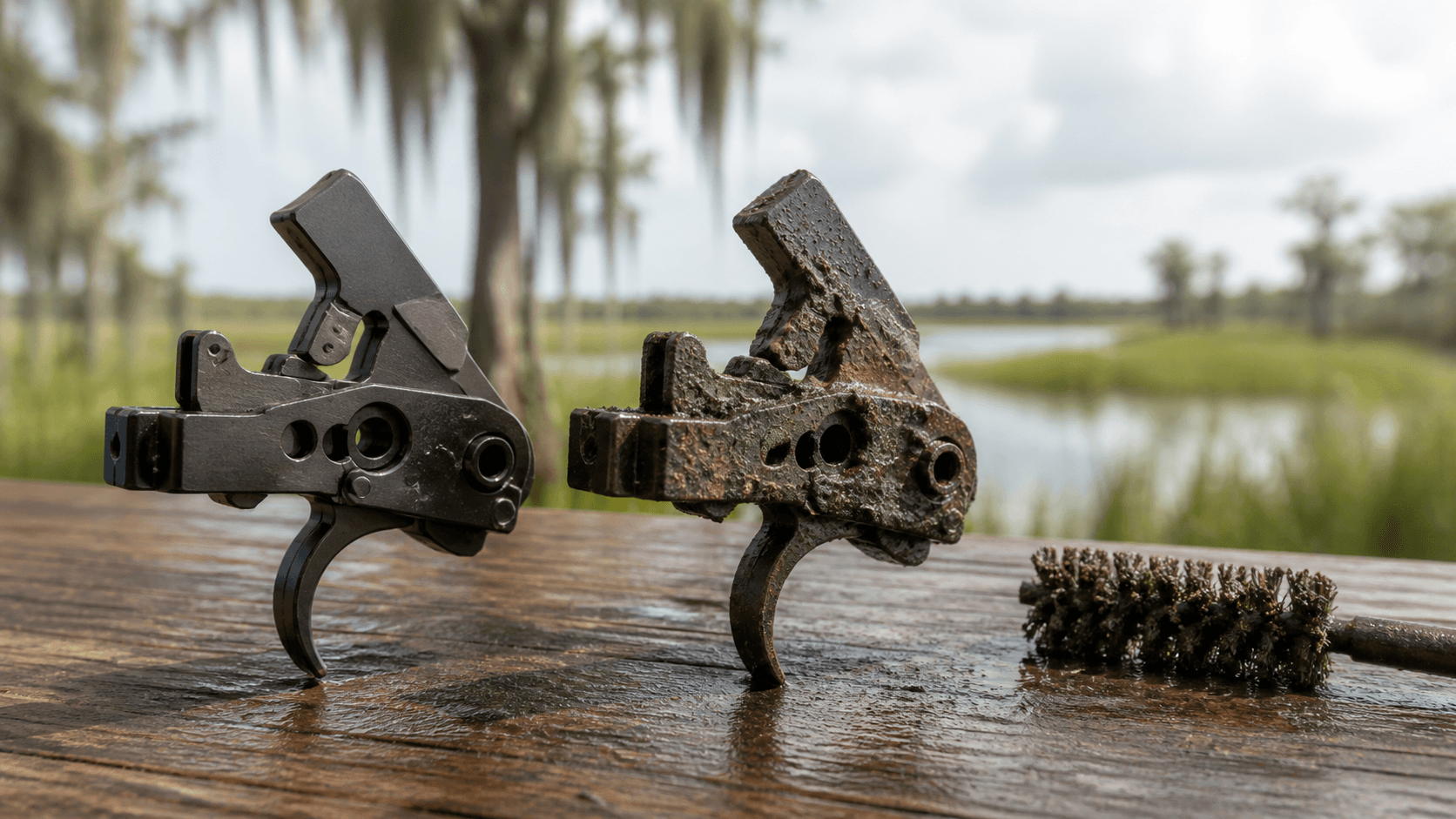
Outdoor ranges around Louisiana often mean sandy berms, grass, and unpaved parking areas. Every shot throws a bit of carbon and unburnt powder into the air. Add a light breeze and that stuff mixes with dust, dirt, and your gun oil.
Inside the trigger housing, that can turn into an abrasive paste that likes to hide in all the wrong spots:
- On sear faces and hooks
- Around reset levers and cams
- Inside spring coils
- Around pins, holes, and sliding bars
As this mix builds up, you may notice:
- Slower reset speed or a trigger that occasionally fails to reset fully
- Gritty or crunchy feel during the pull or reset
- Reduced safety margin if debris interferes with proper engagement
Design choices help fight those problems. We focus on:
- Geometry that lets debris fall or get pushed out instead of trapped
- Surface finishes that are smoother and less likely to grab fouling
- Clearances that are tight enough for precision but not so tight that a bit of dust brings everything to a stop
When the housing sheds fouling instead of storing it, you can run longer between deep cleans while keeping reset behavior more consistent.
Why Precision Machining in Louisiana Matters for Reliability
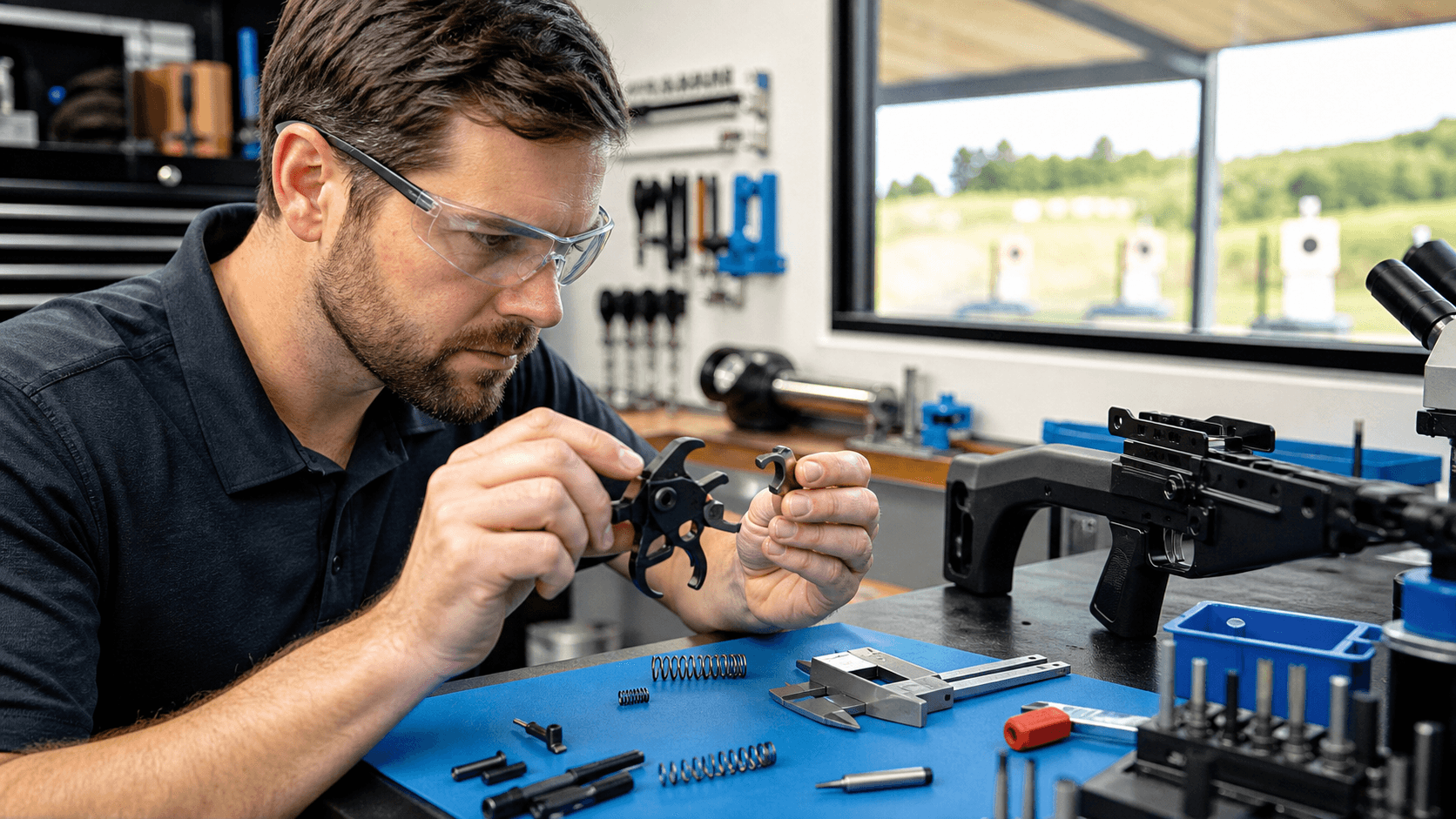
Design is one side of the coin. Precision machining is the other. Holding consistent tolerances on every sear surface, pin, and bore is what keeps the trigger feel repeatable when the gun heats up or gets a little dirty.
Building and testing parts in this climate shapes our decisions. We know guns will sit in hot cars, ride in range bags on muggy days, and run hard during long matches. So we focus on:
- Tight, repeatable tolerances on engagement points
- Straight, round pin bores that keep parts aligned even with heat and fouling
- Smooth surfaces that slide instead of scrape when conditions get rough
Material and finish choices also matter in our weather. Corrosion-resistant alloys and protective coatings help fight:
- Sweat working its way into the frame
- Quick temperature swings between air conditioning and outdoor heat
- Afternoon showers that surprise you between stages
That local experience feeds straight into the design table so triggers built here have a good chance of running clean in much milder climates too.
Seasonal Stress Test: Late Summer Range Sessions
Late summer is when everything gets pushed the hardest. The sun is high, the ground is hot, and match days or long practice blocks often mean lots of rounds in a short time.
Extended strings of fire bring:
- Heat soak in the slide, barrel, and frame
- Faster breakdown or thinning of light oils
- More sweat on your hands and frame, and more sunscreen and dust stuck to both
All of that wants to work its way into your trigger pocket. To help your precision trigger keep up, it helps to build a few habits:
- Take short cooldown breaks between big drills so parts can breathe
- Wipe down the frame and trigger guard with a clean cloth at midday
- Pay attention to changes in feel, like a reset that starts to dull or a pull that gets sticky
Those small checks can give you early warning that fouling or lube failure is creeping in and it might be time for a quick clean before the next big session.
Smart Maintenance to Protect Your Trigger Investment
A good trigger deserves a simple but steady care plan, especially for shooters who run high round counts in Louisiana weather.
A practical cadence looks like this:
- After each range trip, a quick field strip and visual check of the trigger area
- During heavy training seasons, a weekly deeper clean with focus on sear faces, pins, and reset parts
- Before any match, a function check that pays close attention to reset feel and overtravel
Lube choice matters in humid, dusty air. In general, you want:
- A quality oil or light grease that stays put in the heat
- Thin, sparing application on contact points so you do not build a sludge magnet
- Dry or low-residue products in areas most exposed to dust
Storage is its own challenge in the Gulf South. Guns often live in vehicle safes, closets, or non-climate-controlled spaces. To protect the trigger group long term, think about:
- Desiccant packs where you store guns
- Wipe-on rust protectants on exposed metal
- Periodic checks of trigger components for early signs of corrosion or thick fouling
Upgrade Your Trigger, Elevate Your Louisiana Range Days
If you train hard through Louisiana summers, your trigger will tell you how it is doing. Watch for grit in the pull, drag on the reset, or any signs of rust or sticky fouling after hot range trips. Those are clues that your current setup may not be happy in our climate.
Precision CNC forced reset triggers tuned for this environment can bring sharper feel, faster and more reliable resets, and better long-term durability when the heat and humidity peak. At G-Force CNC Solutions, we design and build our trigger systems in Louisiana with this weather in mind, so serious shooters and enthusiasts have gear that keeps up when conditions get rough.
Get Started With Your Project Today
If you are ready to bring tighter tolerances and higher reliability to your components, G-Force CNC Solutions is here to help. Our team specializes in precision machining in Louisiana, delivering consistent quality for industries that cannot afford guesswork. Share your drawings, requirements, and timelines so we can recommend the best approach and provide a clear quote. Have questions or a complex project to discuss right away, just contact us and we will respond promptly.