Separate Range Talk From Real Trigger Science
Forced reset triggers get people talking fast. Long summer range days, hot barrels, and fast splits bring out all kinds of opinions. Some of that talk is helpful. A lot of it is not.
We hear the same myths again and again, especially from quick social media clips and "range lore" passed down on the firing line. That mix of noise can lead to bad advice, confusion about safety, and even wrong ideas about the law. When you start pushing speed and accuracy, especially as a performance shooter or Canik owner, you need facts, not rumors.
In this post, we will walk through how forced reset triggers really work, why they are different from standard triggers, and what they are actually built to do. We will break down the biggest myths you hear at the range and explain why good design focuses on control, reliability, and safety every single press.
What Forced Reset Triggers Really Do
First, we should clear up what "forced reset" really means in simple terms. In a normal semi-automatic trigger, the gun fires, the slide cycles, and the trigger moves forward to a reset point as the parts reengage. Your finger rides that motion, then you press again for the next shot.
In a forced-reset system, the trigger design helps push the trigger back toward that reset point more positively. It is still a semi-automatic trigger. It still needs:
- A press from the shooter to fire
- A release from the shooter to reset
- A new, separate press for every round
The "forced" part is about how the trigger and internals interact as the gun cycles. The design can:
- Shorten the distance to reset
- Make the reset feel sharper and more positive
- Give your finger a clear, repeatable cue
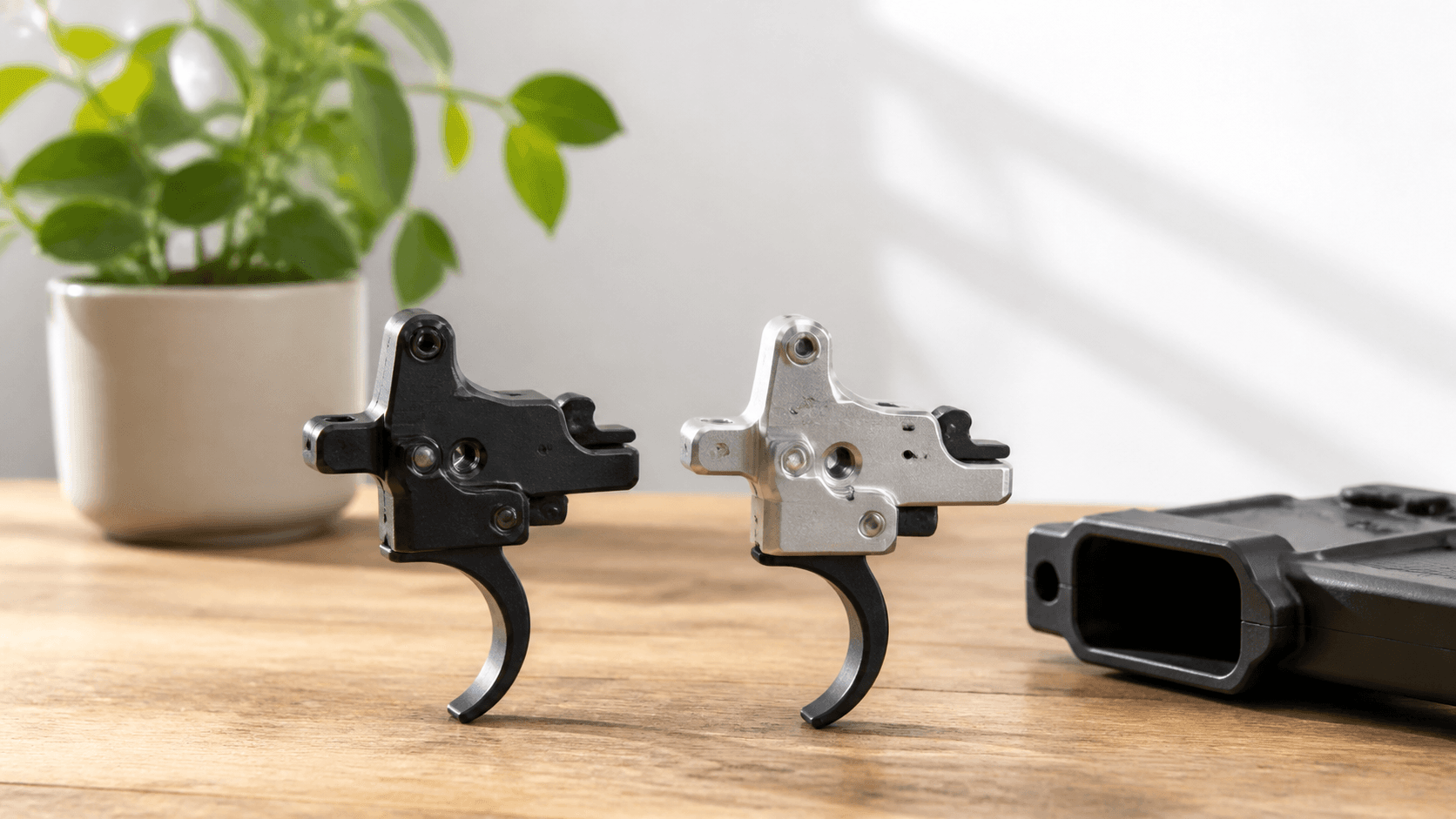
That stronger reset feel does not make the gun shoot on its own. It just means the trigger comes back to ready faster and more consistently so you can run it with more control. When a trigger is machined with tight, repeatable geometry and smooth contact surfaces, that reset can feel very predictable. That matters when you are running long summer practice blocks, putting a lot of heat and fouling through the gun, and still asking it to behave the same way every press.
Myth One: Forced Reset Triggers Are Full Auto
One of the loudest myths is that a forced reset trigger "turns your gun into full auto." This is wrong, both mechanically and in how the trigger actually feels under your finger.
On a semi-automatic trigger, including a forced-reset style, the gun fires one round for each full function of the trigger. That means:
- You press the trigger
- The gun fires
- The action cycles and resets the trigger
- You release and press again for the next shot
With a true full-auto or machine gun action, one continuous trigger function lets the gun keep firing until you release the trigger or run out of ammo. That is not what a forced reset trigger does. Your finger still has to do real work on each shot. The system just brings the trigger back to the reset point more positively so you can run a faster, cleaner rhythm.
So why does this myth keep going? A few reasons:
- Fast shooters with good recoil control can make semi-autos sound very quick on video
- Camera angles often hide finger movement
- Many people do not understand how much skill goes into running a fast split time
A responsible forced-reset setup still follows all local and federal laws. It still needs correct installation and proper ammo. The goal is to build a trigger that behaves the same way every time, so trained shooters can run it with confidence and control, not to blur the line into automatic fire.
Myth Two: Forced Reset Triggers Kill Accuracy
Another common line we hear on the range is, "Those fast triggers wreck your groups." The truth is simpler. A badly run trigger hurts accuracy. A crisp, repeatable trigger, even a fast one, can help it.
A positive reset can actually support precision by giving your finger a clean, sharp signal. Instead of "searching" for reset in the middle of a fast string, your finger feels it snap into place. That makes it easier to:
- Time your next press with your sight picture
- Avoid slapping or yanking the trigger
- Keep a steady rhythm as the gun tracks in recoil
When groups open up, the trigger is often blamed first, but the real issues are usually:
- Weak grip or poor wrist tension
- Inconsistent finger placement from shot to shot
- Rushing the press as fatigue sets in during hot-weather drills
When you understand how forced reset triggers work, you can pair the reset timing with what you see in your sights. The gun recoils, you see the sights start to settle, you feel the reset, then you add pressure straight to the rear. With precision-machined surfaces and consistent break weight, the point of aim and point of impact can stay together even during fast strings, as long as your fundamentals stay honest.
Myth Three: Any Fast Trigger Is "Good Enough"
There is a tempting idea out there that if a trigger "feels faster," it is automatically good. That kind of thinking can create problems on the line.
Not all fast-feeling triggers are the same. Some home-grown mods try to shorten travel or lighten springs without thinking through the full system. That can bring risks like:
- Unintended doubles when the gun recoils
- Inconsistent break and reset from shot to shot
- Increased malfunctions under heat and fouling
Speed without control is not real performance. A serious forced-reset system needs thoughtful design, repeatable machining, and real testing under real use. Parts have to keep their shape, keep their surfaces, and keep their timing under long strings when the gun is hot and dirty.
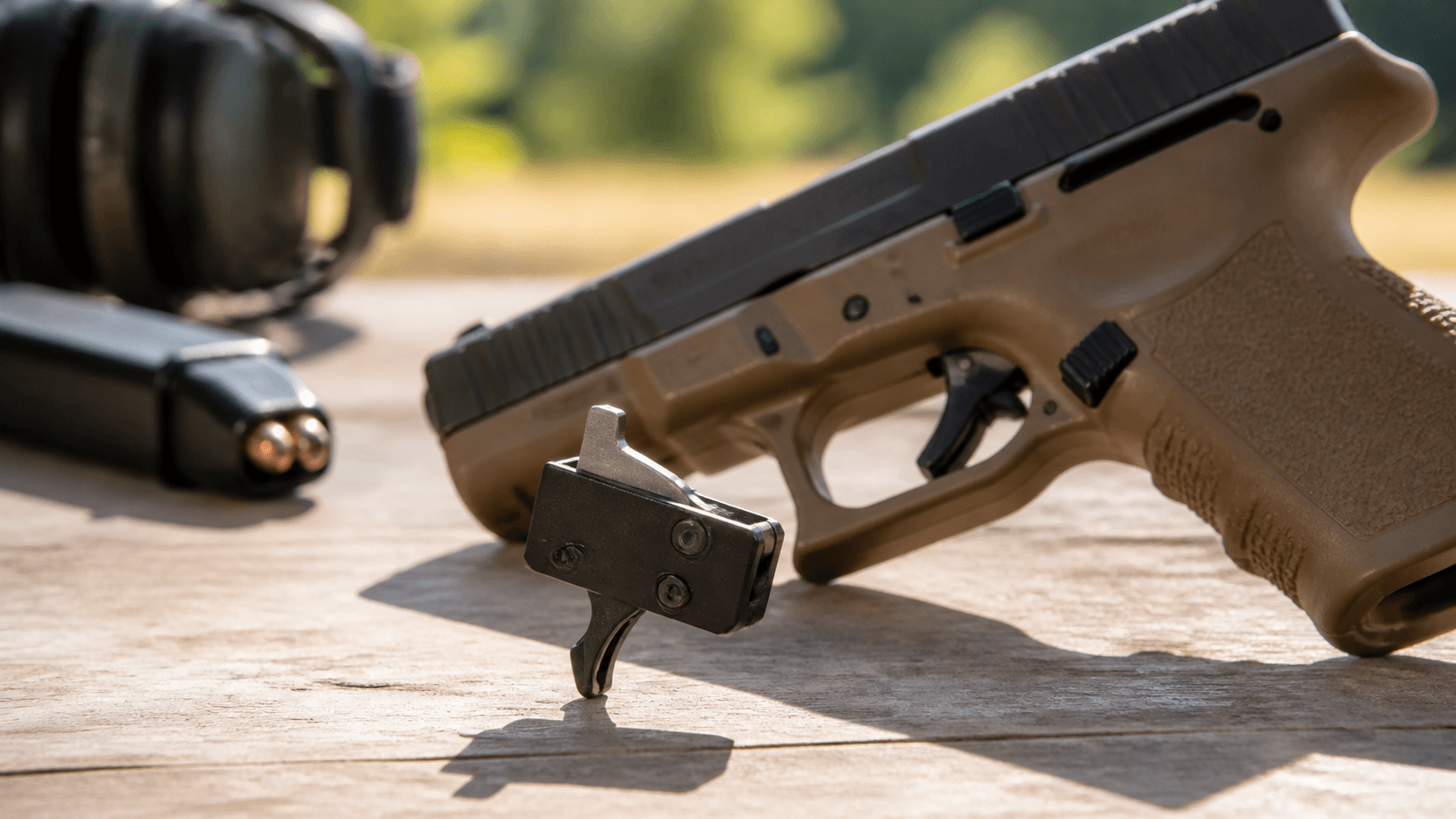
That is the idea behind designs like a recoil-assisted trigger system for Canik pistols. Instead of fighting recoil, the design works with that rearward movement to help return the trigger to reset in a predictable way. The goal is simple: help the shooter run faster follow-up shots while still feeling in charge of every press.
Make Every Summer Range Trip Count
If you are going to spend your warm weekends on the range, you might as well learn something from every magazine you shoot. A good way to cut through myths about how forced reset triggers work is to test things for yourself in a simple, structured way.
Try setting up a small plan for a range day:
- Warm up with slow, single shots to feel your normal trigger
- Run short controlled pairs and track your split times
- Switch to a forced-reset system and repeat the same drills
- Watch your sights, feel the reset, and compare your groups
Keep notes on what you feel, not just what you hear online. Pay attention to when your groups start to open up. Is it really the trigger, or is it grip, stance, or fatigue from the heat?
At G-Force CNC Solutions, our focus is on triggers and components that give shooters clear feedback, consistent behavior, and confidence when they push speed. For Canik owners and performance shooters, especially during long summer match and practice seasons, understanding what is happening inside the gun on every press is one of the best ways to stay safe, stay fast, and stay accurate.
Optimize Your CNC Performance With Expert Trigger Support
If you are troubleshooting your system or planning an upgrade, our team at G-Force CNC Solutions can help you understand how forced reset triggers work in real-world applications. We will walk you through practical steps to improve reliability, reduce downtime, and keep your machines running safely. If you are ready for tailored guidance or have specific questions about your setup, contact us so we can review your situation and recommend the best path forward.