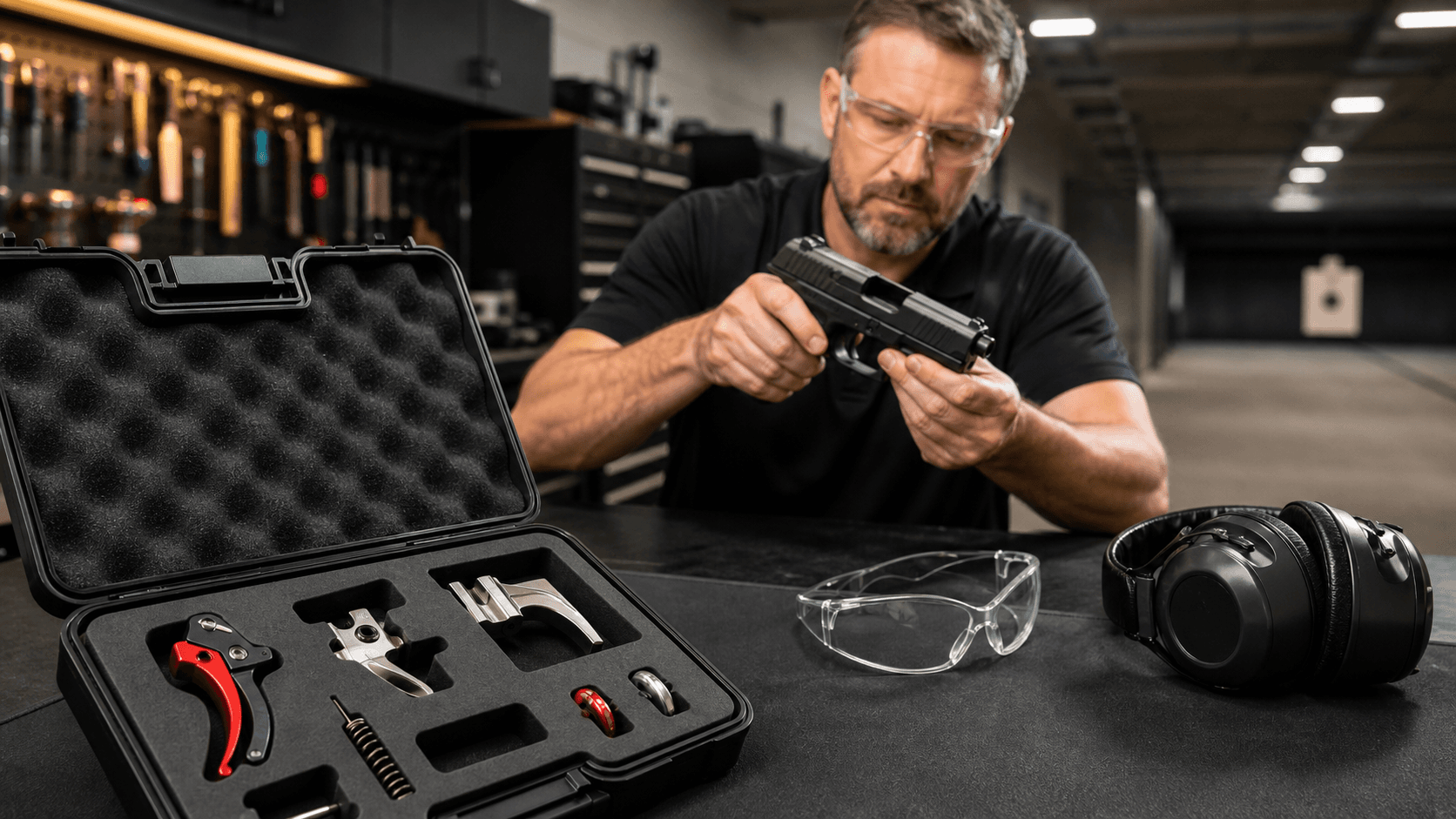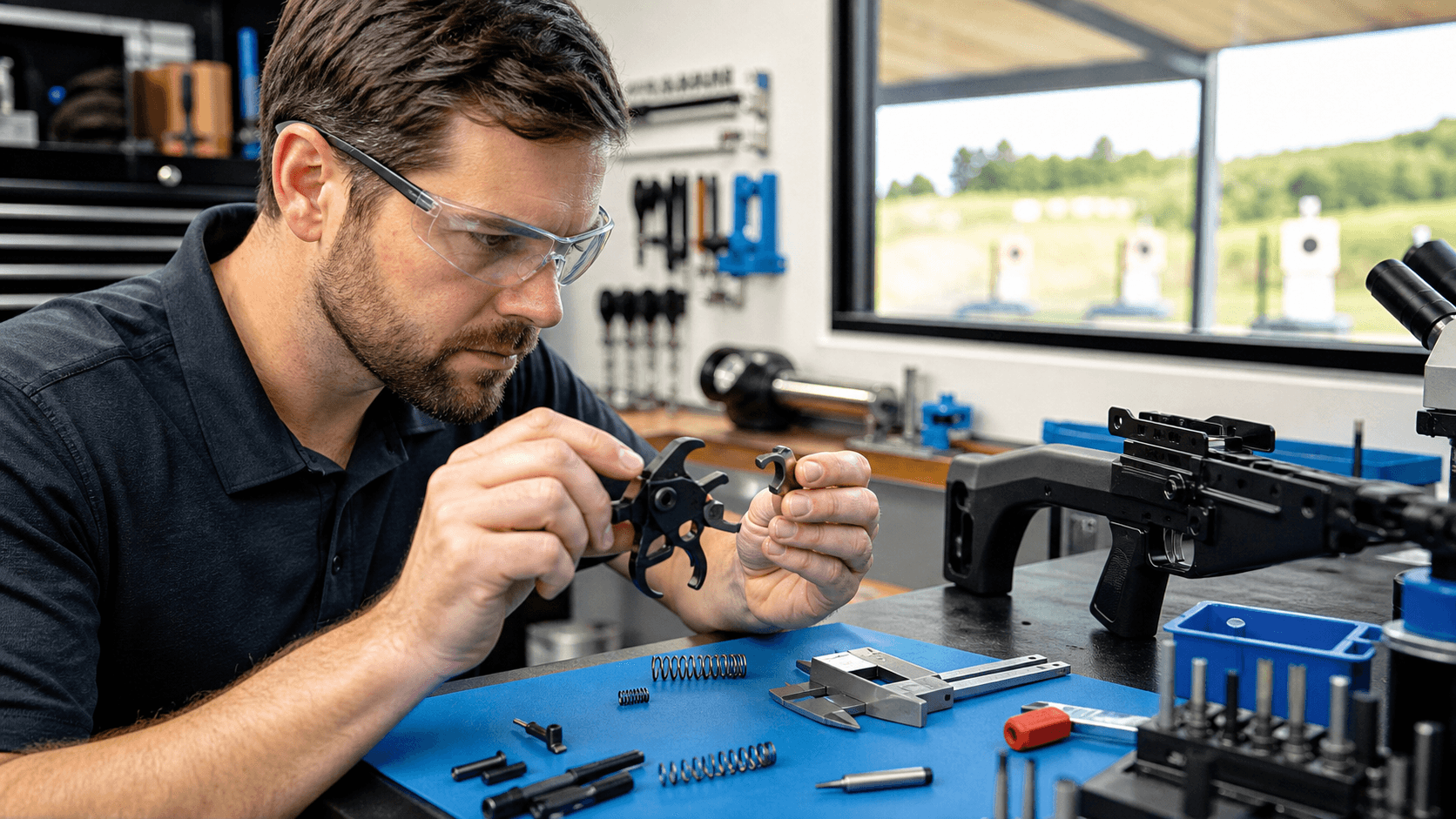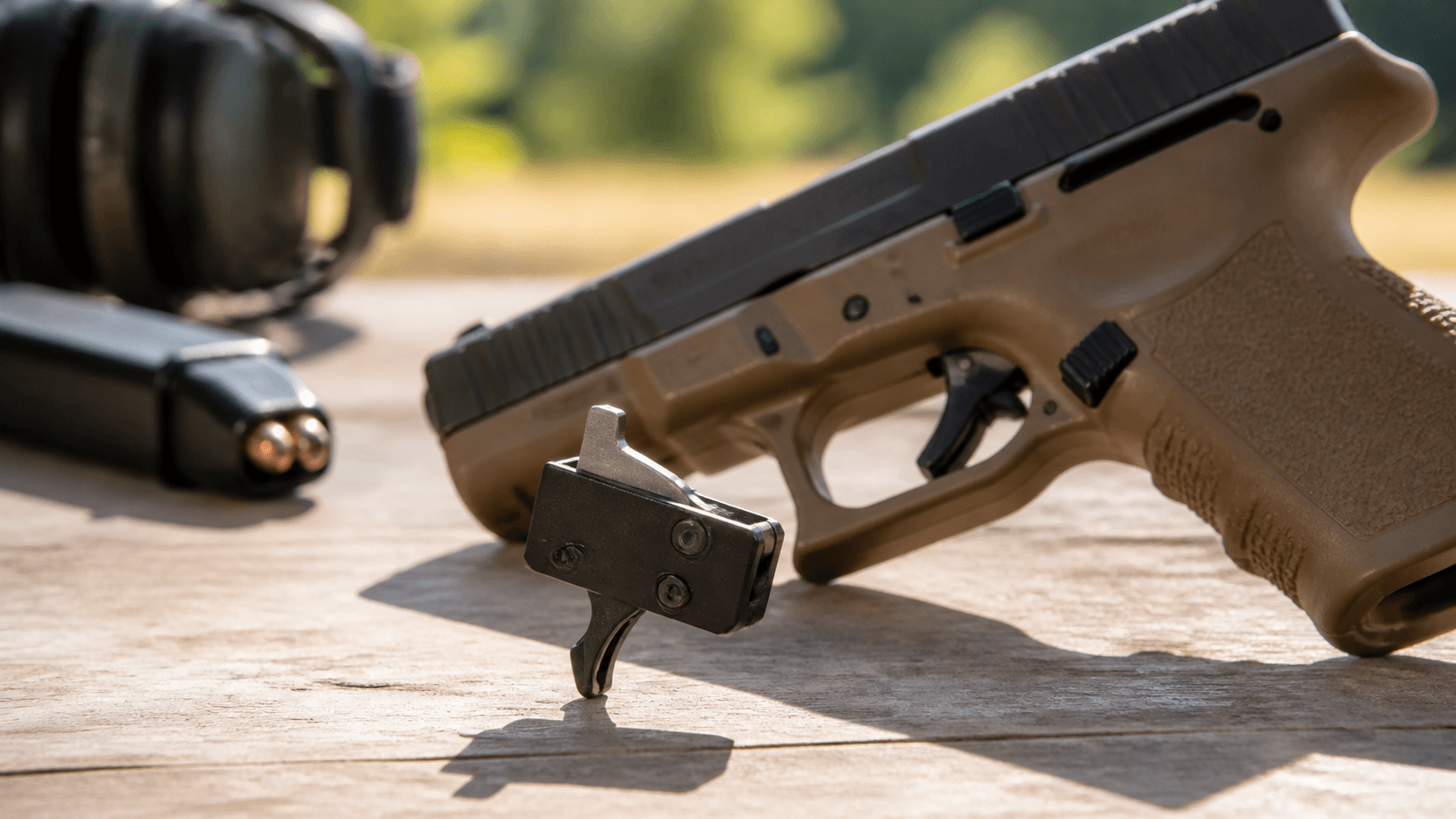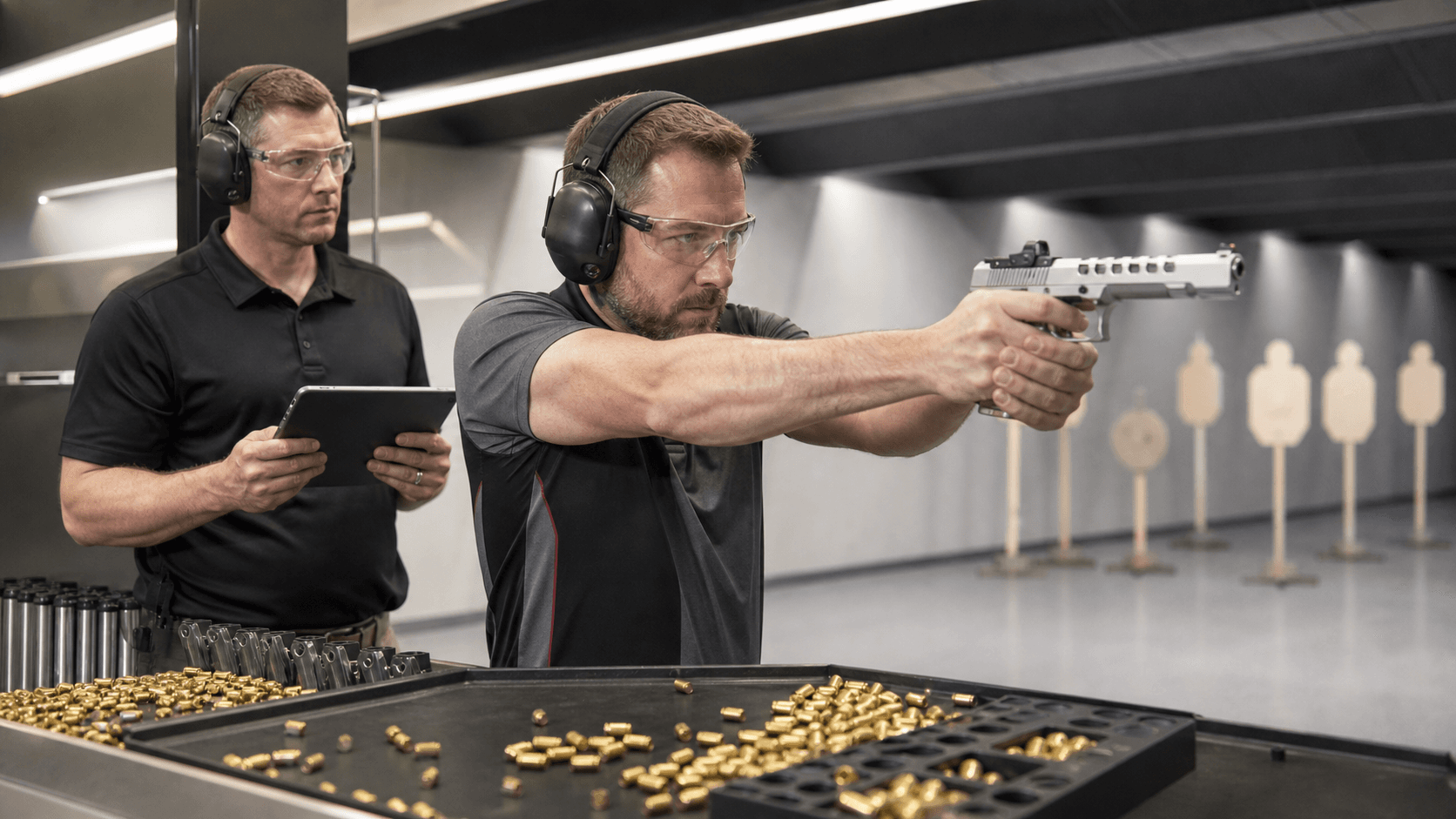
As fall matches get closer and hunting season gets closer, serious shooters start asking a simple question: Is my gear actually helping my training, or just taking up space in the bag? Trigger upgrades sit right in the middle of that question. They feel better, sure, but do they really give you a return on the time and ammo you pour into late-summer practice?
In this article, we walk through how we treated a CNC-machined trigger system like any other training tool and measured it over 1,000 rounds. We look at split times, hit rates, and fatigue, side by side with factory triggers, so you can see how small changes at the trigger turn into real gains on the timer, on the target, and in your body by the end of a long, hot day on the range.
Turning Trigger Upgrades Into Measurable Training ROI
When the weather is still hot and the range dust hangs in the air, a lot of shooters and instructors are planning their final tune-ups. Match calendars fill up, hunting trips get locked in, and range time suddenly feels short. Every drill has to count.
That is where a high-quality CNC-machined trigger system should be treated as an investment instead of a shiny extra. The question is not just "does this feel nicer?" It is:
- Can I run drills faster without losing control?
- Do my hits stay consistent as I get tired?
- Does my hand feel fresher at round 800 than it used to?
To answer that, we framed our testing like a simple ROI study. Take two near-identical handguns, run them through 1,000 rounds of structured work, track numbers for time, accuracy, and fatigue, then compare factory triggers to a CNC system built for precision and our Recoil Assisted Trigger design.
Building a Real-World 1,000-Round Test Protocol
We wanted this to feel like a real prep block, not a lab project. So we built a test that matched how many shooters in our area train when fall is coming and the air is still humid and warm.
The basics looked like this:
- Same handgun platform with one change, the trigger system
- Same lot of ammo for the whole test
- Same shooters, same range setup, same target types
Across 1,000 rounds, we rotated through drills most people already know:
- Bill-style drills for raw speed
- Transition drills on multiple IPSC- or USPSA-style targets
- Accuracy work at distance, from 7 to out past 25 yards
Every 200 rounds, we logged:
- First-shot time from ready
- Average splits and transition times
- Hit rates in different scoring zones
- A short fatigue check on trigger finger, hand, and forearm
We used shot timers, scored the targets like a basic match, and kept notes like any serious shooter would in a training journal. The idea was simple: copy a solid late-summer range day, repeat it enough to hit 1,000 rounds, and see what changes when only the trigger system is different.
Faster Splits and Cleaner Breaks with CNC Precision
The first thing we watched was the clock. With a CNC-machined trigger system and our Recoil Assisted Trigger design, the feel of the first shot and follow-up shots changed in a way you could see in the numbers, not just feel in your hands.
Key shifts we noticed included:
- First-shot times settling into a tighter, more repeatable window
- Average splits that stayed more consistent as the round count climbed
- Transitions from target to target that felt smoother, with less "snatching" at the trigger
Why does that happen? CNC precision keeps the geometry of the trigger surfaces consistent. A crisp break and reduced overtravel mean less wasted motion in each press. Over 1,000 rounds, that really adds up. While stock triggers started to feel mushy under heat and grime, the upgraded trigger kept that same clean wall and break.
On the clock, shaving a tiny bit of time off each split may not seem big in a single short drill. But across:
- A long practice session
- A full match with many stages
- Repeated defensive-style strings
those tenths turn into extra reps, cleaner stages, and better use of limited range time before fall events.
Hit Rates, Confidence, and the Cost of Misses
Speed is only half the story. We also tracked how many shots landed where they were supposed to at different distances and during movement.
With the CNC-machined trigger system, we saw:
- More consistent hits in the center zones at 7 yards under time pressure
- Tighter groups at 15 yards when pushing speed on transitions
- Less vertical stringing at 25 yards as fatigue set in
Misses are expensive in more ways than one. Every miss means:
- Extra rounds to make it up
- Longer stage times when you need a reshoot
- Wasted practice reps that do not build good habits
A predictable trigger that breaks the same way, every time, cuts down those "hidden costs." As shooters got tired, the stable trigger feel made it easier to call shots and stay honest about what they were seeing on the sights. That confidence matters late in a long match or during a tough qualification where you do not get a second chance.
Managing Shooter Fatigue Over 1,000 Rounds
Late in a long, hot range day, the trigger finger and forearm often tell the truth before the mind does. We paid close attention to how trigger weight, take-up, and break affected that.
With the upgraded trigger systems, shooters reported:
- Less strain in the trigger finger by the 600 to 1,000-round mark
- Fewer grip breaks or "milking" the grip during fast strings
- More consistent trigger presses on the last drills of the day
A trigger that has clean take-up and a defined wall lets the hand stay more relaxed. You are not fighting the gun for every shot. In warm late-summer conditions, that means you can hold your training volume without the usual crash in quality.
Less fatigue turns straight into real ROI:
- Higher quality reps per box of ammo
- Less downtime between drills
- More mental focus for refining skills instead of just gutting it out
Turning Data Into Dollars: Calculating Your Trigger ROI
So how do we turn all of this into a simple picture of return on investment for your training?
Start with your own numbers:
- Baseline your first-shot times, splits, and hit rates with your current trigger
- Log a full 500 to 1,000 round block during your next prep cycle
- Note when your groups open up and when your hands start to feel tired
Then, after moving to a CNC-machined trigger system, run the same drills. Look at:
- How many more clean reps you get before fatigue shows up
- How many fewer make-up shots you need to clean a drill
- How much tighter your split times stay as the round count climbs
When you add that up over a season, small gains in speed and accuracy can equal:
- Fewer wasted rounds
- Less range time spent fixing problems
- Higher match scores or more confident shots in the field
At G-Force CNC Solutions, we focus on high-precision CNC-machined trigger systems and Recoil Assisted Trigger designs that support those kinds of gains. When you can measure the improvement over 1,000 rounds, a trigger upgrade stops being a "nice to have" and starts becoming a clear part of your overall training plan as you roll into fall.
Get Started With Your CNC Performance Upgrade Today
Explore how a precision-built CNC-machined trigger system can improve consistency, reliability, and confidence in every shot. At G-Force CNC Solutions, we carefully engineer each component to exacting tolerances so you can trust your setup in any condition. If you have questions about compatibility or custom options, contact us and we will help you choose the right configuration for your build.