Why Trigger Feel Is More Than Just CNC Tolerances
Trigger feel is what your finger actually experiences, not what is written on a spec sheet. When shooters talk about creep, wall, break, and reset, they are really talking about control, confidence, and how fast they can make clean hits. As fall competition season ramps up and hunting trips get closer, that control matters even more in cold weather and with tired hands.
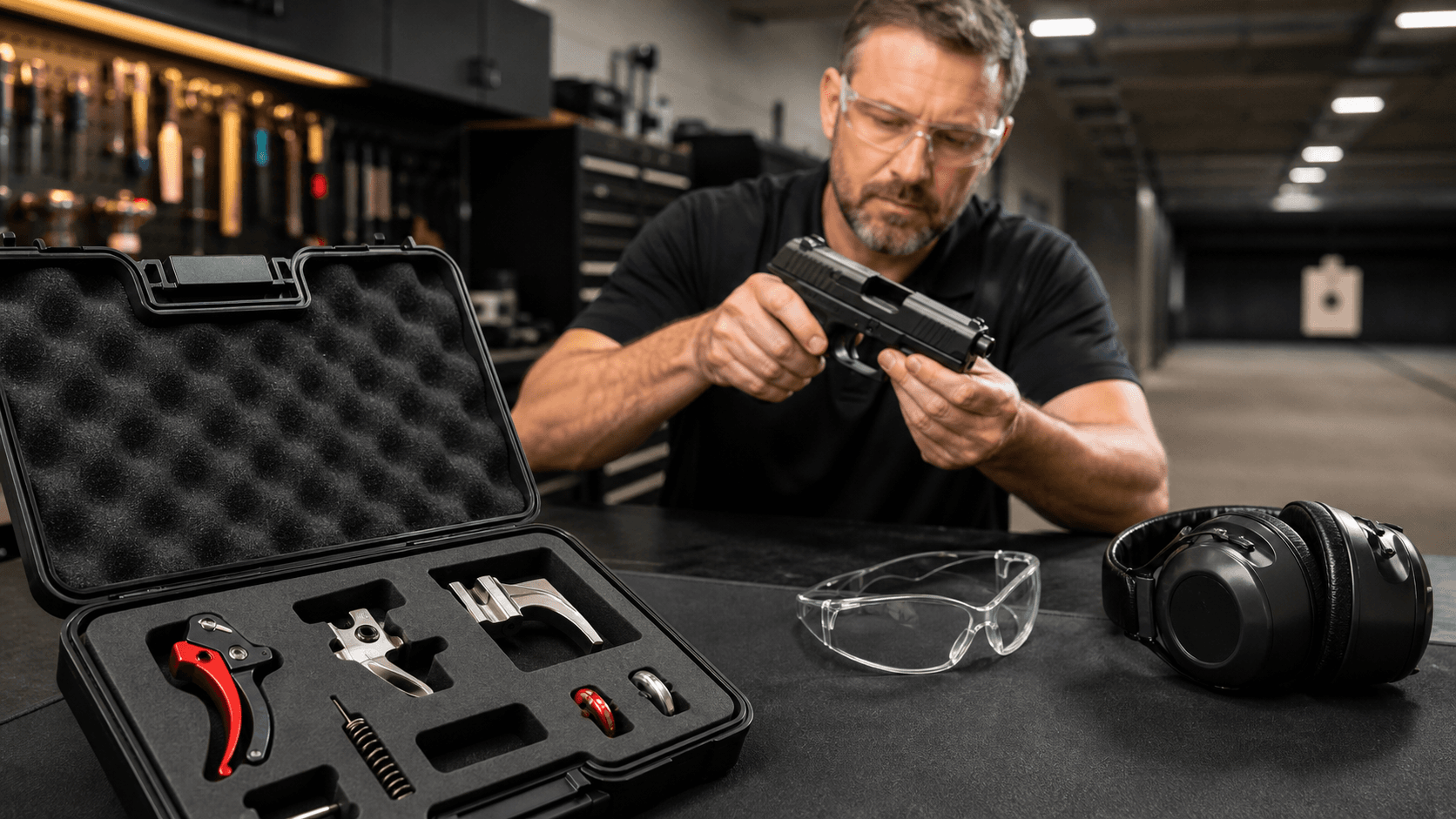
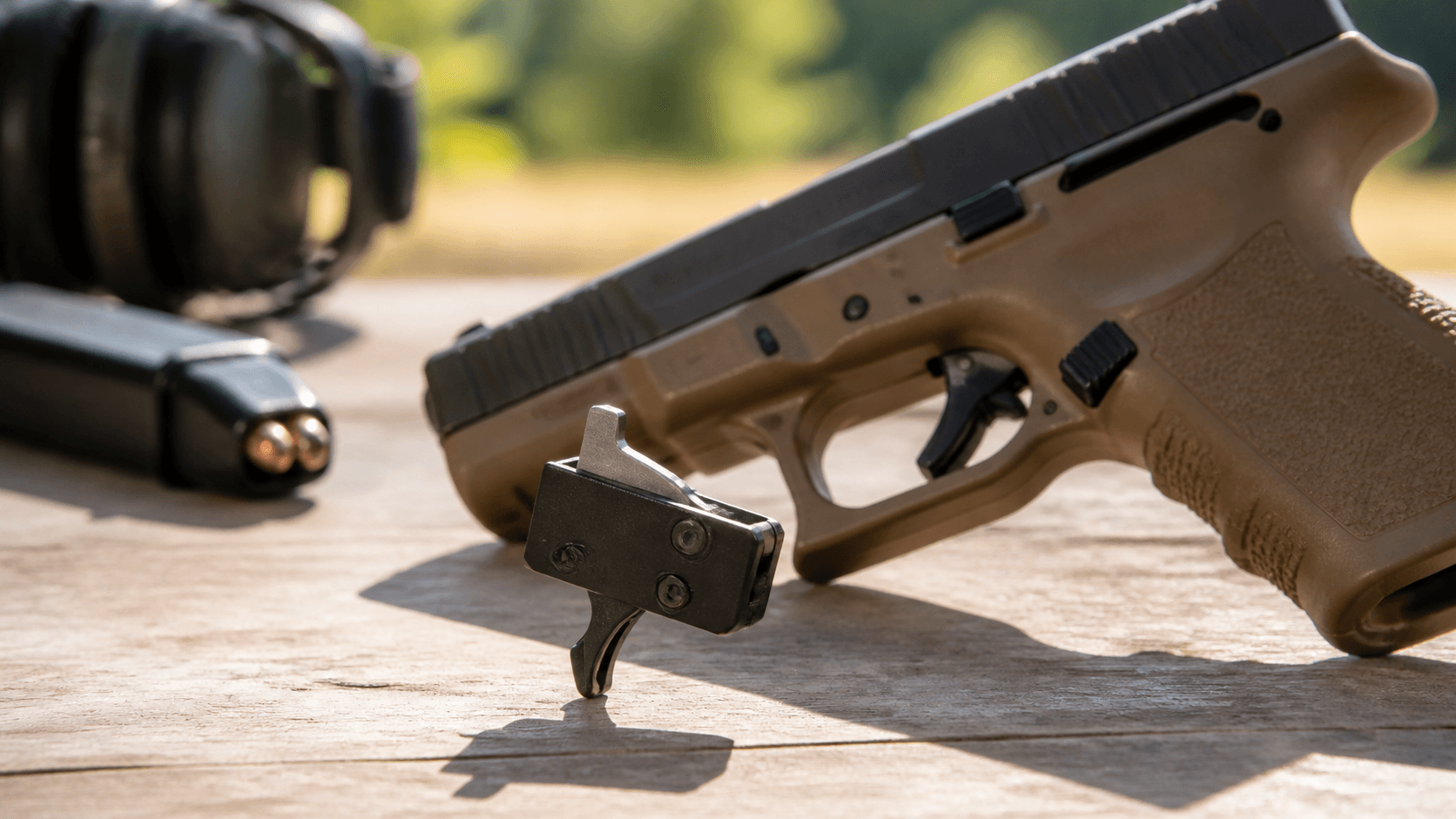
CNC machined components give us tight geometry, but that is only the first layer. Surface finish, coatings, and smart contact polishing are what turn good parts into a trigger that feels clean, repeatable, and safe. At G-Force CNC Solutions, we design and build high-precision trigger systems and components, including the Canik Recoil Assisted Trigger, and we see every day how the same basic shapes can feel completely different once finishing work is applied.
In this article, we will walk through how the trigger cycle actually feels, how surface finish and coatings change that feel, and why careful polishing matters more than just chasing shiny parts. By the end, you will have a clearer picture of what you are feeling under your finger and what to look for when you pick your next upgrade.
Inside the Trigger Cycle: Creep, Break, and Reset Explained
Let us start with a few simple definitions:
- Creep is the tiny movement you feel while the trigger is under load but has not hit the clear wall yet
- Break is the exact instant the sear lets go, which can feel crisp, soft, or even mushy
- Reset is how far and how sharply the trigger must move forward before it can fire again
In striker-fired pistols like many Glock, Canik, and Taurus models, the trigger bar, connector, and striker lug are doing most of the work. As you pull, metal parts slide on each other, then finally slip off an edge and release the striker. In hammer-fired guns, the sear and hammer hooks take that role, but the idea is the same, sliding contact and then a controlled release.
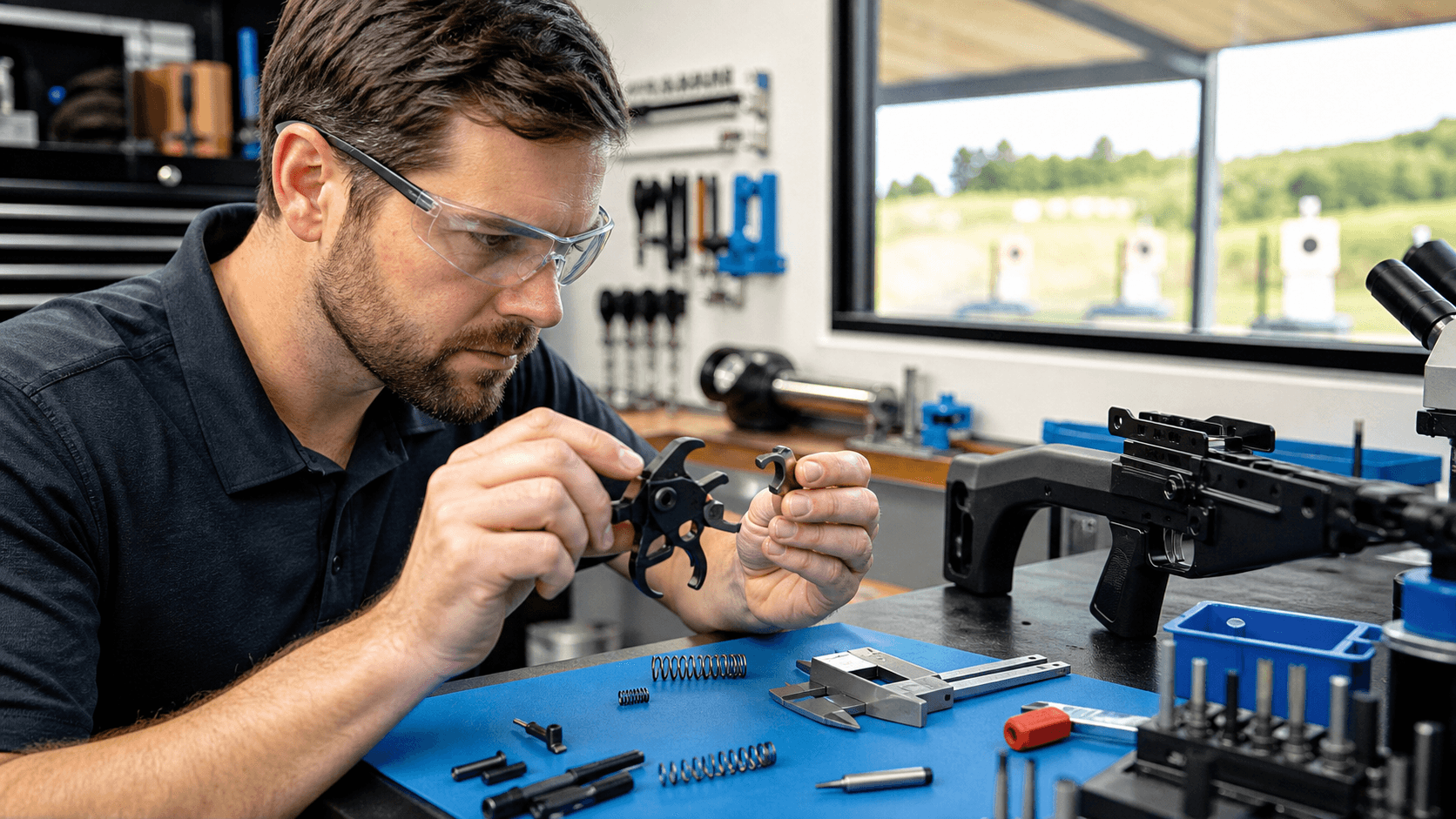
Two sets of CNC machined components can share the same angles and still feel very different. If one set has tiny burrs, rough tool marks, or inconsistent surface finish on the sear faces and lugs, you get gritty creep and an uncertain wall. Clean those same surfaces correctly and the wall becomes sharper, the break more predictable, and the reset easier to feel under stress or with cold fingers at a late season match or during a chilly evening hunt.
Competitive shooters and serious concealed carriers tend to care about three things here:
- Predictable break that does not surprise them or roll forever
- Tactile and audible reset that they can feel even with gloves
- Consistent feel from the first shot to the last of the day
That level of trust does not come from geometry alone. It comes from how those surfaces actually meet and move.
Beyond Smooth: How Surface Finish Shapes Trigger Feel
When we talk about surface finish, we are really talking about tiny peaks and valleys on the metal. Even a flat-looking sear face has texture up close. Those high spots grab, scrape, and stick as the parts slide, which is where grit and stacking come from.
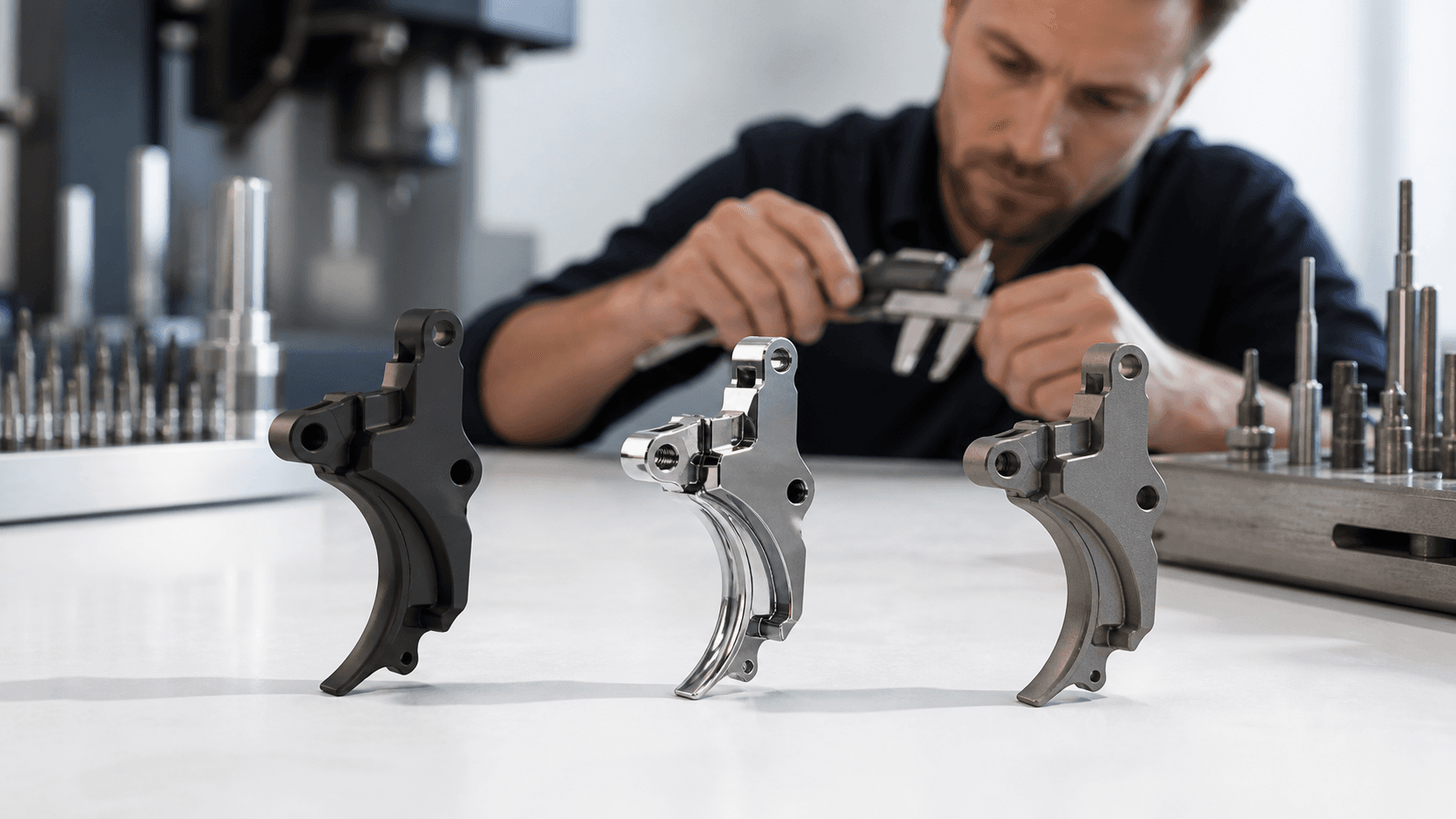
A fresh machine finish right off a CNC mill or lathe can be very precise in size but still rough in feel. Tool paths, feed marks, and microscopic burrs can all add drag. To control that, we can use post-processing like:
- Honing to bring surfaces flat and uniform
- Bead blasting to change overall texture where grip or visual contrast matters
- Fine grinding to sharpen and align contact faces
On critical trigger parts, a slightly higher polish often makes the pull feel lighter and smoother, even if a gauge says the weight has not changed. That is because reduced friction lets your finger move the parts more easily, so the wall feels cleaner and the break feels more like snapping a glass rod than pressing through a sponge.
There is a trap here, though. Chasing a full mirror polish everywhere can backfire. If you round edges or change important angles on sears, connectors, or lugs, you can lose safe engagement or change how the break stacks. That is why we design surface finish into our parts from the start, rather than leaving it as an afterthought for someone at a bench with a Dremel and good intentions.
Coatings That Change the Game for Trigger Performance
On top of base surface finish, coatings can change both feel and long-term consistency. Some common choices on firearm trigger parts include:
- Nitriding or Tenifer style treatments for a hard, wear-resistant surface
- Nickel boron and electroless nickel style coatings for a slick, low friction layer
- DLC type finishes for a very hard, smooth, dark surface with good lubricity
These coatings help reduce friction and slow down wear on high contact parts like the connector, sear, trigger bar, and striker lug. That means your trigger feel stays more stable over thousands of cycles and keeps working even when dust, carbon, and cold weather all show up at once.
A raw steel sear can feel good at first but may change as edges wear in. Coated CNC machined components can keep that same feel longer, because the working layer is harder and more uniform. The tradeoffs often look like this:
- Very slick coatings can feel fast and light, great for competition setups
- Slightly more controlled coatings can give a damped, steady feel that some prefer for carry or duty use
When we design products like the Canik Recoil Assisted Trigger, we are not just picking a color. We think about how a specific coating will react with the exact geometry, how it will affect reset speed, and how it will feel in real trigger time when the gun is cold, dirty, or both.
Smart Contact Polishing: Where Precision Meets Hand Work
Contact polishing is focused, not random. It means we polish only the surfaces that truly touch and move under pressure. The goal is to make those areas work together better, without changing the shapes that keep the gun safe.
Typical areas that benefit most from skilled polishing are:
- Sear faces where they meet hammer hooks or striker lugs
- Trigger bar to connector interfaces where sliding is constant
- Firing pin or striker lug surfaces that ride on the trigger bar
- Certain rail or cam areas that guide motion under load
Even very good CNC machining can leave micro burrs or sharp tool marks in those spots. Controlled polishing knocks down the highs, keeps the flats, and makes the transition from take-up to wall more clear. Creep feels shorter and more even, and the wall becomes easier to find.
We like to say that the best CNC machined components still get a bit of human touch. That careful, repeatable hand tuning is where a lot of elite trigger feel is born. It also pays off when your hands are numb from the cold or you are running drills in a late fall rain. A consistent, well-polished trigger helps your brain focus on sights and stage plan, not on guessing where the break will be.
Bringing It Together: Choosing Your Next Trigger Upgrade
When you are looking at your next trigger system or parts kit, it helps to think in layers, not just numbers. A simple checklist can keep you focused:
- Is the trigger geometry right for your role, like carry, competition, or duty use?
- How are surface finishes handled on key contact parts?
- What coatings are used, and are they chosen for feel and durability, not just looks?
- Is there planned or professional contact polishing on the real mating surfaces?
Hands-on testing matters too. Dry fire is where you can feel take-up, creep, wall, and break. Live fire tells you about reset and how easy it is to run fast but still call your shots. Pay attention to how the trigger feels at the start of a long fall range session and how it feels after your last drill of the day. Good surface finish and coatings will keep that experience steady.
At G-Force CNC Solutions, we build triggers and CNC machined components with all of this in mind, from the first drawing to the last polish stroke. The Canik Recoil Assisted Trigger is a clear example of how geometry, surface engineering, coatings, and smart hand work can turn hard metal into a smooth, predictable, high-performance trigger system that feels right when it really matters.
Get Started With Your Project Today
If you are ready to bring tight-tolerance parts from concept to reality, we are here to help. Explore our precision-built CNC machined components to find the right fit for your application or reach out with your print for a custom solution. At G-Force CNC Solutions, we work closely with you to ensure every part meets your specifications, timeline, and budget. If you have questions or need a quote, contact us and we will respond promptly.