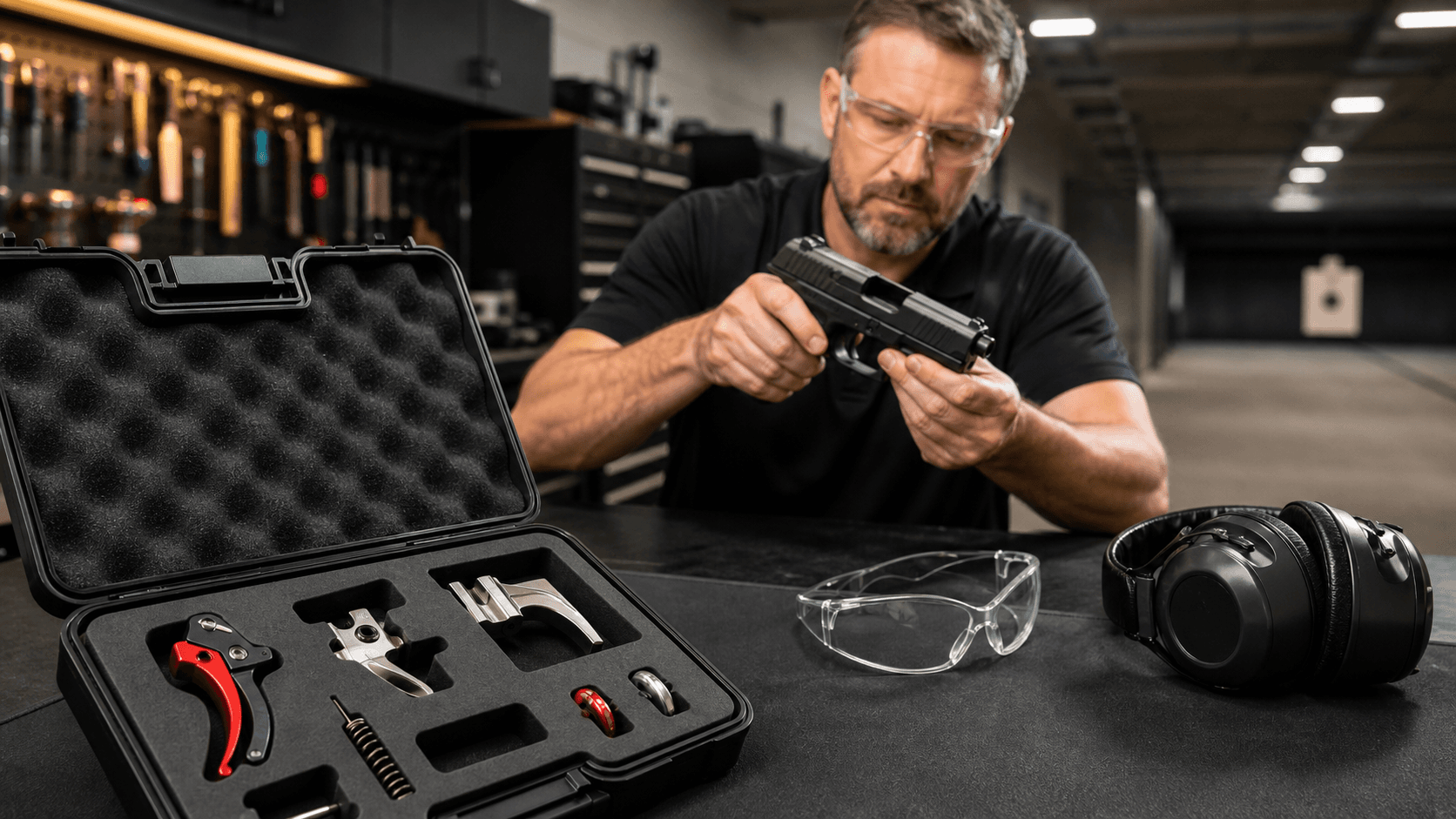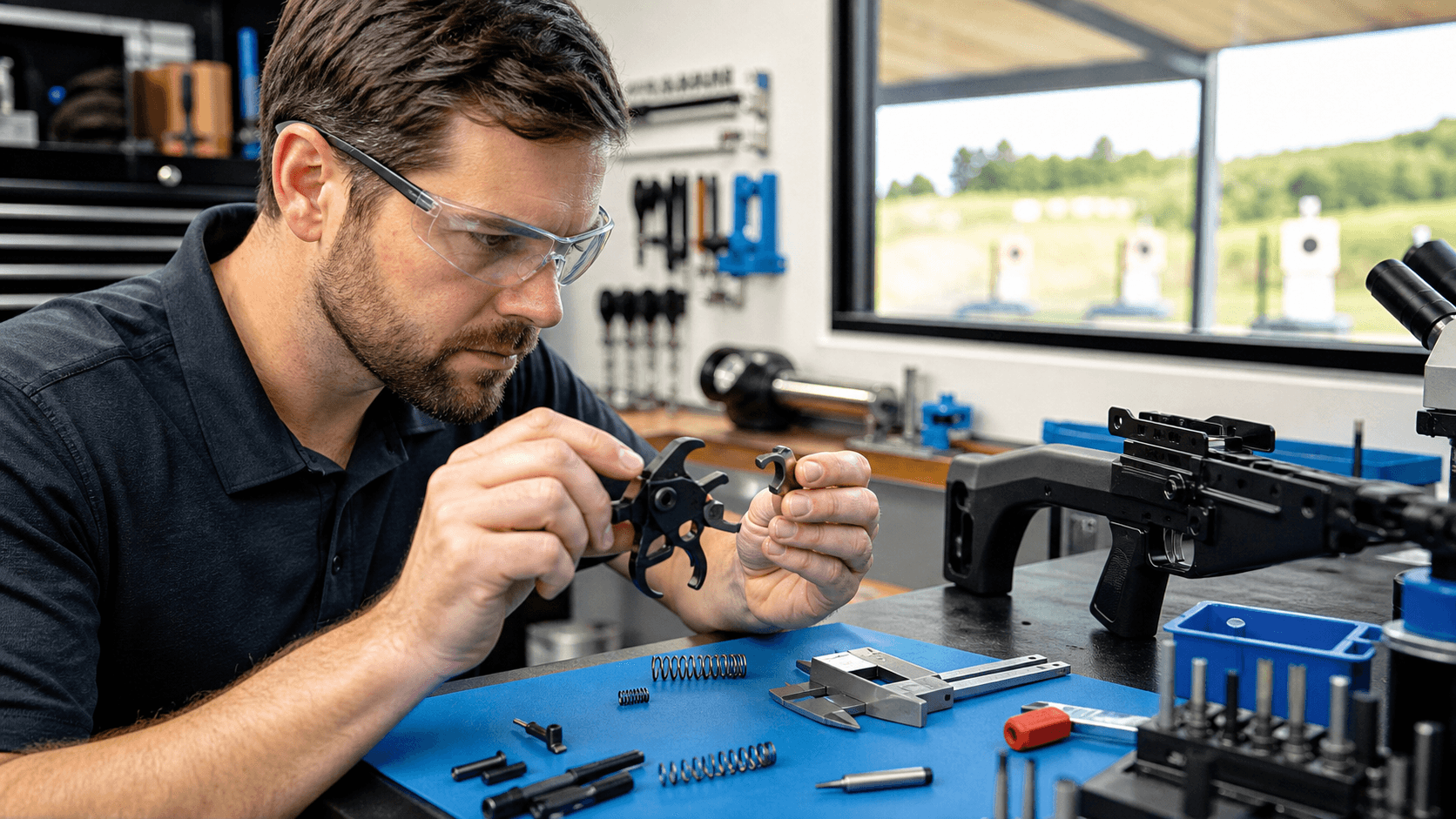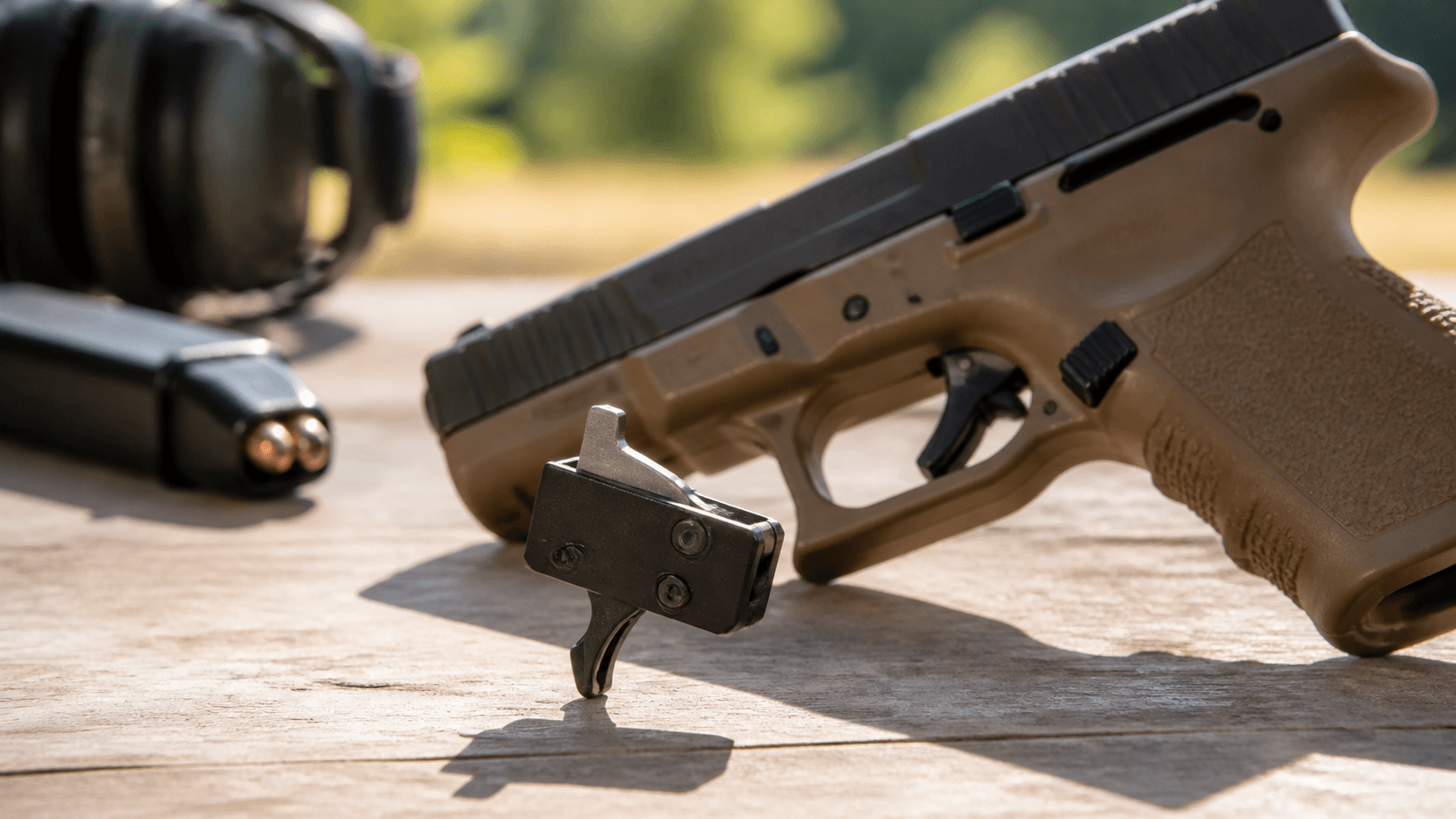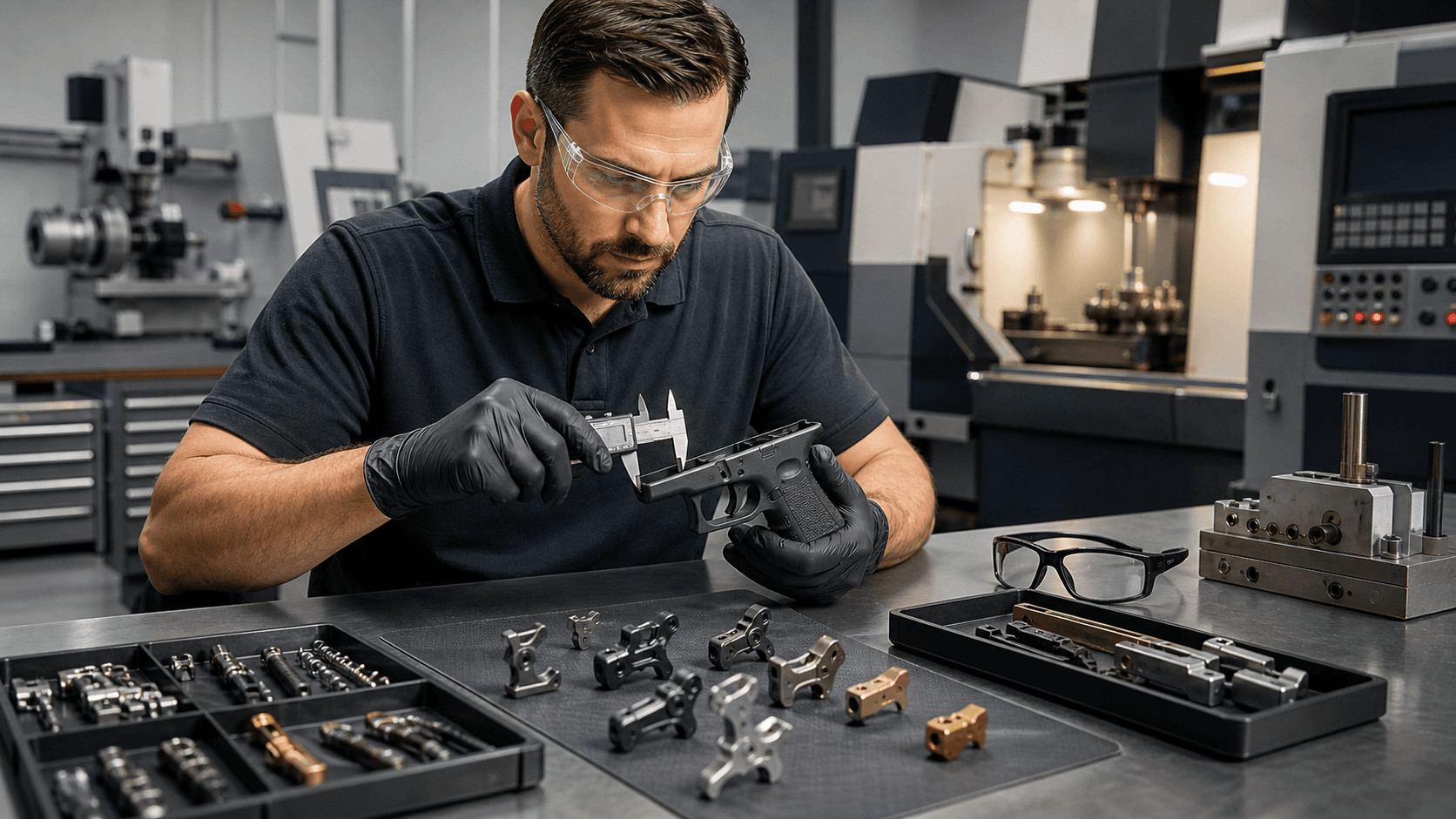
How a Glock Forced Reset Trigger Changes the Game
A Glock forced reset trigger has one job: to help the trigger reset faster so you can run the gun with more control. It feels different from a normal Glock trigger, and that can be good or bad depending on what you want from your pistol.
In simple terms, a forced reset trigger uses the motion of the slide to push the trigger forward for you. Instead of you easing off and finding the reset on your own, the trigger is kicked forward so the reset is sharper and quicker. The shot still only happens when you press the trigger, but the timing between shots can feel very different.
Right now, more shooters are talking about Glock forced reset triggers because competition shooting is growing, classes are packed, and people want faster, cleaner follow-up shots. Late summer, especially around August, is when a lot of shooters are fine-tuning gear for matches and training. That is when questions about triggers come up the most.
We design and machine high-precision trigger systems every day, so we pay attention to both performance and long-term durability. In this article, we are focusing on when a Glock forced reset trigger actually makes sense, not on trying to turn a pistol into something it was never meant to be.
Understanding Forced Reset Triggers on Glock Pistols
A standard Glock trigger resets when the slide cycles and the trigger bar reengages the internal parts. You feel and hear a small click, then you can press again. With a forced reset trigger, the slide's energy helps shove the trigger forward more firmly and often more quickly.
That means:
- The trigger pops forward with more energy
- The reset point is easier to feel
- The time between reset and the next shot can be shorter
This is different from a lightened or short-reset trigger that only changes pull weight or travel. Those triggers still depend on your finger to let the trigger move forward. A forced reset system actively drives that reset using the action of the gun.
Here is what a Glock forced reset trigger does not do:
- It does not fire on its own
- It does not hold the trigger back for you
- It does not remove the need for a clear trigger press
You still need one trigger pull for every round fired. If you slap the trigger or ride it wrong, you can cause user-induced malfunctions like short stroking the trigger or failing to let it reset fully.
At a high level, the pros look like this:
- Faster perceived split times
- Strong, positive reset feel
- Helpful feedback on trigger timing
And the cons:
- Steeper learning curve, especially at first
- More chances for errors if your grip and stance are sloppy
- Higher need for quality parts and proper setup
When a Glock Forced Reset Trigger Actually Makes Sense
A Glock forced reset trigger is not for everyone. For some shooters, it fits very clear goals.
For competitive shooters, it can help when:
- Running USPSA-style stages with lots of target transitions
- Shooting steel where fast, controlled pairs matter
- Pushing times on close targets while still keeping hits clean
That fast, positive reset lets an experienced shooter ride the trigger in rhythm. They can press, manage recoil, catch the reset, and press again with less wasted movement.
For dedicated training, a forced reset trigger can be a strong tool. It tends to expose:
- Poor grip that cannot control recoil
- Trigger slapping instead of straight presses
- Timing issues between shots
When you run structured drills and log your times, you can feel and measure small gains. The quicker reset makes any mistake with your hands very obvious, which is useful if you actually want to get better, not just make noise.
Range environment also matters. Late summer is peak range season in many places, with long, hot days and more open shooting time. If you are already burning through higher round counts, working drills, and pushing yourself, a forced reset trigger can make sense as a dedicated practice or match setup.
Experience level is a big piece of this. We usually see forced reset triggers fit best for:
- Intermediate shooters who already have solid gun handling
- Advanced shooters who want every small edge in performance
- People running a clear training plan, not casual plinkers
If you are still working on the basics, a standard performance trigger is usually a better choice before jumping into something more aggressive.
Legal, Safety, and Reliability Factors You Cannot Ignore
Any time we talk about trigger systems, we have to talk about law and safety. The legal views around forced reset triggers can change, and they are not always simple. It is smart to check both federal and state rules where you live and, when needed, talk with a firearms attorney before you start changing parts.
From a safety side, the four rules matter even more with a quicker reset. The trigger is coming back to the ready position faster, so any bad habit is easier to expose. We strongly recommend:
- Slow, careful dry fire to learn the feel
- Starting with simple live fire drills at a relaxed pace
- Getting help from a qualified instructor when possible
Reliability is another key point. Many responsible shooters keep their defensive Glock as close to stock as possible, or with a proven conservative trigger, then run more aggressive setups on dedicated range or match guns. That way, the pistol they might depend on in a real emergency stays predictable.
A forced reset Glock can be great for fun, matches, and training, but that does not mean it belongs in every holster or on every nightstand.
Engineering Essentials for a High-Performance Glock Setup
Forced reset systems ask more from the parts inside your Glock. Trigger geometry, surface finish, and material choice all matter a lot. If the sear surfaces are rough or the tolerances are sloppy, you can get:
- Gritty feel
- Premature wear
- Inconsistent reset or break
Precise CNC machining helps keep angles and contact areas consistent from one part to the next. That is a big reason we focus on high-precision work for triggers and components. When everything lines up correctly, the trigger path feels smoother and the reset feels more repeatable.
Parts compatibility is also a factor. Different Glock generations, slide weights, recoil springs, and connector angles all interact with how the forced reset feels. Poorly matched parts can lead to:
- Light strikes
- Failures to reset
- Odd, unpredictable behavior
Before you depend on any forced reset trigger in a match, it is wise to test it with several hundred rounds. Late summer classes and competitions are hard on gear, and weak parts tend to show themselves under that kind of use. Quality components are built to handle those higher round counts without losing their feel.
Deciding If a Forced Reset Glock Is Right for You
When you are trying to decide if a Glock forced reset trigger makes sense, it helps to keep a simple frame in mind:
- What is the main purpose, competition, skill building, or just fun?
- What is your current skill level, solid basics or still learning?
- Are you ready to spend time learning a new trigger behavior?
If you mainly carry your Glock for defense and shoot a few times a year, a standard or slightly improved trigger is usually more than enough. If you shoot often, track your drills, and care about split times and transitions, a forced reset may have a place in your lineup.
A smart path for many shooters is to start with a well-designed performance trigger that cleans up the feel and consistency, while still working like a normal Glock trigger. Once you are fully comfortable with that and have strong fundamentals, then you can decide if moving to a forced reset system fits your goals.
At G-Force CNC Solutions, we spend our time building high-precision trigger systems and components for Glock and other leading platforms, with a focus on consistent performance, durability, and responsible innovation. Our goal is to help serious shooters pick setups that match how they actually train and shoot, so the trigger becomes a tool, not a surprise.
Upgrade Your Glock With Precision-Engineered Performance
If you are ready to enhance control and responsiveness in your build, explore our Glock forced reset trigger options designed for serious shooters. At G-Force CNC Solutions, we focus on reliable, precisely machined components that help you get consistent results at the range or in competition. If you have questions about compatibility, installation, or custom needs, contact us and we will help you choose the right setup for your firearm.