Precision You Can Feel in Every Trigger Pull
A good trigger is not an abstract idea; it is something you feel in your hands every time the sights settle and you press. The distinct wall, the clean break, the positive reset, all of that depends on how precisely each component is made and how consistently those parts interact. Tiny imperfections, just a few thousandths of an inch off, can turn a crisp break into a mushy surprise or make a reset feel vague and unreliable. For shooters who care about performance, that inconsistency chips away at confidence shot after shot.
Today's firearm owners expect competition-level performance even from their carry and duty pistols. That level of performance does not happen by accident; it comes from tight tolerances, smart engineering, and repeatable manufacturing. Precision CNC machining sits at the heart of that equation, especially for platforms like Glock, Canik, and Taurus where small changes in geometry have a big impact on feel. At G-Force CNC Solutions, we focus on high-precision, USA-made trigger components because we know serious shooters want parts that feel right and run right, every single time.
How Precision CNC Machining Transforms Trigger Performance
Precision CNC machining is simply computer-controlled cutting tools shaping metal with extreme accuracy. Instead of relying only on manual machines and the hands of an operator, CNC equipment follows a programmed toolpath to create parts consistently to tolerances measured in thousandths of an inch. That level of control means each trigger bar, shoe, connector, and sear surface matches the design, not just in theory but in every production run.
Those numbers directly translate into trigger feel. When we hold tolerances tightly, we can control how surfaces meet and move against each other. That allows us to refine details like:
- Pre-travel and over-travel
- Sear engagement depth and angle
- Take-up smoothness
- Break consistency from shot to shot
When engagement surfaces are precisely located and finished, friction drops and grit is reduced. Instead of a trigger that stacks unpredictably as you press, you get a smooth, linear feel leading into a distinct wall, followed by a clean break with minimal over-travel. The reset becomes more positive and repeatable, which helps with faster follow-up shots and tighter split times.
Material choice and machining strategy work hand in hand here. High-grade steels and aluminum alloys each respond differently as they are cut, cooled, and finished. By tuning speeds, feeds, and toolpaths, we control heat input and surface quality so parts not only fit correctly but also maintain strength where it matters. For performance-focused Glock, Canik, and Taurus triggers, that balance of material and precision CNC machining gives shooters the consistency they are after.
Safety, Reliability, and the Cost of Poor Machining
Trigger feel is important, but safety and reliability are non-negotiable. Poorly machined trigger components can lead to inconsistent sear engagement, where sometimes the sear bites deep and sometimes it barely catches. That inconsistency may show up as light strikes, failures to reset, or in the worst cases, unintended doubling or out-of-battery concerns. All of those are serious issues for any firearm owner, especially when a pistol is used for defense or duty.
High-quality precision CNC machining is how we control the dimensions and surface finishes that make a trigger safe. Critical factors include:
- Proper engagement angles between sear and striker or hammer
- Adequate contact area for secure engagement under recoil
- Correct geometry for reliable reset and return
- Smooth but controlled surfaces for predictable pull weights
When these areas are machined correctly, parts wear in, not out. Sharp edges that could chip or deform are managed, and the geometry that sets pull weight and break characteristics stays stable across thousands of cycles. That means the trigger you feel after a long training session still behaves like it did on day one, with safety margins preserved.
On the other side, cheap, poorly machined parts might feel decent right out of the package but can wear unevenly, lose engagement, or develop rough spots as surfaces gall. That is why we focus on well-engineered, CNC-machined, USA-made components that keep both performance and safety at the forefront instead of chasing the lowest manufacturing cost.
Why USA-Made CNC Triggers Deliver a Competitive Edge
There is a clear advantage when trigger components are designed and made domestically. With production in the United States, we have tighter process control and better oversight of raw materials. If an issue shows up in testing or customer feedback, we can adjust quickly, refine tooling, or tweak a dimension without long delays. That faster feedback loop leads to continuous improvement in how parts feel and function.
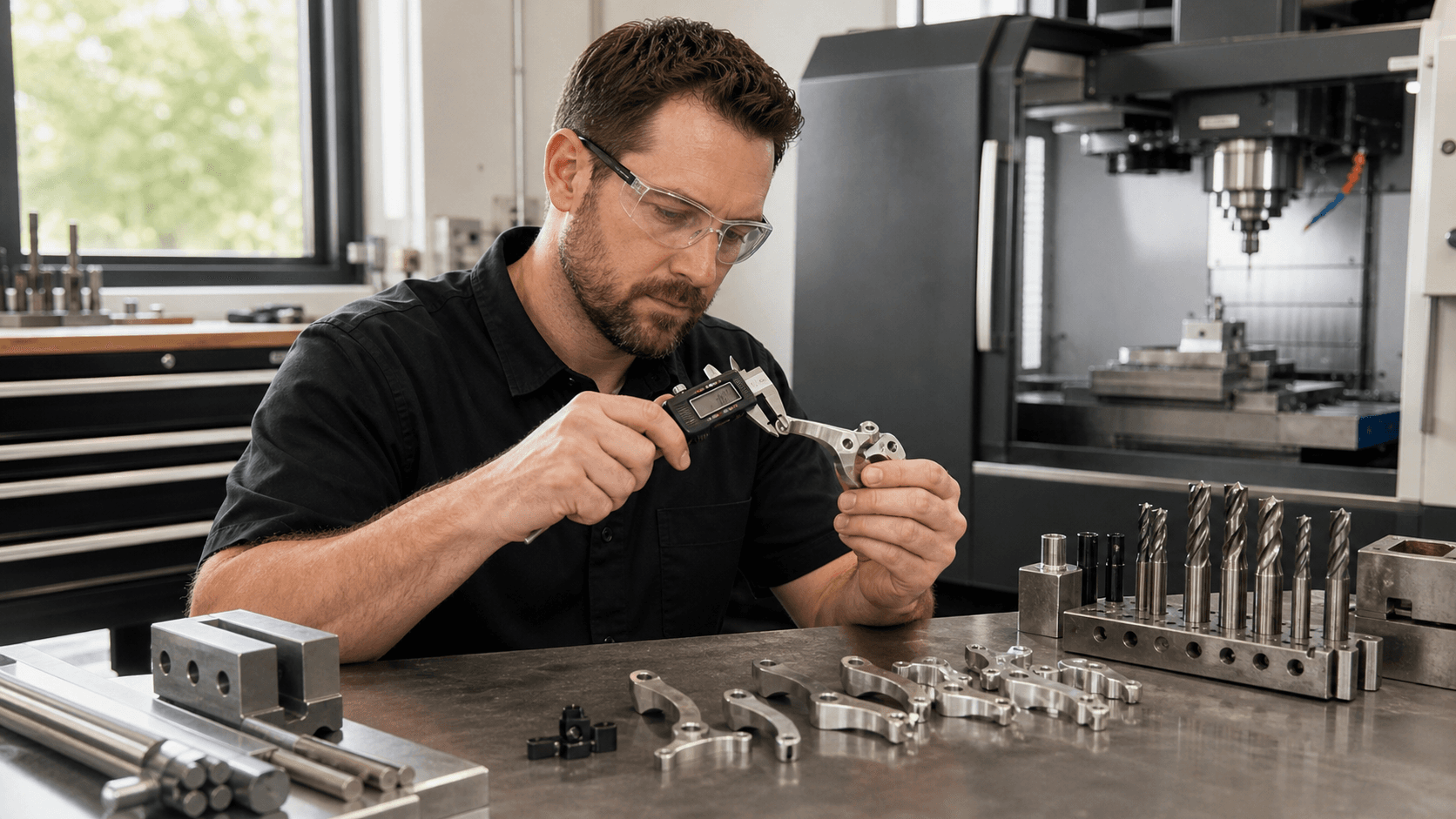
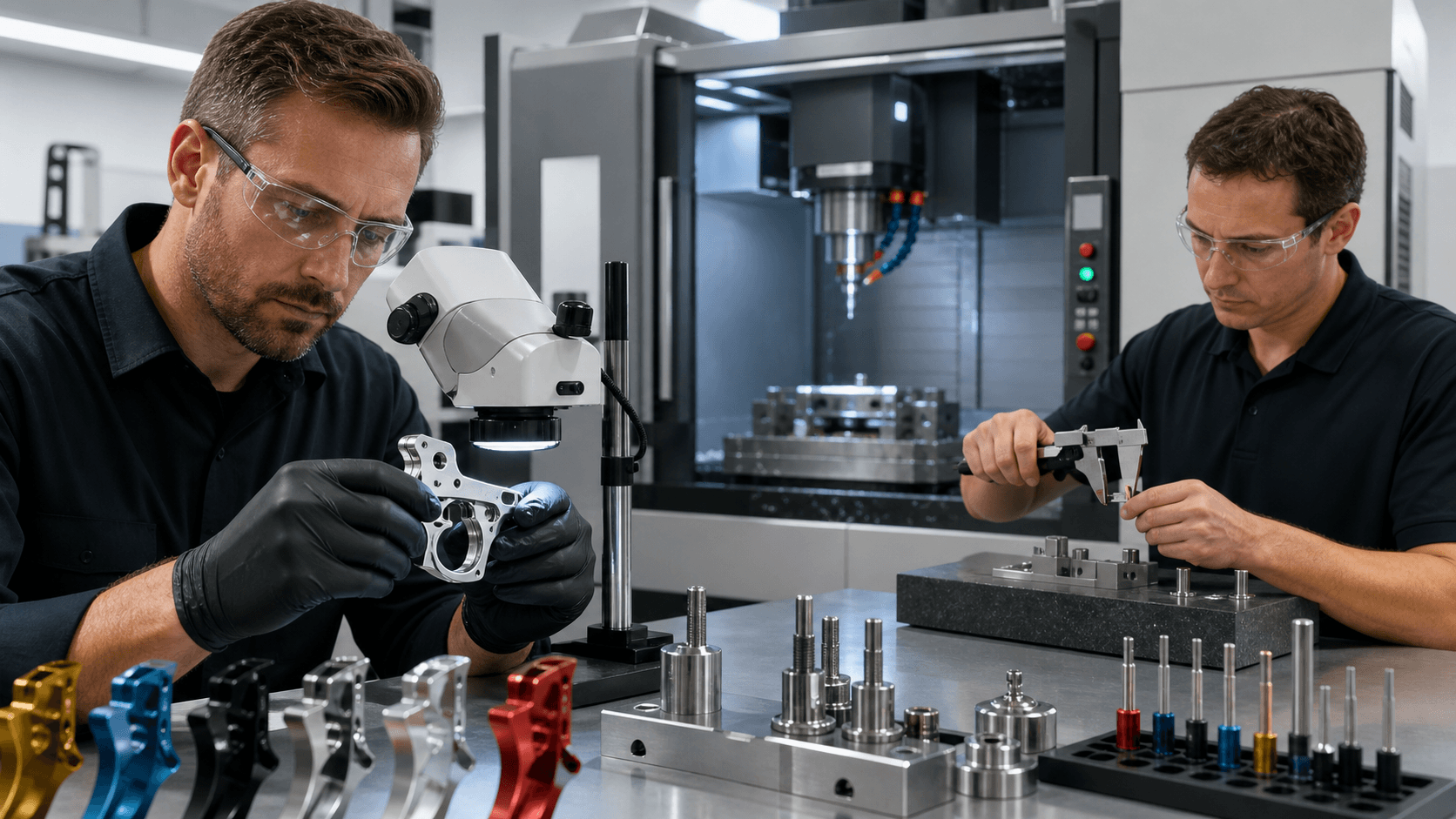
Shops like ours rely on precision inspection tools to keep runs consistent. Using micrometers, gauges, and coordinate measuring equipment, we verify that each production batch stays within spec on the dimensions that matter most to trigger performance and safety. This is especially important with platform-specific parts. A small change that works well on a Glock might not translate the same way to a Canik or Taurus pistol, so we pay close attention to how geometry interacts with the internals of each system.
For American shooters, there are practical benefits to USA-made, precision CNC machining beyond pride of origin. You get:
- Predictable lead times and availability
- Components designed with local shooting disciplines in mind
- Parts that reflect domestic legal and safety expectations
- Support from a team that understands how you use your pistols
That combination of local control and platform-specific knowledge gives performance-focused shooters a real edge when they are chasing consistency and confidence on the range.
Inside the G-Force CNC Approach to Trigger Precision
Our process at G-Force CNC Solutions starts long before metal hits a machine. We begin with CAD design, modeling each trigger component in detail so we can control every engagement point and movement. From there, we run simulations and refine the design until we are confident it will deliver the desired pull weight, travel characteristics, and reset feel on the intended platform.
Once the design is locked in, we program optimized toolpaths for our CNC equipment. That includes selecting the right tooling, setting speeds and feeds that suit the chosen material, and building precision fixturing that holds parts in a repeatable position. This is how we keep the first part and the thousandth part effectively identical in the dimensions that matter.
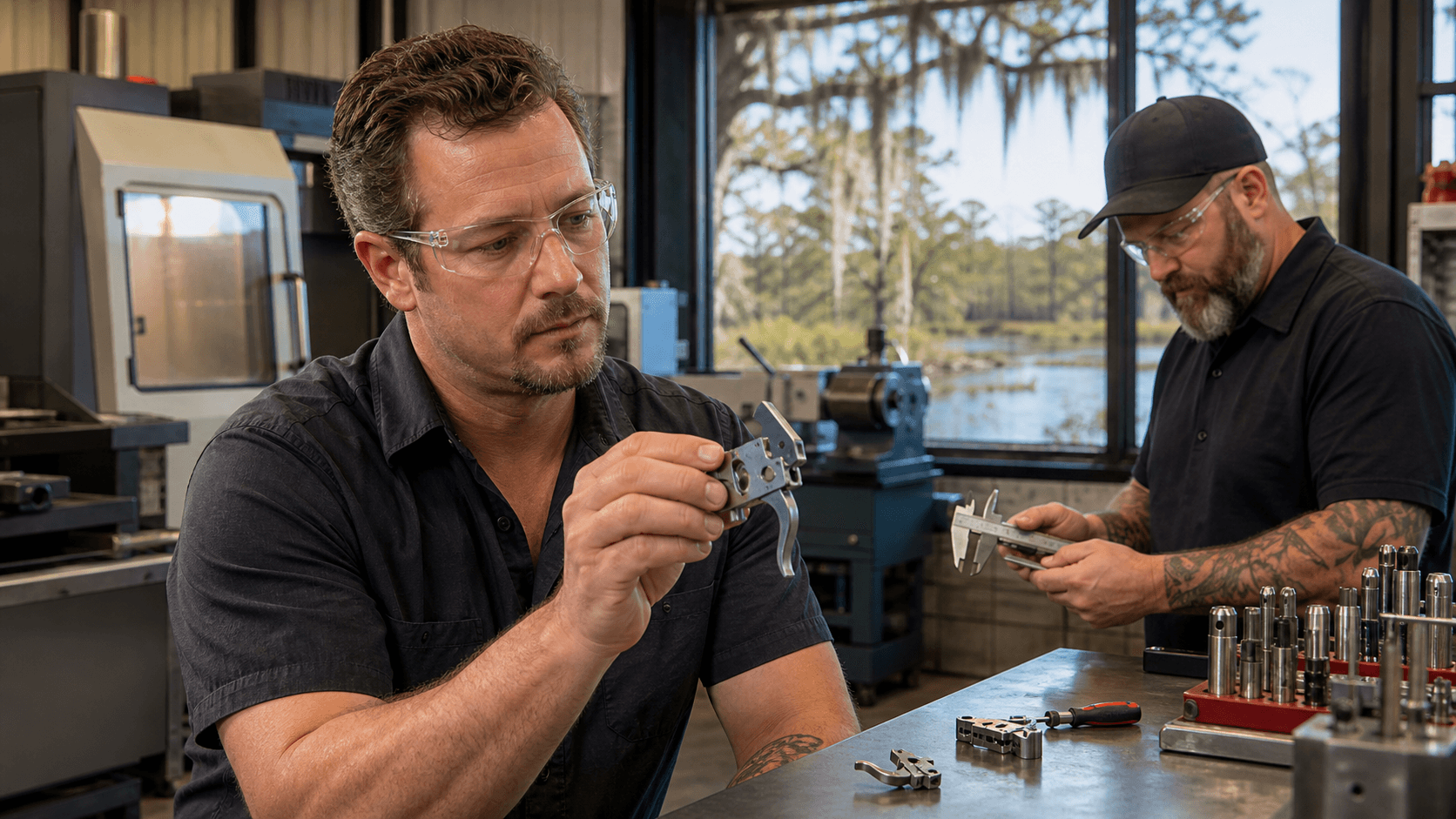
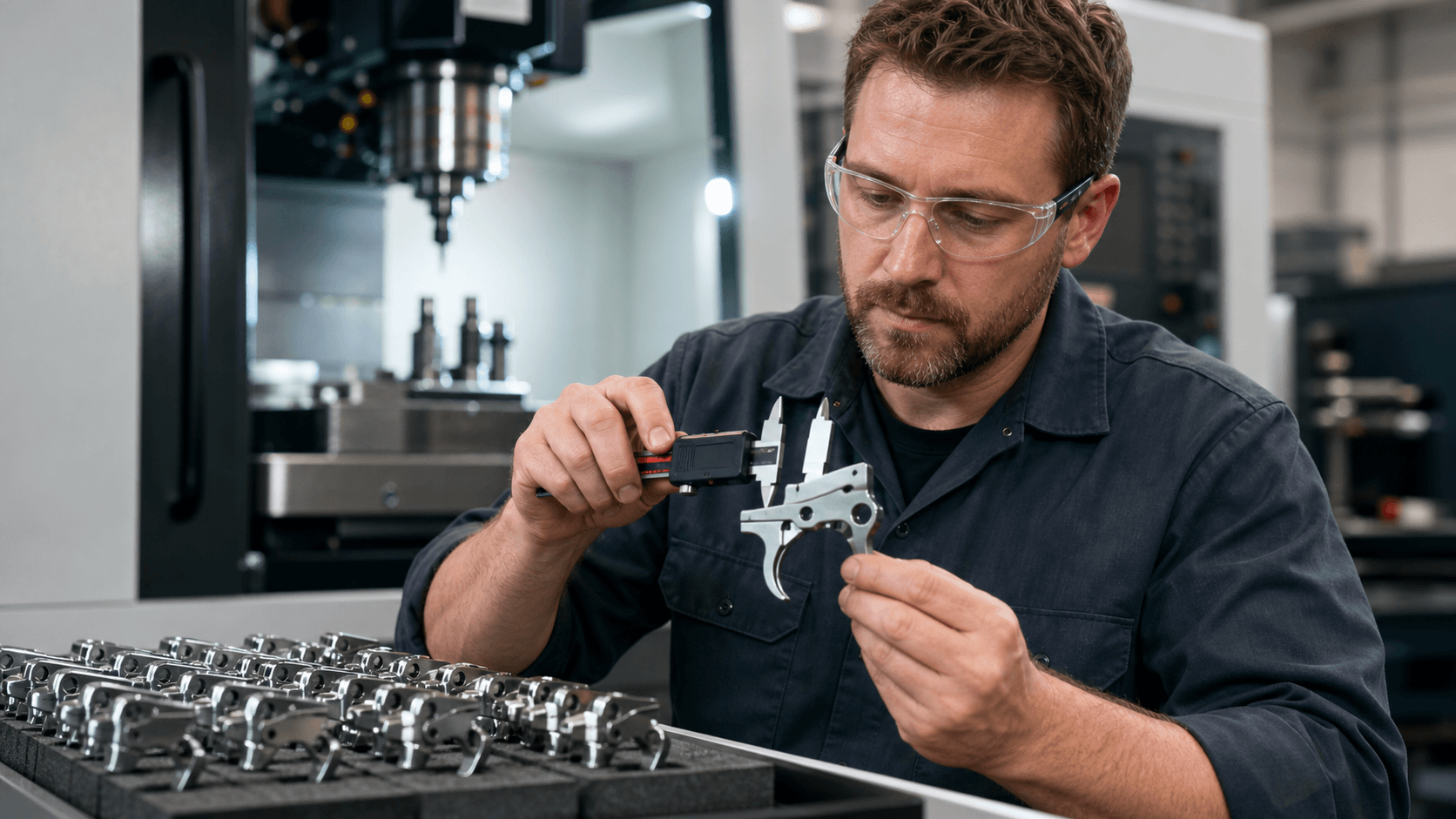
Quality control is built into each step. During and after machining, we inspect parts with micrometers, gauges, and coordinate measuring equipment to confirm critical dimensions and surface finishes. Engagement surfaces receive particular attention, since even a small deviation there can change how a trigger feels or behaves.
We do not stop at the bench. Our parts are tested in real-world Glock, Canik, and Taurus pistols, on the range, and under different shooting conditions. Feedback from competitive and defensive shooters helps us see how triggers behave under speed, stress, and high round counts. That feedback loops back into our design and machining process so we can keep refining geometry, polishing strategies, and component interfaces.
Upgrade Your Trigger with Confidence and Control
When you press the trigger, you should not be thinking about machining tolerances, toolpaths, or engagement angles. You should be focused on the sights, the target, and the shot. Precision CNC machining is what lets everything behind that trigger press disappear into the background so the experience feels smooth, predictable, and repeatable. Clean breaks, positive resets, and durable geometry all trace back to how carefully each part was designed and cut.
For performance-driven firearm owners, especially those running Glock, Canik, and Taurus pistols, choosing high-precision, USA-made trigger components is about more than a nicer feel. It is about building in safety, reliability, and confidence across thousands of rounds. By understanding what precision CNC machining brings to your trigger system, you can evaluate your current setup more clearly and decide when it is time to move to components that match your standards for performance and control.
Get Started With Your Project Today
If you are ready to bring tighter tolerances and better consistency to your parts, explore our precision CNC machining capabilities and see how we can support your next build. At G-Force CNC Solutions, we work closely with you to match materials, finishes, and production methods to your exact requirements. Share your drawings, timelines, and quantities, and we will provide a clear path from prototype to production. Have questions before you begin? Simply contact us so we can talk through the details of your project.