Unlocking Trigger Performance for Summer Range Time
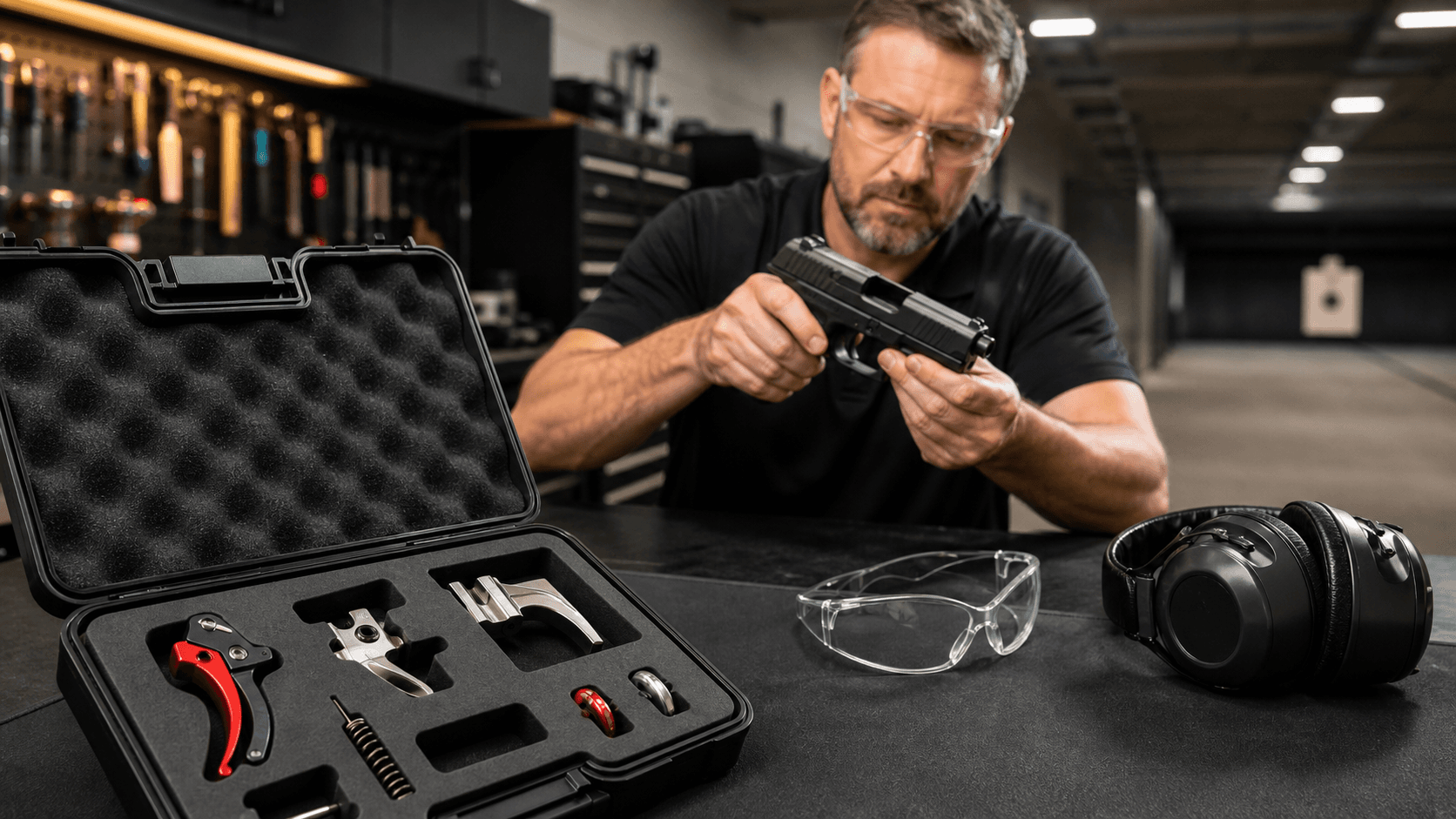
Good trigger feel is one of the fastest ways to tighten groups and speed up follow-up shots. When you understand what is happening inside your CNC-machined trigger system, you can read what the gun is telling you and run it with more control. Summer range days stop being random practice and start becoming focused skill-building.
A modern performance trigger system is more than just a lighter pull. It is the balance of several traits working together: the take-up before the wall, the firmness of the wall, any creep you feel before the break, how clean that break is, and how the reset feels as the trigger comes back forward. Change one, and you change how the others feel.
Here we will walk through how sear geometry, pre-travel, over-travel, and reset design affect both the break and the return on popular striker-fired platforms like Glock, Canik, and Taurus. We design and machine these parts every day at G-Force CNC Solutions, including the world's first Canik Recoil Assisted Trigger, so we see how small changes in shape and surface can make a big difference on the range.
Inside the CNC Trigger System That Controls the Break
On a striker-fired handgun, several key parts work together to create the trigger break you feel at your finger:
- Trigger shoe
- Trigger bar
- Sear or sear surface on the bar
- Striker or firing pin lug
- Trigger, striker, and connector springs
- Safety pieces like the trigger safety and firing pin block
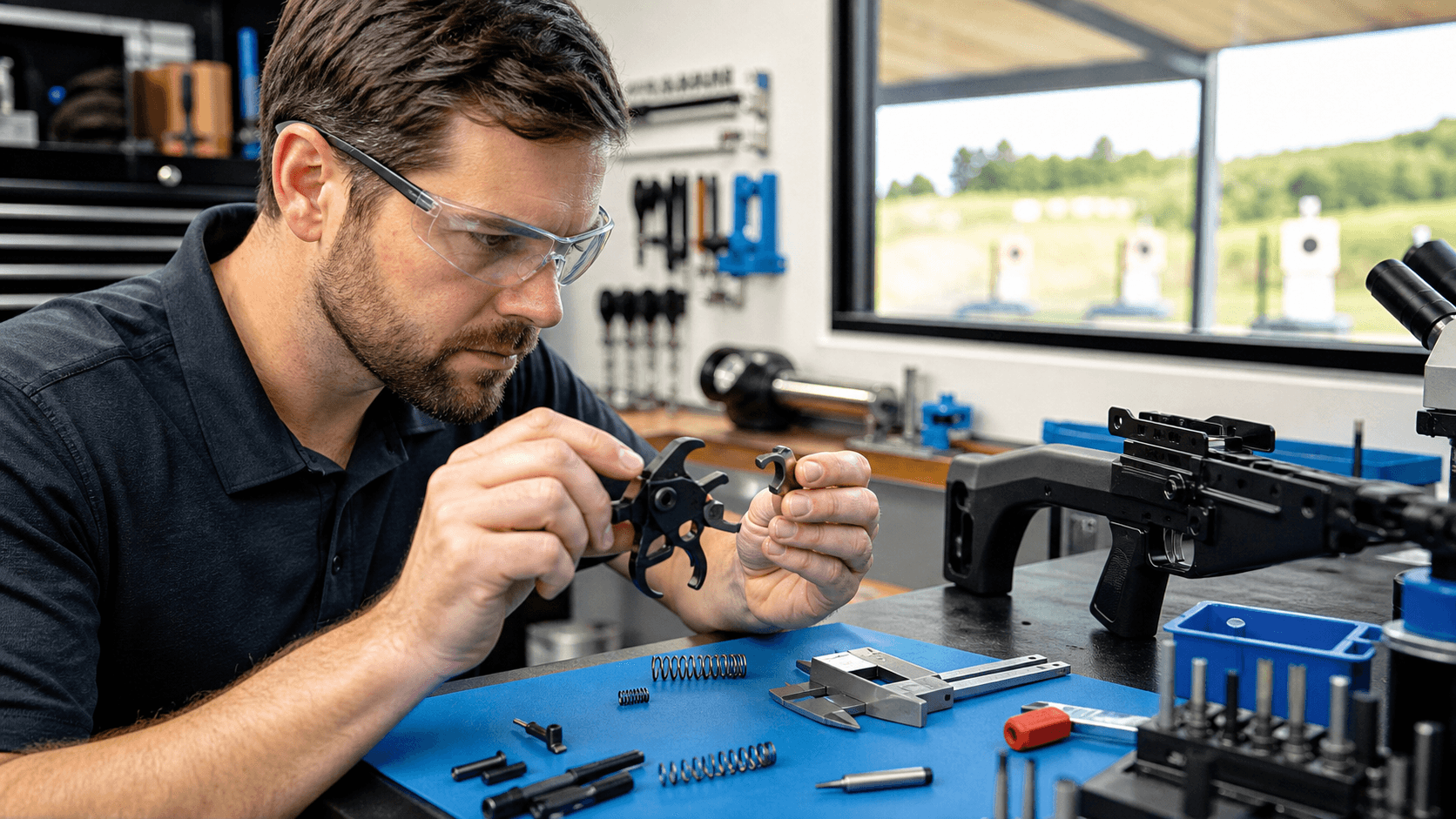
Each part has contact points where metal moves against metal. With CNC machining, those parts can be cut to tight, repeatable dimensions with smooth, clean surfaces. That helps reduce gritty creep and makes the wall feel more defined because the parts line up the same way every time the gun cycles.
The big deal is not just a "light pull number" on paper. The shape of the sear surface, how deep the striker lug sits on it, and how clean that interface is will decide:
- How solid the wall feels
- How much movement you feel before the break
- How consistent the break weight is as the gun heats up
Good performance trigger designs still keep safe engagement depth, so the striker has plenty of surface holding it until you mean to fire. With a well-designed CNC-machined trigger system for Glock, Canik, or Taurus, you can get a crisper and more predictable break without giving up safety features built into the pistol.
How Sear Geometry Shapes Wall, Creep, and Break Feel
Sear geometry is simply the shape and angle of the contact between the sear surface and the striker or hammer. When you press the trigger, you are sliding those two surfaces against each other until they slip past and the gun fires. That small patch of metal is where the "wall" and any creep live.
There are a few big ideas at play:
- Engagement amount, how much surface is actually touching
- Angle, neutral, slightly positive, or slightly negative
- Contact area and surface finish
More engagement usually means more safety margin and a bit more movement before the break. Less engagement can give you a sharper, "glass rod" style break, but if done poorly it can be finicky or less forgiving if dirt or wear show up.
Neutral or slightly positive angles tend to hold the striker more firmly under stress. Slightly more aggressive angles can feel lighter and cleaner, but need very careful design and machining so they stay safe. This is where precision CNC machining helps, because keeping these micro angles the same across thousands of parts is hard to do any other way.
Think of two different shooters. A competition-focused shooter often wants:
- Minimal creep
- A very clear, quick wall
- A clean, sudden break
A defensive or duty-focused shooter may want:
- A bit more engagement
- A more forgiving, confident wall
- A break that is clean but not razor thin
Both can be built around smart sear geometry. The trick is matching the shape and angles to the role of the gun, not just chasing the lightest number.
Tuning Pre-Travel and Over-Travel for Speed and Control
Pre-travel is the movement you feel from the at-rest position to the wall. Over-travel is what happens after the shot breaks, as the trigger keeps moving to the rear. Both change how steady your sights stay and how connected you feel to the gun.
Too much pre-travel can feel mushy and slow, like you are searching for the wall. With a CNC-machined trigger system, we can shape the trigger shoe, control where the trigger bar starts to lift parts, and use internal stops so you get:
- Enough take-up to keep safeties working
- A smoother, shorter path to the wall
- A more direct feel as you prep the shot
Over-travel is about what happens the instant the shot breaks. Less over-travel usually means less muzzle movement and faster follow-up shots, because your finger is not driving the trigger farther back than needed. But if you cut it too short, you can run into problems like poor reset or inconsistent ignition, especially on hard-use pistols.
For summer practice, tuning these two travel zones helps you:
- Clean up rapid-fire strings while keeping the sights in the notch
- Move between targets with more control
- Feel more of a "press and stop" instead of "press and swim"
Done right, it is a balance between speed, safety, and long-term reliability.
Reset Mechanics and the Secret to Fast Return Shots
Reset is what happens as the trigger moves forward after the shot. It is the point where the sear and striker are ready to fire again. Performance shooters care about reset length, how strong the push forward feels, and whether there is a clear click and feel they can ride.
Inside the gun, reset is driven by:
- Trigger bar geometry and how it re-engages the sear surface
- Trigger and striker spring weights
- Where the connector or other parts "kick" the bar back into place
On a good CNC-machined trigger system, these parts are designed so the reset distance is consistent from shot to shot and from gun to gun. Some shooters want the shortest, snappiest reset possible for fast strings at the range. Others like a more deliberate feel that is easy to find under stress.
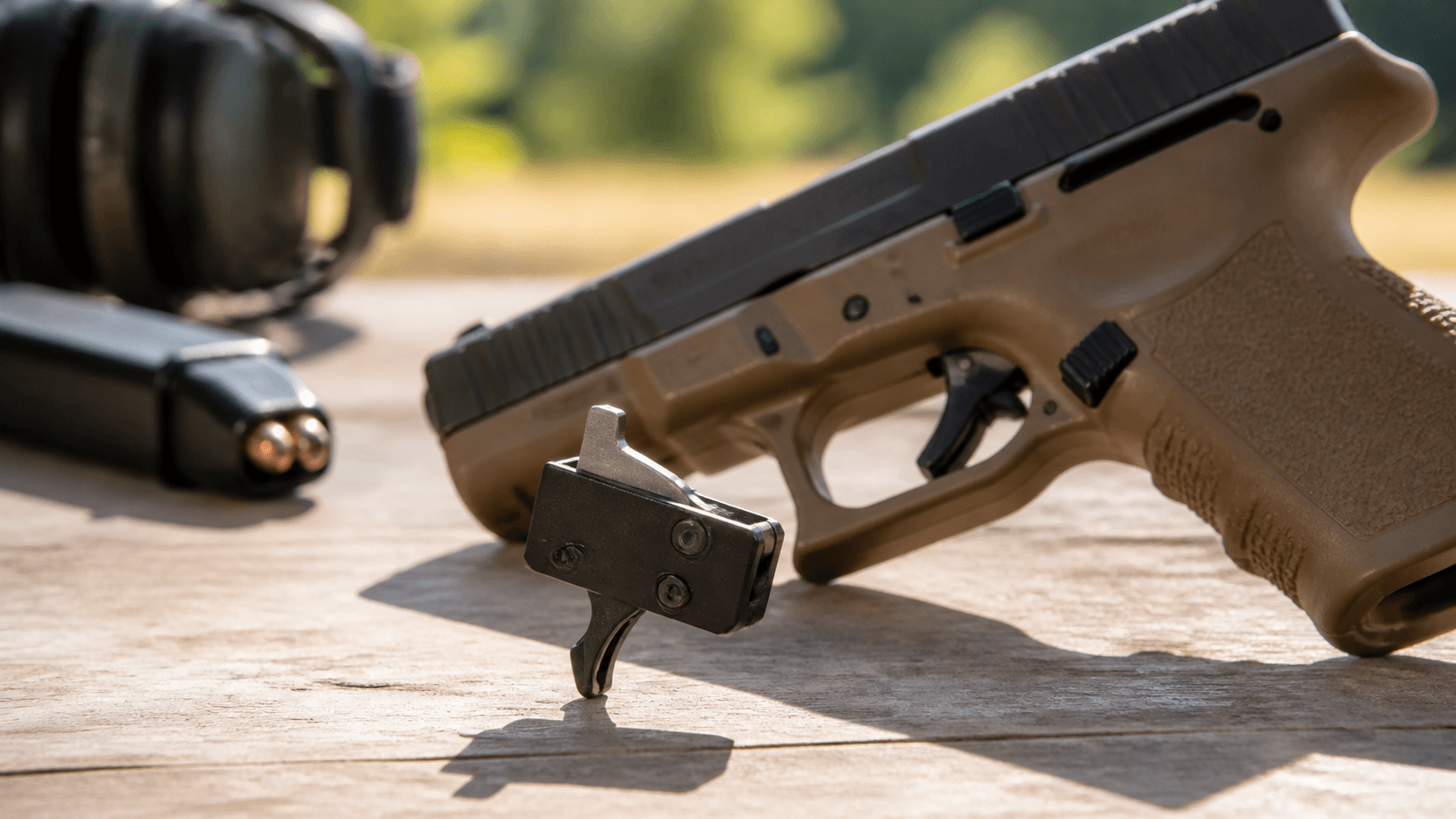
Advanced designs can take this even further. For example, recoil-assisted concepts, like our Canik Recoil Assisted Trigger, use motion and spring timing to help the trigger return more positively during rapid fire. The idea is to work with the gun's movement so the trigger wants to come forward with energy instead of just coasting back.
For a pure range or competition build, a short, crisp reset can be a big advantage. For a defensive handgun, a slightly longer, more obvious reset can help some shooters feel more in control when they are not on the clock.
Choosing and Maintaining a Trigger That Elevates Your Shooting
When you put it all together, sear geometry, pre-travel, over-travel, and reset are all parts of one system. Change one, and you touch the others. Knowing how they connect helps you make smarter choices instead of just chasing buzzwords.
If you shoot a Glock, Canik, or Taurus, some helpful things to think about are:
- What is the main role of this gun, range fun, competition, everyday carry, or home defense?
- Do you prefer a strong wall and clear reset, or a smoother, lighter overall pull?
- How much do you value absolute speed compared to extra margin and a more forgiving feel?
Look for quality materials, clean machining, and designs built around your platform instead of generic one-size-fits-all parts. Professional installation is always a smart move so that safety checks, engagement depths, and function under live fire are all verified.
Once installed, treat the trigger system with respect. Do regular function checks, especially after high-round-count summer range days. Watch for changes in feel, unusual drag, or weak reset, and keep the gun clean around the trigger bar and striker channels without trying DIY trigger mods that could affect safety.
At G-Force CNC Solutions, we design and machine performance trigger systems and components with all of this in mind, from our work on Glock, Canik, and Taurus platforms to innovations like the Canik Recoil Assisted Trigger. Our goal is simple: give you a CNC-machined trigger system that lets you shoot more confidently and makes every summer range trip count.
Upgrade Your Firearm Performance With Precision Engineering
If you are ready to reduce pull weight variation and improve shot consistency, our CNC-machined trigger system is built to deliver repeatable, match-grade performance. At G-Force CNC Solutions, we machine every component to tight tolerances so you can trust your trigger on the bench or in the field. Have specific requirements or a custom setup in mind? Reach out and contact us so we can help you dial in the right configuration for your build.