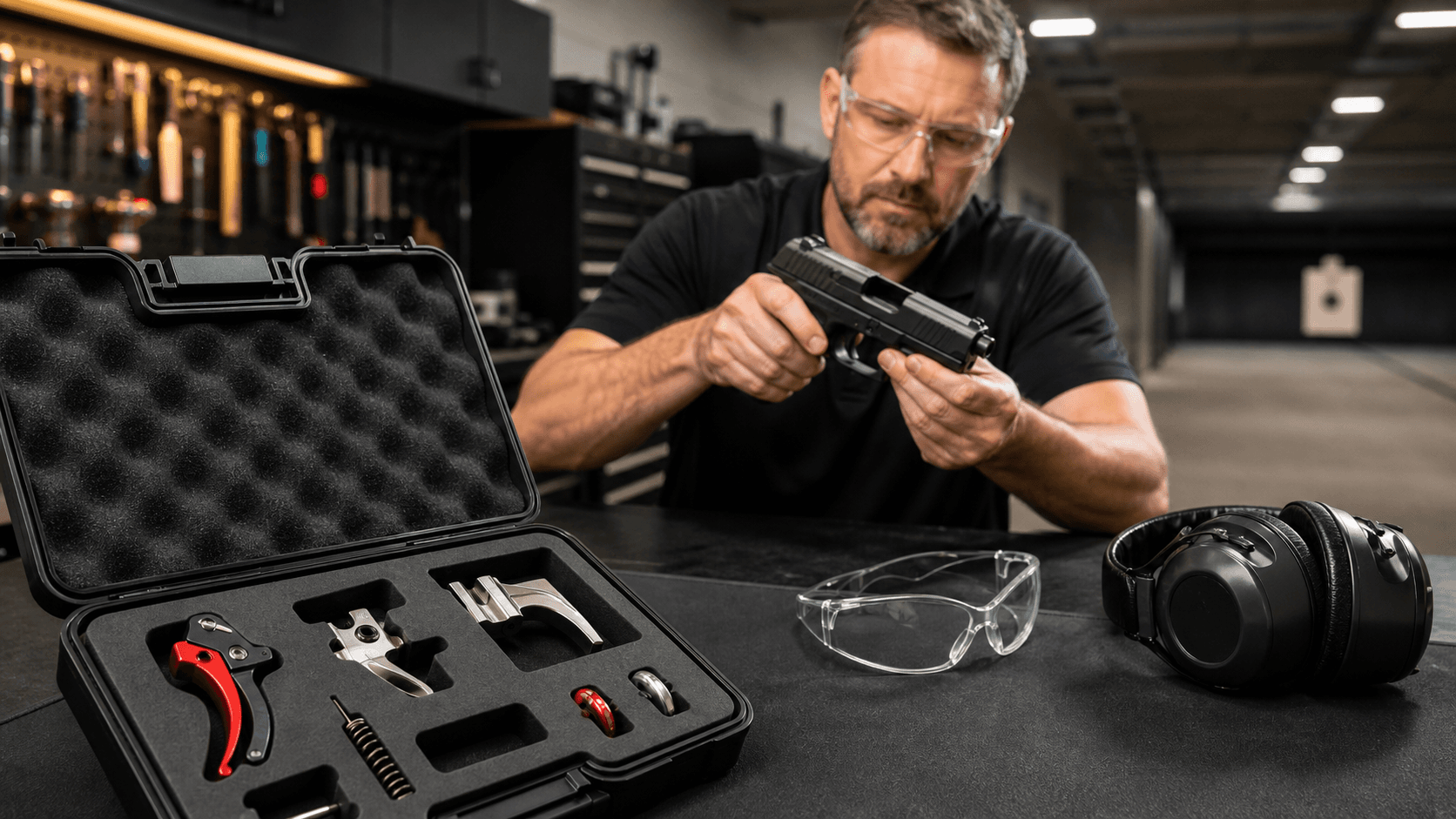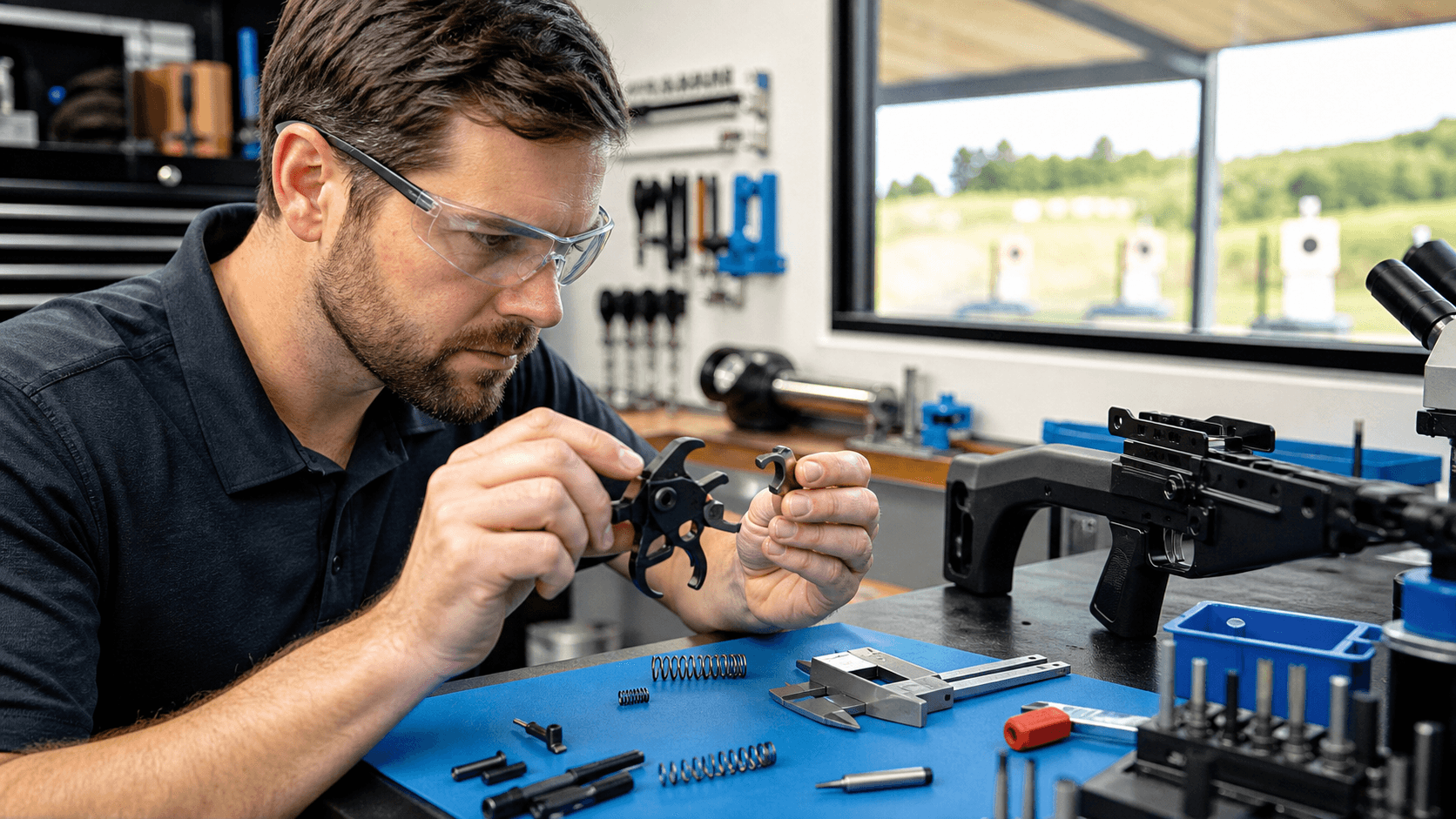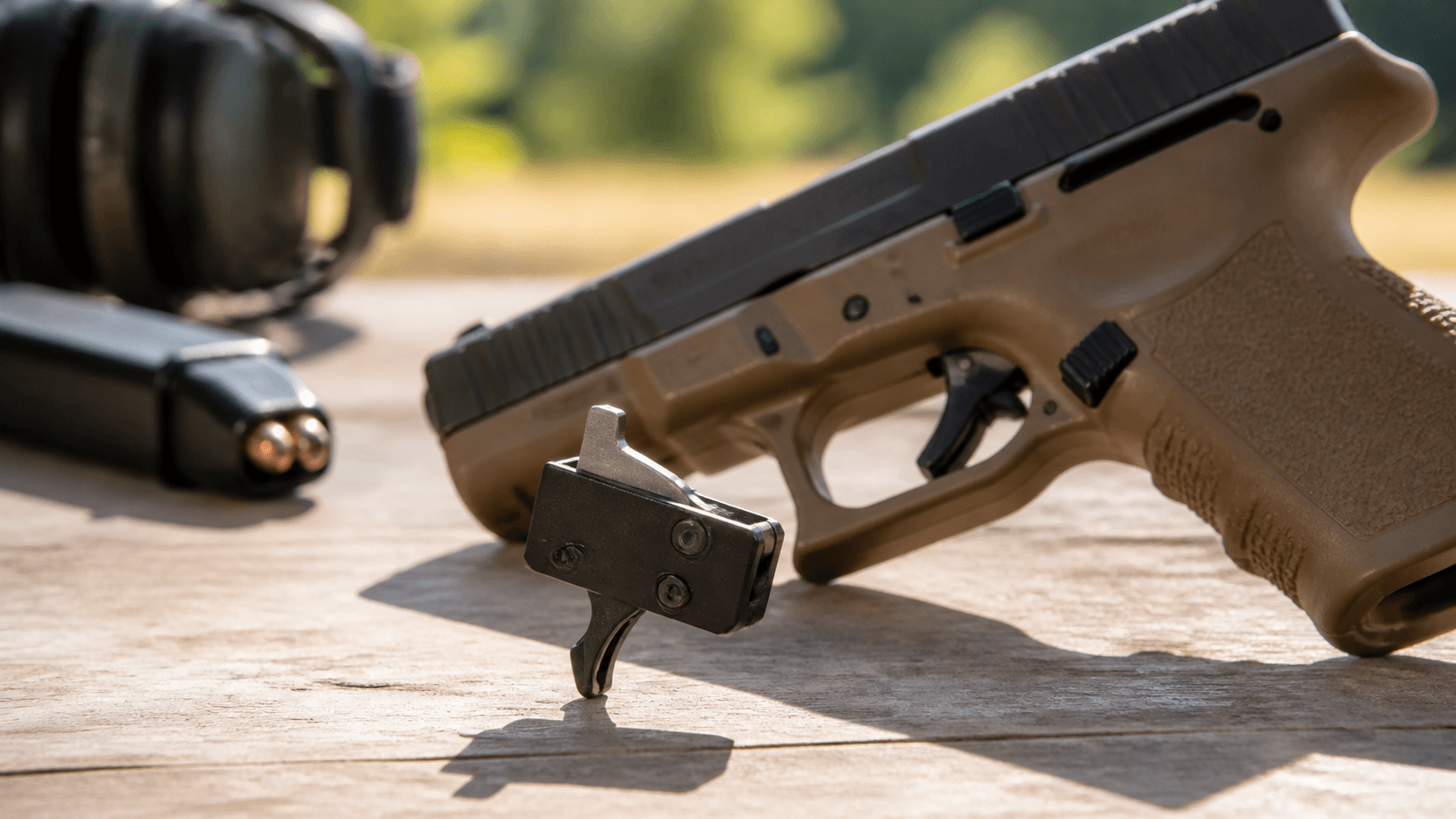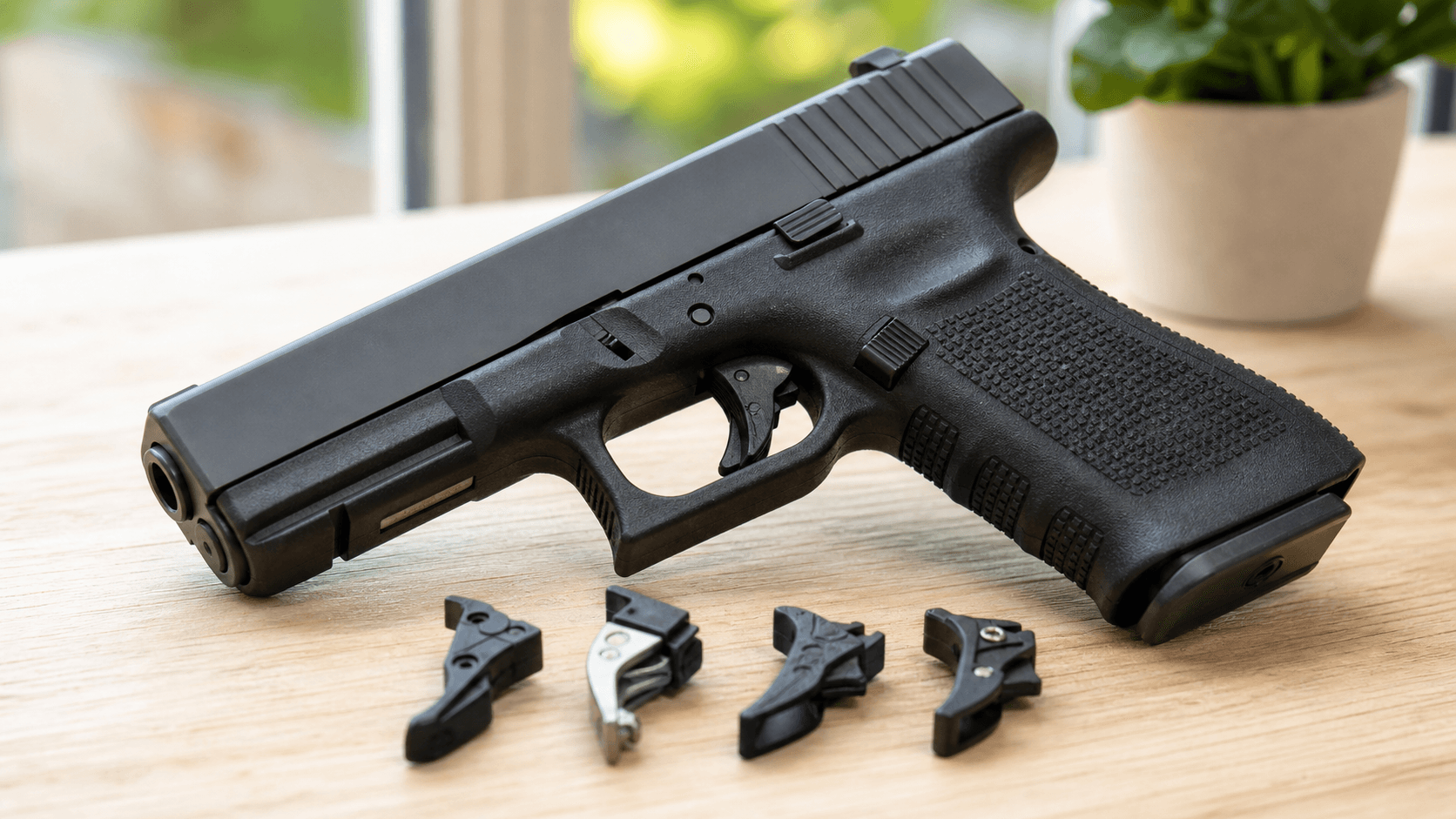
A stock Glock trigger works for most people most of the time, but serious shooters start to feel its limits. Longer days, hot summer range trips, and timer pressure in matches all have a way of exposing every bit of grit, creep, and mush in that factory setup. When you are spending real time and money on training, it makes sense to ask when a Glock trigger upgrade stops being a toy and starts being a real tool.
We build triggers, so of course we care about parts. But we also care about honest progress. Not every shooter needs an upgraded trigger right away. The goal is to help you see where the factory Glock trigger shines, where it holds you back, and how to know if you are at the point where an upgrade will actually show up on target and on the timer.
When Your Factory Glock Trigger Holds You Back
Summer is when the weak spots show. Long USPSA stages, defensive pistol classes out in the heat, or steady range sessions after work all stack up. Somewhere around the point where sweat is rolling into your eyes, you start to notice details like:
- Gritty take-up that feels like dragging through sand
- A vague wall that is hard to predict
- A break that feels different from shot to shot
The factory Glock trigger is built for broad reliability and simple production. It is designed to be safe in holsters, safe in duty use, and safe across a huge range of shooters. That means heavier pull weights, more travel, and a feel that aims at "good enough for everyone" instead of "perfect for you."
So the real question becomes: when is a Glock trigger upgrade no longer just something cool to buy, but a smart move to support the level of shooting you are already chasing?
What OEM Glock Triggers Do Well and Where They Fall Short
Glock built its name on guns that just keep running. The stock trigger is a big part of that story. It is made to work:
- Dirty from long classes
- Dry from low lube
- Wet from sweat, rain, or humidity
On top of that, Glock has to think about global contracts and lawyers. That is one reason you see heavier trigger pulls and longer travel from the factory. The design leans toward safety and consistency across thousands of guns, not toward the cleanest break for one dedicated shooter.
As your skills grow, though, you probably start to feel what many shooters complain about:
- Mushy or moving "wall" before the break
- Stacking, where the pull gets heavier right before the shot
- Extra overtravel after the break
- A slower, less positive reset
On an easy indoor lane, you might not care. But under a hot sun, with a higher heart rate and a timer, all that extra movement starts to cost you time, accuracy, and mental focus.
Performance Benchmarks That Justify a Glock Trigger Upgrade
A Glock trigger upgrade makes the most sense when you are already doing your part. That means:
- You use proper grip and sight picture
- You can call your shots at realistic distances
- You notice what your trigger is doing instead of ignoring it
With that base in place, a cleaner break and less creep help you tighten groups and actually see where shots break. When you can track your front sight through recoil, a smoother trigger lets you stay on that sight instead of fighting inconsistent resistance.
On the clock, the gains can be even more obvious. A shorter, more positive reset lets you:
- Cut down split times on controlled pairs
- Get more consistent follow-up shots
- Maintain the same pace with less mental strain
If your misses and slow shots come from poor grip or flinch, a new trigger will not fix that. But if your fundamentals are solid and you can clearly feel the trigger working against you, an upgrade starts to look less like a luxury and more like a tool that supports your progress.
Safety, Carry Use, and Legal Considerations You Cannot Ignore
Any time we talk about Glock trigger upgrades, safety has to come first. Not every aftermarket trigger is a "hair trigger." Many quality options are set up at safe, carry-friendly weights. The improvement is in smoothness, clean break, and repeatability, not just making it super light.
You do need to be honest about how the gun will be used:
- Everyday carry or duty first, training second
- Mixed carry and local matches
- Pure competition gun that never goes in a holster on the street
Carry and duty guns should live in the zone of control and safety, not "as light as possible." That includes reasonable pull weights and a trigger feel that still supports safe holstering and stress shooting. Competition-only builds have more freedom, but they bring their own learning curve.
Many shooters also worry about legal questions in a defensive use. While we are not lawyers, it is common sense to stick with:
- Reputable parts designed for serious use
- Reasonable pull weights, not extreme setups
- Proper, documented installation by someone who knows Glock internals
That way you keep a clear story: you set up your pistol for safe, controlled shooting, not for show.
Inside Modern Trigger Technology and Recoil Assisted Designs
Modern CNC machining lets us hold very tight tolerances on trigger and sear surfaces. When those engagement points line up cleanly, you feel less grit, less drag, and much more repeatable breaks. Over time, that repeatability builds trust, and trust lets you run the gun harder without hesitation.
Recoil assisted trigger concepts take that a step further. By pairing smart geometry with the natural recoil impulse of the slide, these triggers are designed to help the reset along. The goal is not to mask bad form, but to give you:
- A shorter, more positive reset
- Better shot-to-shot rhythm under recoil
- Faster transitions while still staying safe and reliable
Materials and coatings also matter a lot. Quality steels and surface finishes are chosen with high-round-count, heat, and sweat in mind, not just that first "wow" feeling on the bench. Serious shooters need triggers that feel the same on round 50 and round 500 on the same hot day, not triggers that start out sharp and then wear in random ways.
Choosing the Right Glock Trigger Upgrade for Your Role and Season
The best Glock trigger upgrade is the one that matches your mission. A few simple profiles help narrow it down:
- EDC or duty: safe pull weight, clear wall, strong reset, strong reliability focus
- Range and competition mix: a bit lighter, cleaner break, snappy but still positive reset
- Pure competition: lighter pulls, very short travel, tuned for timers and stages
Summer is a perfect time to test changes. Longer daylight and more events give you room to:
- Install and confirm basic function
- Run solid range sessions in heat and sweat
- Take at least one class or match with the new setup
When you look at any trigger option, ask questions like:
- Who designed it and what shooting roles was it built around?
- How does it behave in high-round-count sessions?
- Does it keep a clear, repeatable reset under heat and stress?
- Is it meant for the Glock models and calibers you actually run?
For us at G-Force CNC Solutions, every one of those questions guides how we design and machine our parts. Our focus is tight tolerances, reliable feel, and innovative concepts like Recoil Assisted Triggers for popular handgun platforms. The end goal is simple: give serious shooters a trigger they can trust every single time the sights are on target and it is time to press.
Upgrade Your Glock Performance With Precision Components
Take the next step toward a smoother, more consistent pull with a precision-crafted Glock trigger upgrade from G-Force CNC Solutions. Our team focuses on quality machining so you can feel confident in every shot. If you have questions about compatibility or installation, contact us and we will help you choose the right setup for your build.