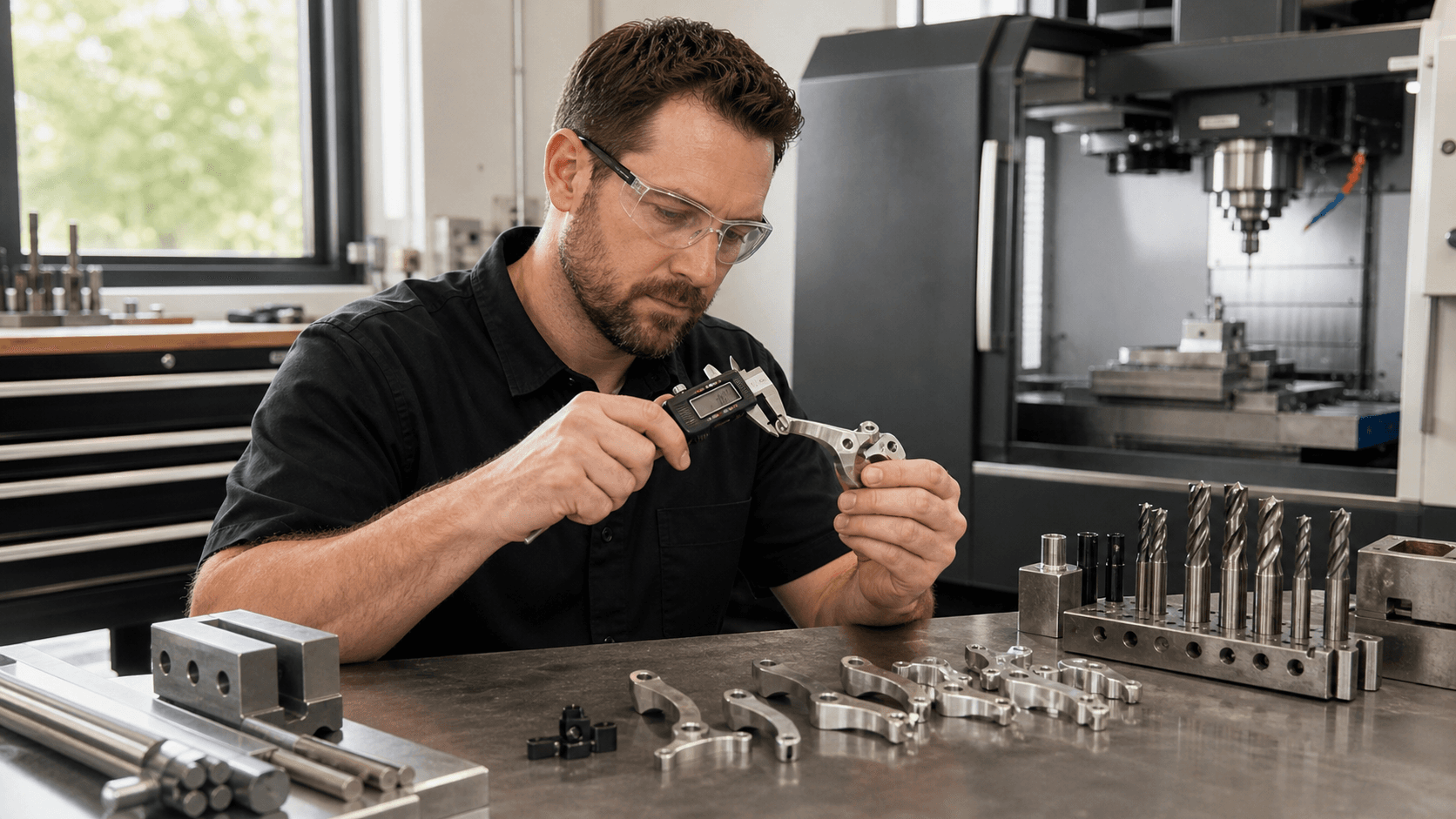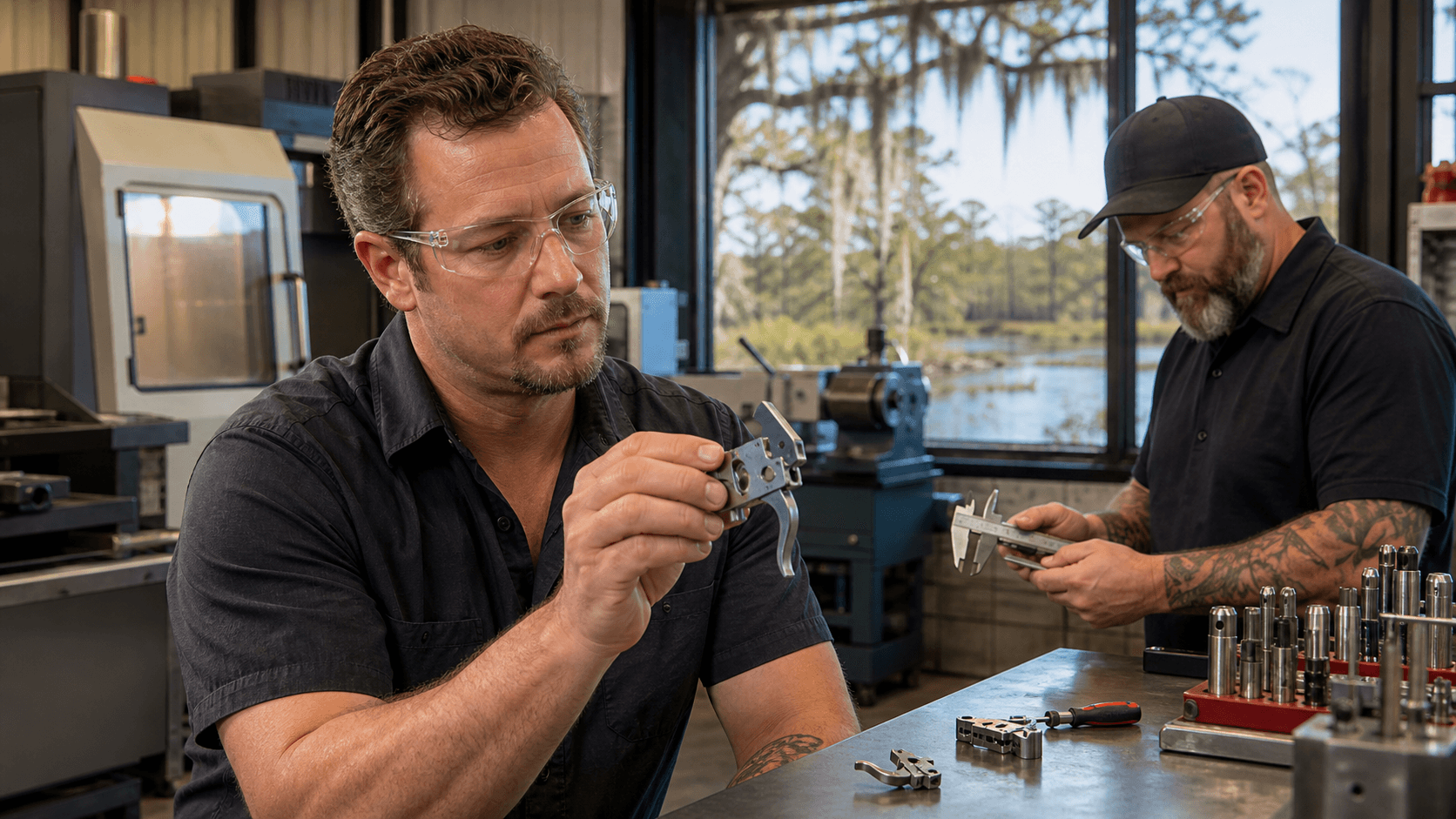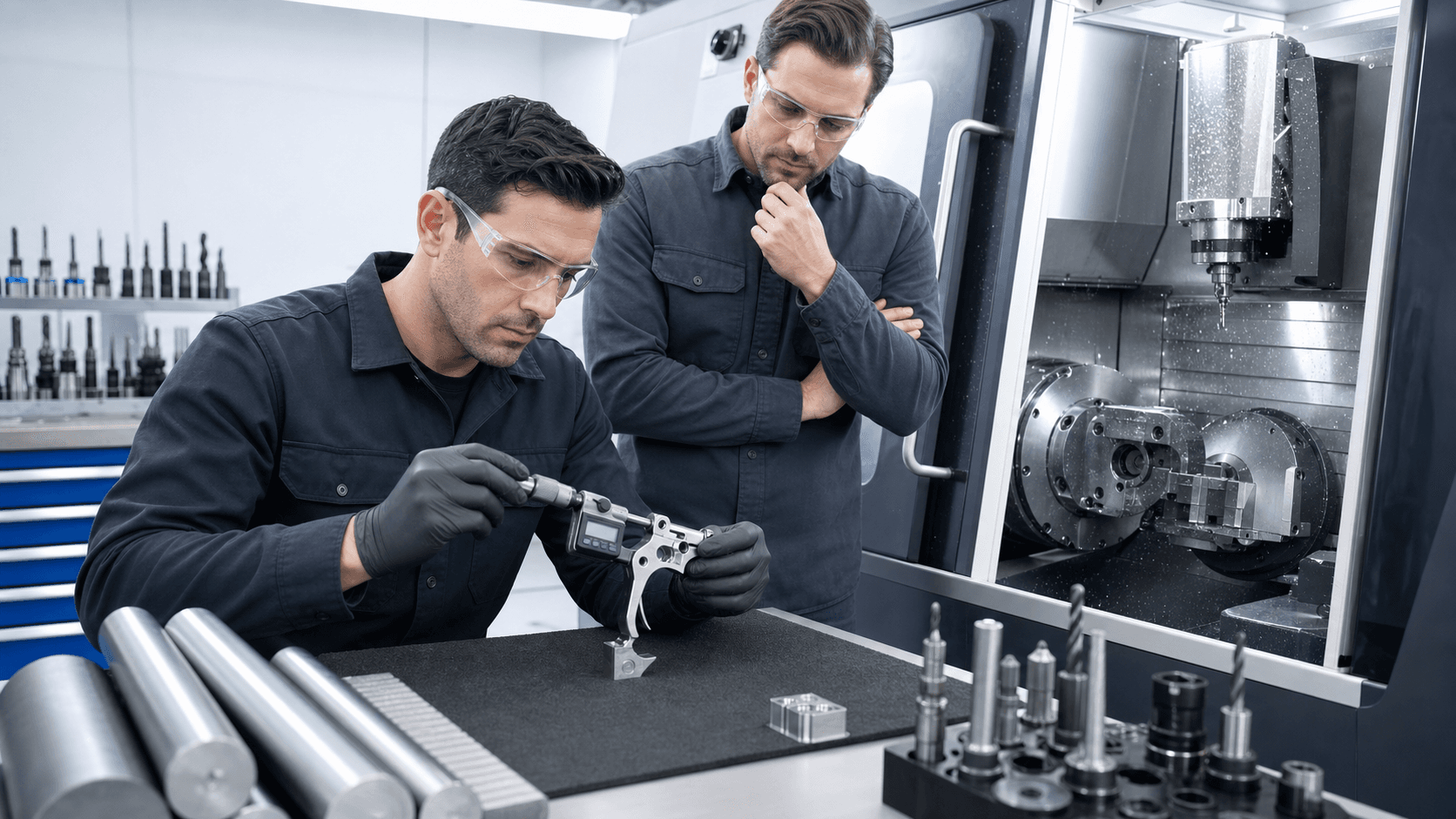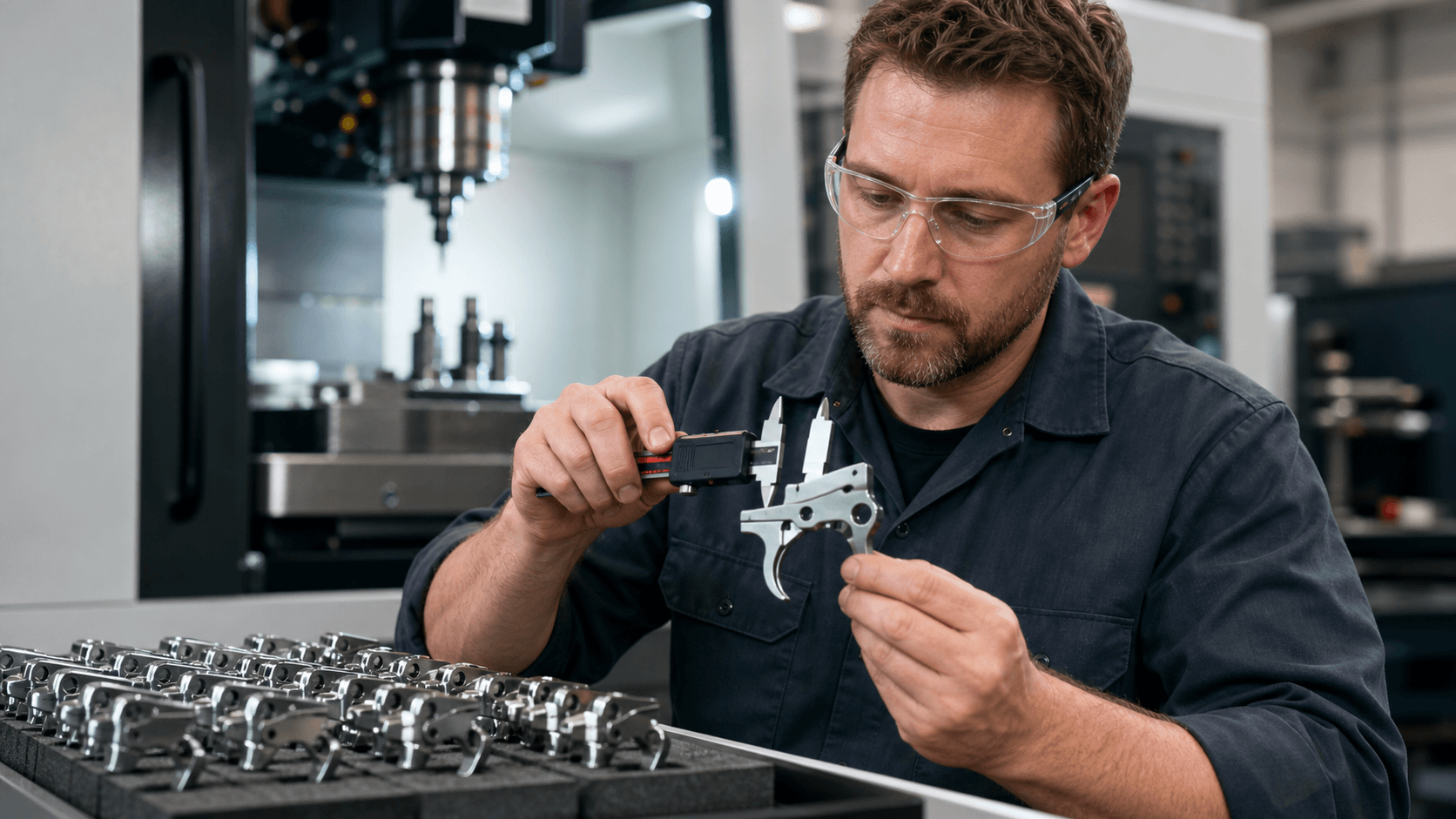
When you start running serious round counts, your trigger becomes the truth teller in your gun. Light range days will not show you much, but long practice blocks, classes, and back-to-back matches will. Under that kind of use, tiny flaws in design, material, and finish start to show up. That is where a CNC-machined trigger system proves what it is really made of.
In this article, we are going to talk about why high round counts expose weak triggers, how precision machining keeps your pull consistent, what long-term wear looks like, and why material science matters as much as geometry. We will also walk through simple ways to check your own trigger before your next heavy training season so you are not surprised halfway through a match or course.
Why High Round Counts Are the Real Trigger Test
Late summer is when a lot of shooters get serious. Temperatures are high, days are long, and people are burning through ammo to get ready for fall matches and hunting trips. That means guns are getting hot, dirty, and run hard. Triggers that feel fine at a few hundred rounds can change fast when you start stacking thousands.
High round count use, think in the tens of thousands of cycles, exposes weak points like:
- Poor sear geometry that starts to round off
- Rough surface finishes that hold grit and carbon
- Soft pins that mushroom or bend
- Springs that lose tension under heat and use
A CNC-machined trigger system is different because it is cut to tight specs on every single surface that matters. Instead of guessing where the sear will land or how the shoe will pivot, we can hold dimensions at a microscopic level. That repeatable precision is what helps a trigger survive serious abuse. Our own work on products like the Canik Recoil Assisted Trigger, or RAT, is built around that idea of data-driven design under hard use.
Precision You Can Measure Every Single Pull
Trigger feel is not magic. It is geometry, surface finish, and tolerance stacked together. With modern CNC machines, we can control all of that very tightly. Sear faces, pivot pin bores, and contact points are cut so they line up the same way, part after part.
That kind of precision gives you:
- A consistent wall and break from pull to pull
- Very little change in break weight as parts wear in
- Predictable reset length that does not wander over time
For competition and defensive shooting, muscle memory is everything. Your brain learns what that wall feels like, when the shot breaks, and how far the trigger needs to move for a reset. If the parts are cast, MIM, or stamped, you can get tiny voids, soft spots, or warped edges. Those can show up as grit, odd stacking right before the break, or pull weights that drift as the parts wear.
With CNC machining, we control thickness, location, and surface angles in a way that cheaper methods often cannot. That means when you swap in another trigger from the same batch, it feels nearly identical. Your practice transfers cleanly from gun to gun instead of fighting different pulls.
Wear Data From Long-Term Testing and Hard Use
Serious trigger design is not just about feel at the bench. It is about what the parts look like after long-term use. Good testing includes live fire, lots of dry fire, and exposure to heat, dust, sweat, oil, and cleaners. At G-Force, we think of it as a loop: shoot, inspect, measure, then adjust.
Typical wear patterns on lower-grade parts often include:
- Mushroomed pins that are hard to remove
- Peened or chipped sear edges that change engagement
- Worn or flaking coatings on contact areas
- Trigger shoes that start to wobble side-to-side
With a well-designed CNC trigger, we watch different data points instead. We track how much trigger pull weight changes over time. We check sear engagement under magnification to see if the contact patch is holding its shape. We measure over-travel and reset after high round counts to see if anything is walking or shifting.
The Canik RAT is a good example of how this works. We use closed-loop testing, meaning we do not just shoot a big number and call it good. We stop at set round counts, break the gun down, and study details like edge wear and surface polish. Small changes in geometry, CNC toolpaths, and coatings grow out of that testing to keep durability moving in the right direction.
Reliability and Consistency in Real-World Firefights and Matches
Different shooters live on different schedules, but they all need the same thing from a trigger: it has to act the same every time. A USPSA or IDPA shooter might run long practice days and back-to-back weekend matches. A duty gun might ride on a belt in all kinds of weather, then see short but intense training days. A home-defense pistol might sit in a safe for months, then suddenly matter a lot.
Across all those uses, a CNC-machined trigger system helps by giving you:
- The same break and reset on round 20 and round 20,000
- Reduced risk of light strikes or odd-feeling pulls under stress
- Shot timing that does not drift as parts wear in
When you know exactly where the wall is and what the break feels like, you can call shots faster and cleaner. That means better recoil control, cleaner sights, and tighter split times, even when you are tired or hot. If your trigger suddenly gets heavier, lighter, or mushy in the middle of a stage or in a defensive moment, that change can throw off your whole plan. Reliability is not just about firing every time; it is about behaving the same every time.
Why Material Science and Coatings Matter as Much as Geometry
Precision machining alone is not enough. The metal itself and the way it is treated matter just as much as the shape. One of the big benefits of CNC work is that we can choose premium, consistent materials like specific tool steels or aluminum alloys and know how they will respond to cutting, heat treating, and finishing.
Good material and coating choices help prevent:
- Galling, where surfaces start to tear and drag
- Micro-chips at the edge of sears
- Rapid loss of surface hardness on contact areas
A well-designed CNC trigger is really a system. Geometry, material, heat treatment, and coating are planned as a package so the parts wear slowly and in non-critical areas. The goal is for the edges that set sear engagement to stay sharp and stable for a long time, while less important spots take the minor wear.
At G-Force, we apply that system view to products like the Canik RAT. Test feedback might push us to change a radius, adjust a contact patch, or tweak a coating process. Small changes like that, based on real use, add up to triggers that hold their feel for very high round counts.
Upgrade Your Trigger Before Your Next High-Volume Season
As late summer training picks up and the weather is hot, it is a good time to be honest about your current trigger. If you put a lot of rounds through it last season, it might not be the same trigger now that it was out of the box.
Here is a simple "garage check" many shooters can do:
- With the gun clear, feel for new grit or stacking in the pull
- Check for side play or wobble at the trigger shoe
- Notice if your pull weight seems lighter or heavier than you remember
- Look at visible edges for rounding, chipping, or peening
If anything feels off, that is usually a sign that parts are wearing in ways you do not want. Moving to a proven CNC-machined trigger system from a specialist that lives and breathes this work lets you lock in reliability and consistency for your next season instead of waiting for a failure at the worst time. For us at G-Force CNC Solutions, including with our Canik Recoil Assisted Trigger, the goal is simple: precision parts, tested hard, that keep your trigger feeling right no matter how many rounds you run.
Get Started With Your Project Today
If you are ready to upgrade your build with tighter tolerances and consistent performance, explore our CNC-machined trigger system options tailored to serious shooters. At G-Force CNC Solutions, we apply proven machining processes to deliver components you can trust under pressure. Tell us what you are working on and we will help you choose the right setup and configuration. If you have specific requirements or questions, contact us so we can support your project from concept to final fit.